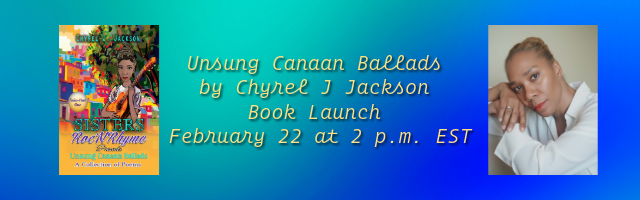
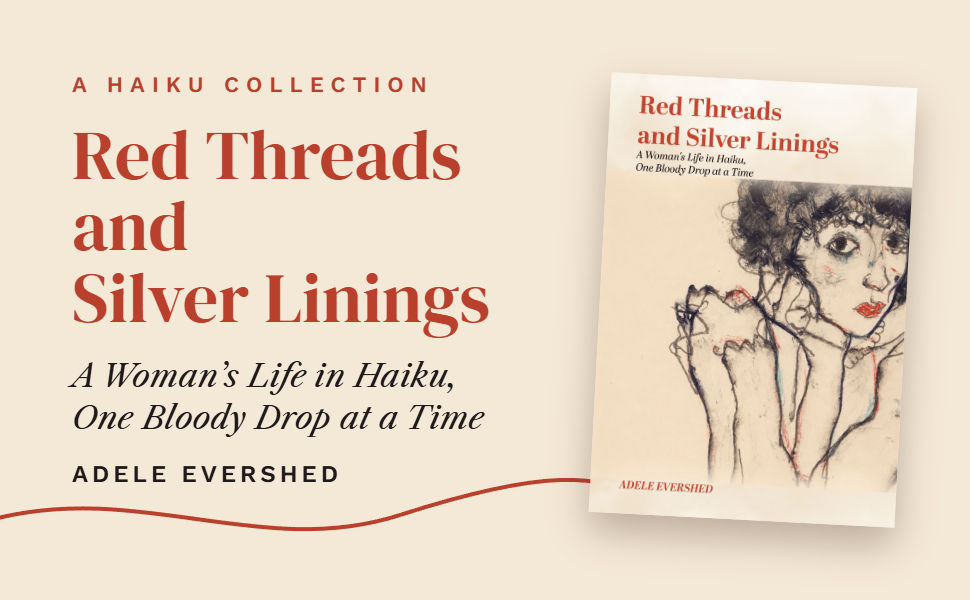
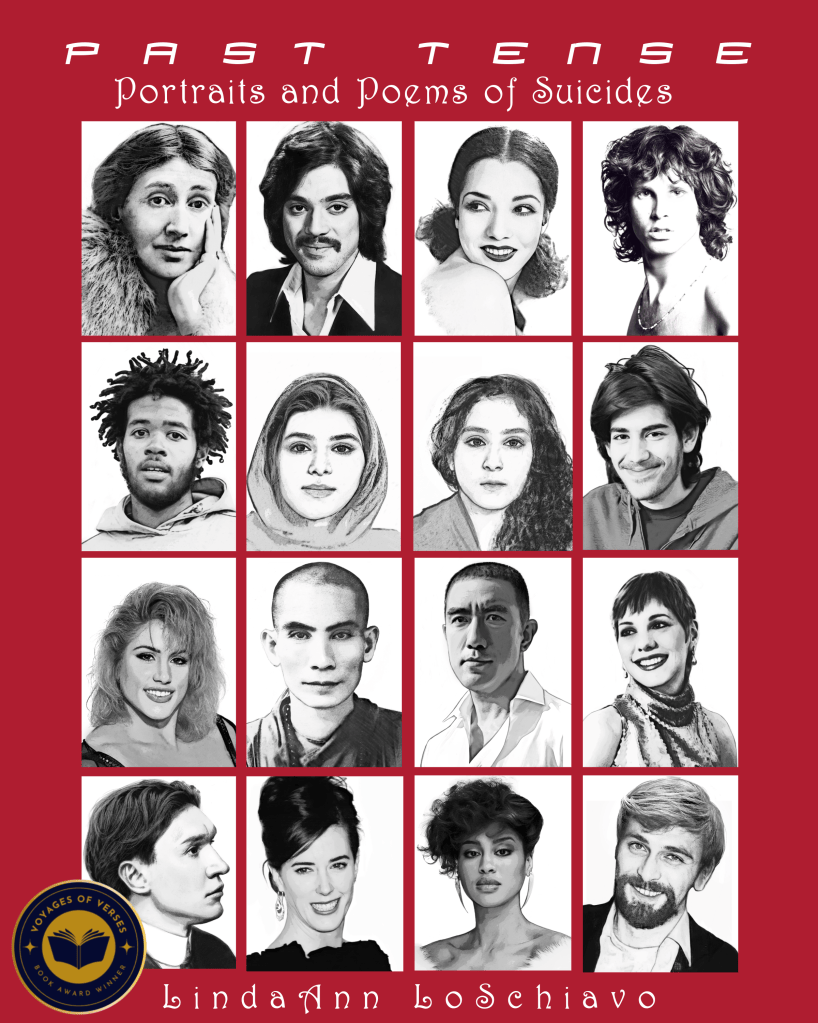
We are ready to celebrate the Book Launch for Unsung Canaan Ballads by Chyrel J Jackson. This much anticipated event is on February 22 at 2 p.m. EST via ZOOM.
Register now to save a seat for this exciting virtual event!
We had a lovely talk about so many things. Poetry, therapy work, art, baby love, and more. Check out this interview on YouTube or Spotify or anywhere podcasts are offered.
When I saw the following interview with Nolcha Fox, I was so pleased that I just had to share. It’s been such a pleasure to work with Nolcha Fox with the publishing of the above books. All are available on ProlificPulse.com/NolchaFox
Thank you to Poetic Bloomings for interviewing this prolific poet!
In fashion nothing completely goes out of style. Major trends often see great comebacks after generations of being shunned, resurfacing with a bang! So, yes, poetry is very much back in fashion, especially amongst the young, which is a delight to see. It never really left to be honest, I think it underwent and is […]
It’s gratifying that two poets as versatile in their own right as Ken Tomaro and Nolcha Fox have combined their imaginations, poetic skills, and talents in Seesaw, a collection of twenty-six collaborative poems. Their versatility shows in their ability to improvise: one says something, and the other goes with it, the result being these quirky, darkly […]
In honor of April’s National Poetry Writing Month (NaPoWriMo), and to celebrate the upcoming release of “Seesaw,” a quirky poetry collaborative book by Ken Tomaro and me, I will post a quirky prompt each day in April. Submit your best quirky response poem (no more than 26 lines) to the Seesaw contest on Prolific Pulse Press:https://forms.gle/3a3NBmohikms19yA8 […]
Wound up from the sugary Peeps in her basket, searching for Easter eggs, Mandy grabbed the pastel shades of purple, pink, yellow, orange, and blue plus G.I. Joe green. Running to the porch to share her treasures, her eyes opened wide at the live chick in a box. “Is this mine?”
In honor of April’s National Poetry Writing Month (NaPoWriMo), and to celebrate the upcoming release of “Seesaw,” a quirky poetry collaborative book by Ken Tomaro and me, I will post a quirky prompt each day in April. Submit your best quirky response poem (no more than 26 lines) to the Seesaw contest on Prolific Pulse Press:https://forms.gle/3a3NBmohikms19yA8 […]
PeeWee, my part Pekinese/poodle/dachshund mutt, loved to go on walks. He would explore every little bit of nature. As I chatted away with my walking mate, Peewee kept up the pace, then nosed through a ditch. Suddenly, a black striped animal emerged. “Skunk!” is all I had to yell when my friend and I broke […]
See: The Scent of History: Inside the Library of Smells In honor of April’s National Poetry Writing Month (NaPoWriMo), and to celebrate the upcoming release of “Seesaw,” a quirky poetry collaborative book by Ken Tomaro and me, I will post a quirky prompt each day in April. Submit your best quirky response poem (no more […]
In honor of April’s National Poetry Writing Month (NaPoWriMo), and to celebrate the upcoming release of “Seesaw,” a quirky poetry collaborative book by Ken Tomaro and me, I will post a quirky prompt each day in April. Submit your best quirky response poem (no more than 26 lines) to the Seesaw contest on Prolific Pulse Press:https://forms.gle/3a3NBmohikms19yA8 […]
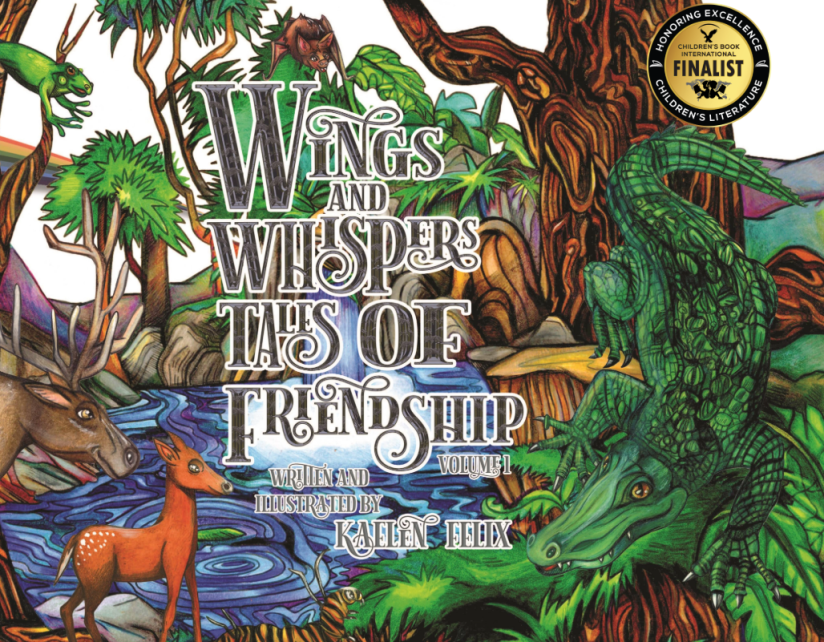
It’s time to CELEBRATE the Placement of Finalist in the 2025 Children’s Book International Competition! “Wings and Whispers: Tales of Friendship, Volume 1” has placed in this prestigious competition! We are offering from April 11-16 the Kindle Version of this Children’s book for .99 – Available in the US and UK You can also buy the paperback or hardcover versions on https://www.prolificpulse.com/kaelenfelix where you can find all the links. Thank you for all of your support!!
In honor of April’s National Poetry Writing Month (NaPoWriMo), and to celebrate the upcoming release of “Seesaw,” a quirky poetry collaborative book by Ken Tomaro and me, I will post a quirky prompt each day in April. Submit your best quirky response poem (no more than 26 lines) to the Seesaw contest on Prolific Pulse Press:https://forms.gle/3a3NBmohikms19yA8 […]
(My Prompt): Use Apathy Sandwich to write a poem. (Ken’s Prompt): Write a poem about something you don’t care that much about but try to convince people around you it’s the greatest thing ever. In honor of April’s National Poetry Writing Month (NaPoWriMo), and to celebrate the upcoming release of “Seesaw,” a quirky poetry collaborative […]
Recently, we sat for a phone interview, and it’s now published! It was such a pleasure to meet with Wil and I think you will like this too! Check out the latest Podcast!
Today’s Prompt: Craft a poem that explores the mysteries of the universe and our place within it.
Congratulations on reaching the end of National Poetry Month! How was the experience? Did you submit your poems to any publications, or are they still a work in progress? Best wishes and thank you for participating!
REGISTER for the VIRTUAL Book Launch featuring Elizabeth O Ogunmodede with her latest Poetry Book “The Beauty of Words” or send an email to admin@prolificpulse.com to register.
Dive into the enchanting world of poetic expression with “The Beauty of Words: A Poetry Collection” by Elizabeth O. Ogunmodede. This captivating anthology traverses through the intricate tapestry of human experience, touching upon themes ranging from the awe-inspiring beauty of nature to the complexities of society, from cherished memories to the depths of agony, and from whimsical fantasies to the warmth of friendship and family bonds. With each carefully crafted verse, Ogunmodede invites readers to explore the rich landscape of literature, where emotions are woven into words, painting vivid portraits of the human soul. Embark on a journey of introspection and revelation as you immerse yourself in the evocative verses of “The Beauty of Words,” where every stanza is a testament to the enduring power and allure of language.
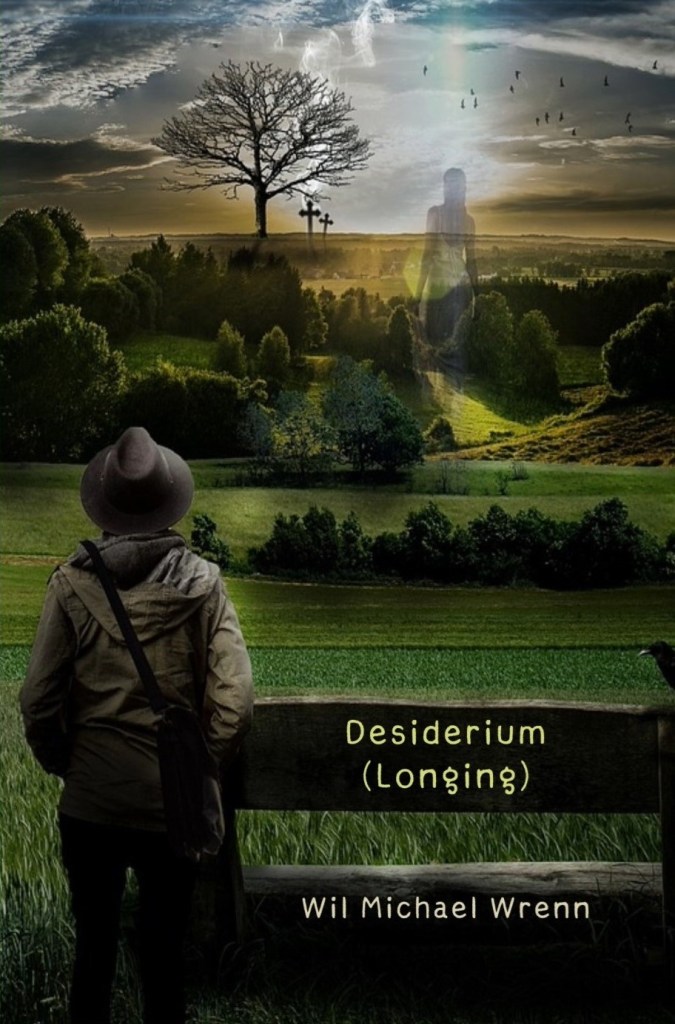
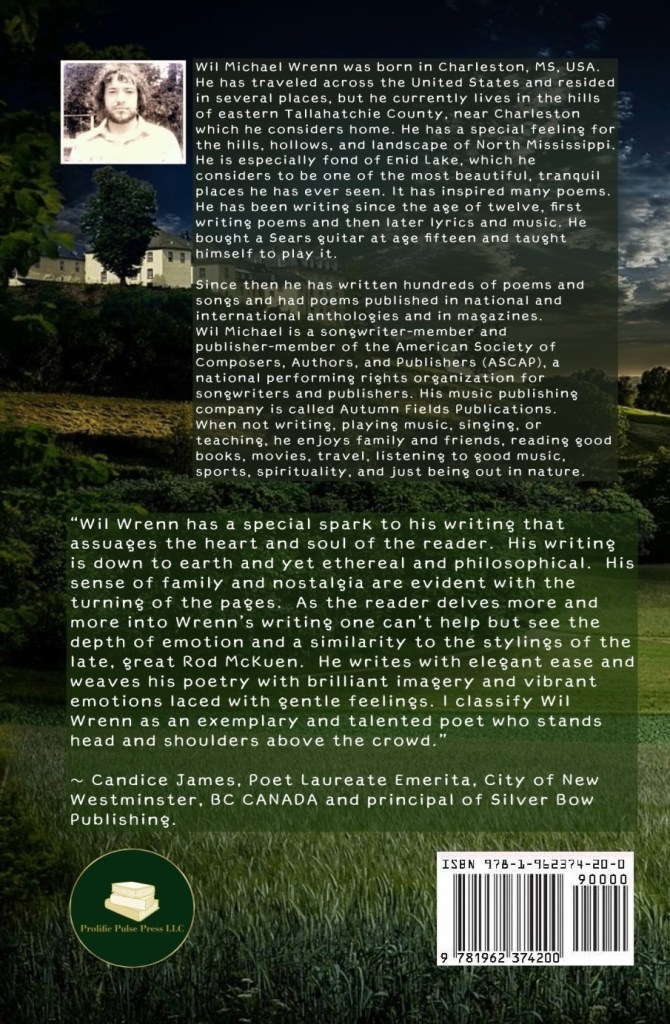
“It seems to me that we humans are in an almost constant state of longing – either a longing for someone or something that we don’t have yet or that we at one time had but then later lost. In this book of poetry, I seek to address that aspect of our human condition – this longing, this ‘desiderium’ (Latin word).”
Wil Michael Wrenn explores desiderium in the sense of longing. Through his poetry collection, one can feel the deep desire for something once cherished. There is a deep desire in the heart for what it once had. Loss brings with it silence, regret, and pain. Wrenn explores this in his unique way, going deep into the subject.
Desiderium is now available for pre-order. Available in Paperback and Kindle.
Kindle Publication Date is April 27 and Paperback Publication Date is May 3.
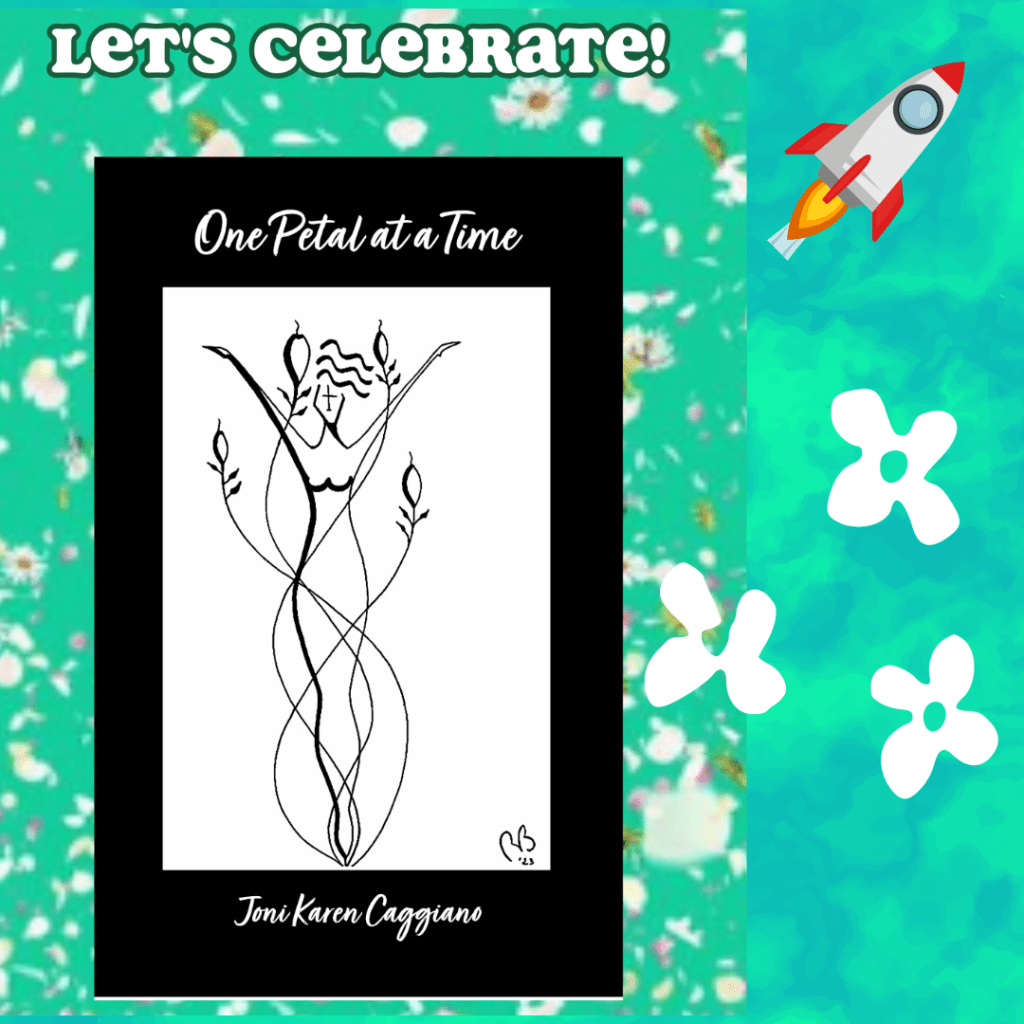
We have been anticipating this occasion to come together and celebrate Joni Karen Caggiano’s “One Petal at a Time.” The virtual event is scheduled for Sunday, April 28, at 2 p.m. EST.
Register by completing the following form or sending an email request to:
Happy Friday and TTOT time! Are you doing the tip-toe through the tulips? It’s certainly that time of year in Holland. What kinds of flowers have you seen this spring?
Roses are welcomed for my sweet daughter as she is recovering from arthroscopic knee surgery. She is doing great! Her surgery was on Thursday, early morning. This means we were up early, but it all worked out very well because we are early risers (although I didn’t sleep well from anxiety about waking up HA). The great news is that we were out of there in time to grab a brunch to go. Grateful for her surgery going well, early surgery times, recuperating going well, she is walking around the apartment with her walker, she was able to find her dirty laundry for me to do (AHA), she’s eating well, the ice flowing machine AKA The Ice Goddess, Naps, Naps, Naps, and a phone to call any time of day or night. I believe that must be at least ten thankfuls. I didn’t count, but will now count all the wonderful well wishes, prayers, blessings, visits, and wows.
As we pace by the daisies of life, we are filled with gratitude for all the colorful events. All the preparations gone well; staying well-informed, tax season ending so I have my sweetheart here to help, staycation time (that took a lot of doing to make a week off happen). Clearing the head as much as possible for the current events to happen. Tender mercies abounding. It’s been good.
How has your week been? How about a share of your thankfuls in the comments, by your own post or … If you go to the following link, you can see other thankfuls and even add your own.
Many of us learned the same unspoken rule while growing up: if someone might struggle with suicidal thoughts, tread carefully, change the subject, and do not say the word out loud. They taught us that staying silent is the safest option.
It isn’t. And today — World Suicide Prevention Day — groups emphasise exactly that concept. This year’s theme, set by the International Association for Suicide Prevention, is “Changing the Narrative on Suicide.” The call to action is simple: have the honest conversation instead of the careful silence.
Where I’m coming from
I spent years doing suicide intervention work across every age group — children, teenagers, adults, and older adults. I have walked many clients down the hall of the mental health center to be evaluated by the doctors.
A withdrawn fourteen-year-old and a grieving seventy-year-old can both be at serious risk, and they rarely look alike. I’ve sat with both. What I want to pass on here isn’t a clinical lecture — it’s what actually held up, conversation after conversation, across all of those ages.
The narrative that needs to change
Suicide is not a sudden, singular crisis. Risk builds quietly, shows up differently depending on who’s carrying it, and touches every age bracket. An older adult withdrawing after a loss, a middle-aged parent who’s stopped mentioning the future, a teenager who’s gone quiet online instead of loud — none of these fit the crisis-movie version of what suicide risk looks like, and that mismatch is exactly why people miss it, including in people they love.
The myth worth killing
If I could correct one thing people believe, it’s this: asking someone directly if they’re thinking about suicide does not plant the idea or make it more likely. It’s the opposite. Every study and every hour of practice I’ve had says the same thing: a direct, calm question is protective. You convey to the other person who is exhibiting suicidal ideations that you will remain steady. Silence isolates people. A direct question opens a door.
What you can actually do today
I am no longer a clinician, but I have long since encountered persons contemplating suicide. It’s confusing, at times, to know if their thoughts are legitimate or they are having a rough time, but not suicidal. Often, it is that they need someone to truly listen.
You don’t need a clinical background to matter here. A few things that consistently help:
Ask directly. Not “you’re not thinking of hurting yourself, right?” but a plain, unhurried “Are you having thoughts of suicide?” The directness itself is a kindness.
Listen without rushing to fix it. You don’t need the right response. You need not look away.
Know when to bring in more support. Caring about someone doesn’t mean you have to carry it alone — knowing when to loop in a professional or a crisis line is part of showing up well, not a failure to help enough. You are not there to cure them, but to help them get the help they need.
Follow up again later. Not once. A check-in three days later, and again the week after, tells someone the concern wasn’t a one-time performance.
If you’re the one struggling
If you are experiencing these thoughts now, you don’t need to worry about finding the right words for someone else. In the US, you can call or text 988 anytime. Outside the US, findahelpline.com will point you to a local helpline. Reaching out is not a bigger deal than what you’re carrying; it’s just the next small step.
The point of today
Changing the narrative isn’t a slogan. The difference becomes practical when someone asks a direct question without flinching, contrasting with a person silently suffering to protect others. Any of us can start that conversation. It doesn’t take a professional to have it — it just takes going first.
If you or someone you know is in crisis, call or text 988 (Suicide & Crisis Lifeline) in the US, or visit findahelpline.com for international resources.
When New Hampshire poet William Doreski sat down with Lisa Tomey-Zonneveld of Prolific Pulse Press to talk about his new collection, Orpheus My Orpheus, the conversation ranged from a stubborn high school argument about E.E. Cummings to an early morning writing routine, and from Robert Lowell to a poem about RadioShack laptops that write their own deranged love poetry. It’s a wide-ranging, generous conversation — and it offers a rare window into how a poet’s voice gets built over a lifetime.
A poet almost by accident
Doreski’s origin story starts with resistance, not inspiration. As a high schooler in Connecticut, he was assigned some E.E. Cummings poems by a teacher barely older than his students — and he wasn’t impressed. “This doesn’t seem like poetry to me,” he told his teacher. “Anybody could write this stuff.” His teacher’s response became a turning point: go home and try it yourself.

“I spent several frustrating hours,” Doreski recalls, “learning what Mr. Cummings was doing was held a lot better than I could do.” Cummings never became a favorite, but the exercise cracked something open. From there, Doreski found his way to Wallace Stevens — drawn in partly because Stevens was, like him, a Connecticut poet — and then to Hart Crane, whose Collected Poems was handed to him by a working poet he met in a Springfield, Massachusetts bookstore. Reading about Crane’s death by suicide at 32 was, in Doreski’s words, horrifying — but Crane became an essential influence all the same. Rounding out his early education was Allen Tate, whose Pulitzer- and National Book Award–winning debut left Doreski impressed by a voice he found “very hard to imitate” — a lesson that would shape his own search for a distinctive style.
A career, and a well-timed exit
Doreski went on to teach for 34 years at Keene State College in New Hampshire, with a decade before that as an adjunct at several Boston-area universities, including Boston University, where he studied under the influential critic Helen Vendler. He’s candid about why he chose to retire when he did, at 70: “There comes a point where you may know a lot more than the students, but… their culture has become so different, so far from mine, that I’m really not the right person to be teaching them anymore.” He’d seen colleagues stay too long and become, in his words, “objects of ridicule among the students” — and he wanted to leave on his own terms.
It turned out to be well-timed. Just a few years after Doreski retired, Keene State laid off several tenured English faculty amid enrollment declines tied to New Hampshire’s shifting demographics. “I probably, with my seniority and higher salary, probably would have been a ripe candidate,” he notes.
The discipline of retirement
Retirement didn’t slow Doreski’s writing down — if anything, it gave it more shape. He describes waking early in the morning simply to have quiet, uninterrupted time to read and, some mornings, to write. “It gets sets the right kind of pace for your day,” he says. The flexibility of retirement means he can step away from gardening or painting the house to return to a poem started that morning — “a luxury,” as he puts it, “to be able to pick and choose your time.”
Inside the poems
During the conversation, Doreski reads two poems from the new collection. The title poem, “Orpheus My Orpheus,” restages the Greek myth as a piece of avant-garde 1960s-style theater — complete with a fiberglass fish tank stage, a disembodied singing head placed in a cooler by EMTs, maenads in “fright wigs,” and a narrator accepting a Pulitzer for drama before retreating, Eurydice in hand, toward the underworld. Doreski traces some of its spirit back to a book he’d been reading about the New York avant-garde scene of the 1960s — happenings, underground film, and the kind of theatrical strangeness he was, in his words, “too young to really fully appreciate” at the time.
The second poem he reads, “Computers Go Crazy,” imagines RadioShack display computers spontaneously generating and publishing deranged lyric fragments — and refusing to stop even after being unplugged and smashed on the floor. It’s a playful premise, but it illustrates something Doreski returns to throughout the interview: his belief in verse as a shaped thing, distinct from “broken prose.” Years ago, he says, he stopped writing free verse entirely, worried he was just writing sentences with line breaks. Returning to Wallace Stevens’s example — deceptively simple, but unmistakably verse — helped him find his way back to line, rhythm, and form as meaning-making tools in their own right.
On reading poems aloud — and the people who shaped him
Doreski credits Helen Vendler with instilling in him the practice of reading poems aloud, even alone — a habit he says has taught him more about a poem than silent reading ever could. “A lot of poetry… does not read aloud very well at all,” he observes, even work published in respected magazines.
The conversation also touches on the poets and friends who shaped him — including Robert Lowell, whom Doreski knew personally but has deliberately never written about, wary of adding to the “gush of memoir” that followed Lowell’s death. Of Helen Vendler, he jokes that her ghost would “tell me off” if he tried. It’s a glimpse of how seriously Doreski takes the boundary between friendship and material — a poem, he says, quoting T.S. Eliot’s idea of the “objective correlative,” has to become its own thing, not a sermon or a memoir.
A candid note on where poetry stands today
Later in the conversation, Doreski reflects frankly on the state of the literary world — the shrinking audience for poetry, bookstores where used poetry collections outsell new ones simply because they’re cheaper, and a broader cultural shift away from reading. It’s a wistful, clear-eyed assessment from someone who has spent a lifetime inside that world, delivered without bitterness — just honest observation, and an unmistakable commitment to keep writing anyway.
About the book
Orpheus My Orpheus is a slim, restless collection of seventeen poems in which art is never mere decoration — it’s a disruptive force that exposes the hidden dimensions of experience, and poetry itself becomes a form of survival even when the body fails. Written in fast-swerving accentual verse, the collection moves from the domestic to the mythic to the grotesque with startling emotional agility, echoing poets like Mark Strand and Stephen Dobyns.
Order Orpheus My Orpheus and learn more about William Doreski here 🎥 Watch the full interview on YouTube.
From Classroom to Children’s Books — An Interview with Emma L. Sembly
For Emma L. Sembly, every story teaches a lesson, and every life is a story.
Emma is a life-long storyteller and lover of stories. As a child, Emma loved telling fantastical tales, starting with a captive audience consisting of her little sister. After she grew up, Emma continued to create stories that her students loved.
With a bachelor’s degree in psychology from Elmhurst College and a master’s degree in reading from Johns Hopkins University, Emma set out on a thirty-seven-year journey as an educator in the Baltimore City Public School System, where she taught children with different abilities on both elementary and high school levels. During that time, she also created stories for her own daughter and niece, then for her grandchildren and great nieces.
Now, Emma creates stories for children of all ages, especially the young at heart.
Emma also has a podcast, Just Folks: Conversations with Emma, in which she provides a platform where regular, everyday humans can share their own stories with listeners of all persuasions. Life lessons shared.
Drawing and writing poetry are among Emma’s favorite things to do. She also enjoys planting red flowers around her home. And when she’s not chatting it up with her kitty of thirteen years, she’s having a blast with both of her Favorite Number One Grandchildren.
“What I have learned as a writer and podcaster, is that our stories, our bedtime stories, our fables, are the gateways to life’s lessons,” Emma says, “and we all have a story to tell.”
In a meadow full of chirping, squawking, climbing, crawling creatures, Mr. Krippet is the most industrious, well-mannered, and well-respected of them all. Known for his magnificent tenor voice and his skill as a shoemaker for the ants, he’s spent all summer singing, working, and making friends. But winter is coming — and Mr. Krippet has nowhere to live and nothing stored away to eat. Will he make the baker’s acquaintance — and earn a place by the fire — before the first snow falls? Written by veteran educator Emma L. Sembly and illustrated by Lesley Scoble, with a foreword by celebrated poet Zaneta V. Johns, Mr. Krippet is a gentle, richly imagined tale about dedication, preparation, and friendship. It’s a natural companion to classic fable-and-fall stories about industriousness and community — perfect for bedtime, classroom read-alouds, and quiet corner adventures. Author: Emma L. Sembly – Illustrator: Lesley Scoble – Foreword: Zaneta V. Johns
As a teacher, I will always remain a student. In the classroom of life, l wish to work with and educate others. Whether you’re a teacher, student, or just your average person, here are a few of my "TEACHERble" moments.