mental health

World Suicide Prevention Day – Changing the Narrative: What Several Years of Suicide Intervention Taught Me About Silence

A graphic featuring two hands with heart shapes, accompanied by the text 'You are not alone. Help is available whenever you need it.' It promotes Suicide Prevention Awareness Month.

Sources: WSPD – IASP Home | SAMHSA – Substance Abuse and Mental Health Services Administration

Many of us learned the same unspoken rule while growing up: if someone might struggle with suicidal thoughts, tread carefully, change the subject, and do not say the word out loud. They taught us that staying silent is the safest option.

It isn’t. And today — World Suicide Prevention Day — groups emphasise exactly that concept. This year’s theme, set by the International Association for Suicide Prevention, is “Changing the Narrative on Suicide.” The call to action is simple: have the honest conversation instead of the careful silence.

Where I’m coming from

I spent years doing suicide intervention work across every age group — children, teenagers, adults, and older adults. I have walked many clients down the hall of the mental health center to be evaluated by the doctors.

A withdrawn fourteen-year-old and a grieving seventy-year-old can both be at serious risk, and they rarely look alike. I’ve sat with both. What I want to pass on here isn’t a clinical lecture — it’s what actually held up, conversation after conversation, across all of those ages.

The narrative that needs to change

Suicide is not a sudden, singular crisis. Risk builds quietly, shows up differently depending on who’s carrying it, and touches every age bracket. An older adult withdrawing after a loss, a middle-aged parent who’s stopped mentioning the future, a teenager who’s gone quiet online instead of loud — none of these fit the crisis-movie version of what suicide risk looks like, and that mismatch is exactly why people miss it, including in people they love.

The myth worth killing

If I could correct one thing people believe, it’s this: asking someone directly if they’re thinking about suicide does not plant the idea or make it more likely. It’s the opposite. Every study and every hour of practice I’ve had says the same thing: a direct, calm question is protective. You convey to the other person who is exhibiting suicidal ideations that you will remain steady. Silence isolates people. A direct question opens a door.

What you can actually do today

I am no longer a clinician, but I have long since encountered persons contemplating suicide. It’s confusing, at times, to know if their thoughts are legitimate or they are having a rough time, but not suicidal. Often, it is that they need someone to truly listen.

You don’t need a clinical background to matter here. A few things that consistently help:

Ask directly. Not “you’re not thinking of hurting yourself, right?” but a plain, unhurried “Are you having thoughts of suicide?” The directness itself is a kindness.

Listen without rushing to fix it. You don’t need the right response. You need not look away.

Know when to bring in more support. Caring about someone doesn’t mean you have to carry it alone — knowing when to loop in a professional or a crisis line is part of showing up well, not a failure to help enough. You are not there to cure them, but to help them get the help they need.

Follow up again later. Not once. A check-in three days later, and again the week after, tells someone the concern wasn’t a one-time performance.

If you’re the one struggling

If you are experiencing these thoughts now, you don’t need to worry about finding the right words for someone else. In the US, you can call or text 988 anytime. Outside the US, findahelpline.com will point you to a local helpline. Reaching out is not a bigger deal than what you’re carrying; it’s just the next small step.

The point of today

Changing the narrative isn’t a slogan. The difference becomes practical when someone asks a direct question without flinching, contrasting with a person silently suffering to protect others. Any of us can start that conversation. It doesn’t take a professional to have it — it just takes going first.

Announcements, Book Announcements, poetry

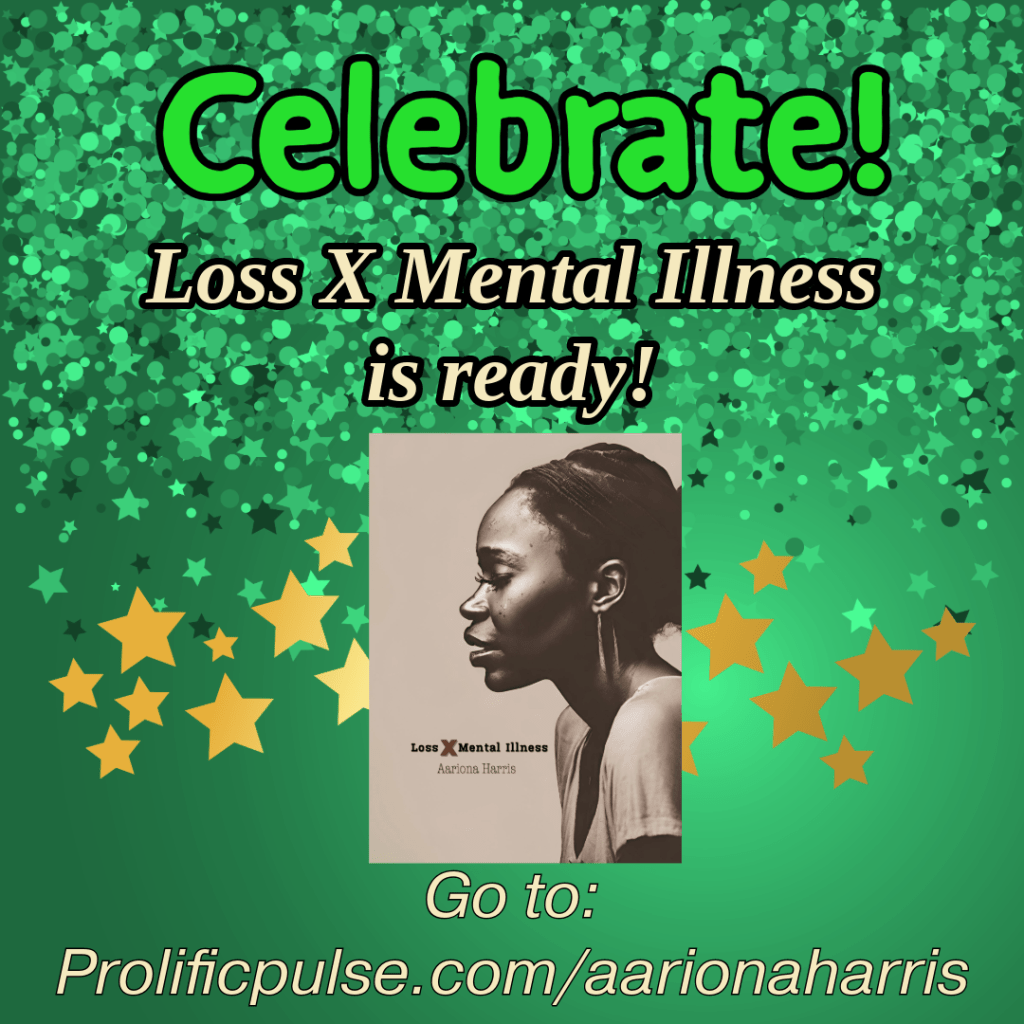
ANNOUNCEMENT: Loss X Mental Illness is Available

Loss X Mental Illness is a collection of poems written by Aariona Harris during one of the most emotionally and mentally challenging times of her life. Harris offers solidarity to other readers who may go through something similar and ensure they know they are not alone. While doing so, Harris was able to address her grief and expel all of the feelings associated with it, along with the emotional reactions caused by her diagnoses.

About Aariona Harris:

Aariona Harris is currently studying English Literature full-time. She balances a full-time job and college while also finding time to write. Her passion is reading, especially classic literature. Writing provides her with a sense of belonging.

She has a passion for literature, just like other members of literary history. Her desire is to share this love with everyone.​

Aariona has had her poetry published in various journals. This book is a product of a chaotic life. Every poem and word brought Aariona healing and acceptance.

What Reviewers Have to Say About Loss X Mental Illness:

There were moments reading this when I could see the 13-year-old I was sure would be a lawyer, throwing out a witty retort to any would be offensive adult, and there were times I saw the young woman clinging desperately to a hand she would never get to hold again, which remains the single most heartbreaking thing I have ever witnessed. Her mother was a huge fan of poetry, and meaningful lyrics; and she was incredible at spoken word, and I think she’d be really proud of what her daughter has accomplished here. I can’t wait for the next book.

Christeena L. Putzer

Aariona Harris captured so many emotions and feelings in her book “Loss X Mental Illness”. With each poem you can feel the emotions that are wrapped around every word. You can tell that the author has gone through so much in her short life. While reading I was shocked and amazed by what she has faced in a short amount of time. Not only does she bring attention to very important topics, she expands on them. This is a raw and honest view of mental health struggles at a young age. Grappling with life challenges that seem almost insurmountable including the loss of a mother, this narrative resonates deeply as it mirrors the silent battles that many young individuals face into today’s world. Aariona’s writing is viewed with a sense of resilience and hope as she navigates these challenges. It encourages a deeper understanding and empathy of those who battle mental health issues often in silence. The book is a beacon of hope and understanding. A reminder that even in our darkest time there is light to be found.

Rebecca Durgin

In Loss X Mental Illness, Harris bares her scarred and beautiful soul. Her poetry could not be more honest as she has sought to understand herself in the context of painful losses.

John Zimmerman

You can check out the page for Aariona Harris at ProlificPulse.com/AarionaHarris and access links for online stores.

Coming Soon!

Set your calendars for the virtual Book Launch for Loss X Mental Illness. March 23, 2024, at 5 p.m. EST. Watch for the upcoming registration link on this blog.

Announcements, poetry, Poets & Events

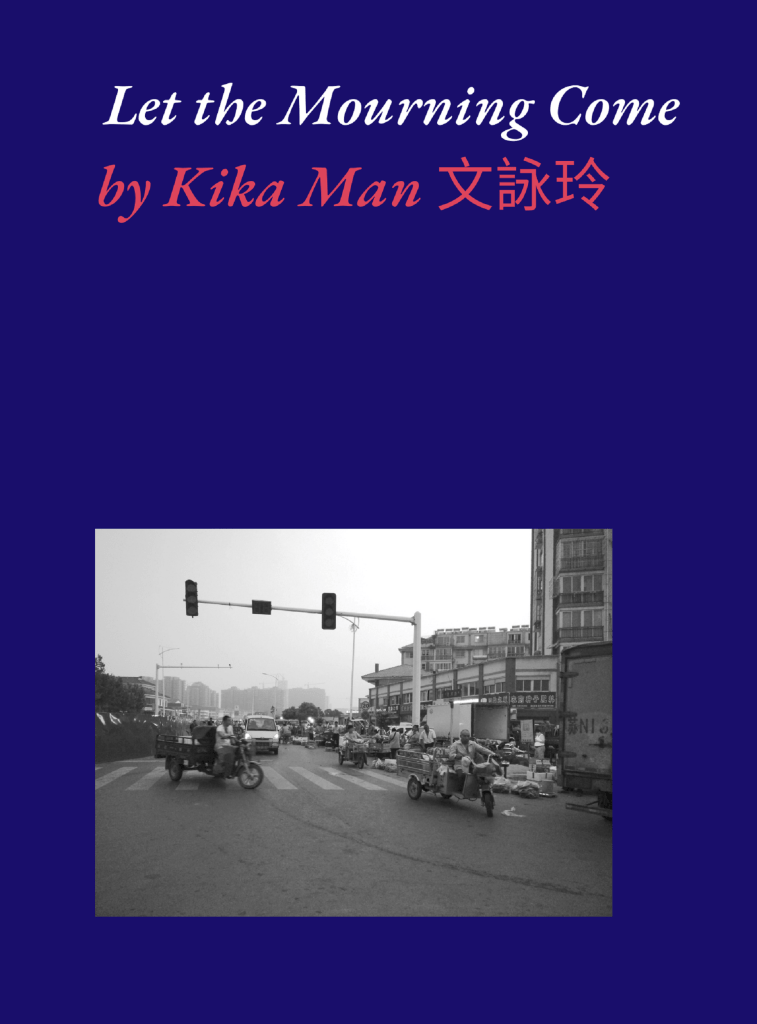
Let the Mourning Come by Kika Man

Photo by Kika Man

We recently held a Book Launch for Let the Mourning Come, the debut chapbook for prolific poet Kika Man. I must tell you that this book affected me. It is the kind of book you want to read over and again to truly digest the contents and feel all the feelings. Following is the Book Launch video and I encourage you to take this content in and digest the beautiful words expressed for Kika and this book, a capture of the heart.

Available on Lulu and via Kika Man, as well as selected book retailers.

ProlificPulse.com Kika Man’s Page

Short Fiction

Hope in the Desert

selective color photography of pine leaf
Photo by Char on Pexels.com

He moved to Needles, searching his soul, pining for his lost woman, she had left him right before Christmas eve.

Needless to say, his heart was broken, and he pondered the true meaning of life.

There was a sound in the distance, gaining volume as the sound of huffing and bells rang near.

Looking to the sky, noticing golden blades, shining brightly and hooves of tiny antlered animals, he was amazed.

Then the sounds of “Ho, ho, ho.” rang in his ears.

Gazing at the cactus and watching in amazement as the sleigh swooped down to land, he was once again revived to memories of his childhood, when life felt innocent and hope sprang in the daylight, and at this thought the smell of the pine trees overcame his senses and he was once again renewed to the meaning of hope.

This is in response to the Six Sentence Story prompt: Pine. Won’t you join in?

poetry, Short Fiction

Don’t Take My Legend From Me

photo-1527775507012-525d78a7e64f.jpg Photo by Mitchell Griest on Unsplash

An Acrostic

Letting go of all future concerns, it was difficult for Edward.

Edward had a heritage of hard-working family who instilled a work ethic.

Gently, Elaine helped Edward to his favorite resting chair so he could enjoy the sunbeams.

Even with plenty of love in place, supporting his every need, Edward felt sad.

Needing the help of others, Edward felt ashamed.

Determined to be the legend who wins, Edward set forth a plan.

…..

There you go! That’s my Six Sentence Story for this week. Thanks to Denise of Girlie on the Edge for faithfully providing these prompts and cheering us on. Won’t you join? Join us here