Announcements, Book Announcements, book launch, books, poetry, Poets & Events

William Doreski on “Orpheus My Orpheus,” Myth, and a Life Devoted to Verse

When New Hampshire poet William Doreski sat down with Lisa Tomey-Zonneveld of Prolific Pulse Press to talk about his new collection, Orpheus My Orpheus, the conversation ranged from a stubborn high school argument about E.E. Cummings to an early morning writing routine, and from Robert Lowell to a poem about RadioShack laptops that write their own deranged love poetry. It’s a wide-ranging, generous conversation — and it offers a rare window into how a poet’s voice gets built over a lifetime.

A poet almost by accident

Doreski’s origin story starts with resistance, not inspiration. As a high schooler in Connecticut, he was assigned some E.E. Cummings poems by a teacher barely older than his students — and he wasn’t impressed. “This doesn’t seem like poetry to me,” he told his teacher. “Anybody could write this stuff.” His teacher’s response became a turning point: go home and try it yourself.

“I spent several frustrating hours,” Doreski recalls, “learning what Mr. Cummings was doing was held a lot better than I could do.” Cummings never became a favorite, but the exercise cracked something open. From there, Doreski found his way to Wallace Stevens — drawn in partly because Stevens was, like him, a Connecticut poet — and then to Hart Crane, whose Collected Poems was handed to him by a working poet he met in a Springfield, Massachusetts bookstore. Reading about Crane’s death by suicide at 32 was, in Doreski’s words, horrifying — but Crane became an essential influence all the same. Rounding out his early education was Allen Tate, whose Pulitzer- and National Book Award–winning debut left Doreski impressed by a voice he found “very hard to imitate” — a lesson that would shape his own search for a distinctive style.

A career, and a well-timed exit

Doreski went on to teach for 34 years at Keene State College in New Hampshire, with a decade before that as an adjunct at several Boston-area universities, including Boston University, where he studied under the influential critic Helen Vendler. He’s candid about why he chose to retire when he did, at 70: “There comes a point where you may know a lot more than the students, but… their culture has become so different, so far from mine, that I’m really not the right person to be teaching them anymore.” He’d seen colleagues stay too long and become, in his words, “objects of ridicule among the students” — and he wanted to leave on his own terms.

It turned out to be well-timed. Just a few years after Doreski retired, Keene State laid off several tenured English faculty amid enrollment declines tied to New Hampshire’s shifting demographics. “I probably, with my seniority and higher salary, probably would have been a ripe candidate,” he notes.

The discipline of retirement

Retirement didn’t slow Doreski’s writing down — if anything, it gave it more shape. He describes waking early in the morning simply to have quiet, uninterrupted time to read and, some mornings, to write. “It gets sets the right kind of pace for your day,” he says. The flexibility of retirement means he can step away from gardening or painting the house to return to a poem started that morning — “a luxury,” as he puts it, “to be able to pick and choose your time.”

Inside the poems

During the conversation, Doreski reads two poems from the new collection. The title poem, “Orpheus My Orpheus,” restages the Greek myth as a piece of avant-garde 1960s-style theater — complete with a fiberglass fish tank stage, a disembodied singing head placed in a cooler by EMTs, maenads in “fright wigs,” and a narrator accepting a Pulitzer for drama before retreating, Eurydice in hand, toward the underworld. Doreski traces some of its spirit back to a book he’d been reading about the New York avant-garde scene of the 1960s — happenings, underground film, and the kind of theatrical strangeness he was, in his words, “too young to really fully appreciate” at the time.

The second poem he reads, “Computers Go Crazy,” imagines RadioShack display computers spontaneously generating and publishing deranged lyric fragments — and refusing to stop even after being unplugged and smashed on the floor. It’s a playful premise, but it illustrates something Doreski returns to throughout the interview: his belief in verse as a shaped thing, distinct from “broken prose.” Years ago, he says, he stopped writing free verse entirely, worried he was just writing sentences with line breaks. Returning to Wallace Stevens’s example — deceptively simple, but unmistakably verse — helped him find his way back to line, rhythm, and form as meaning-making tools in their own right.

On reading poems aloud — and the people who shaped him

Doreski credits Helen Vendler with instilling in him the practice of reading poems aloud, even alone — a habit he says has taught him more about a poem than silent reading ever could. “A lot of poetry… does not read aloud very well at all,” he observes, even work published in respected magazines.

The conversation also touches on the poets and friends who shaped him — including Robert Lowell, whom Doreski knew personally but has deliberately never written about, wary of adding to the “gush of memoir” that followed Lowell’s death. Of Helen Vendler, he jokes that her ghost would “tell me off” if he tried. It’s a glimpse of how seriously Doreski takes the boundary between friendship and material — a poem, he says, quoting T.S. Eliot’s idea of the “objective correlative,” has to become its own thing, not a sermon or a memoir.

A candid note on where poetry stands today

Later in the conversation, Doreski reflects frankly on the state of the literary world — the shrinking audience for poetry, bookstores where used poetry collections outsell new ones simply because they’re cheaper, and a broader cultural shift away from reading. It’s a wistful, clear-eyed assessment from someone who has spent a lifetime inside that world, delivered without bitterness — just honest observation, and an unmistakable commitment to keep writing anyway.

About the book

Orpheus My Orpheus is a slim, restless collection of seventeen poems in which art is never mere decoration — it’s a disruptive force that exposes the hidden dimensions of experience, and poetry itself becomes a form of survival even when the body fails. Written in fast-swerving accentual verse, the collection moves from the domestic to the mythic to the grotesque with startling emotional agility, echoing poets like Mark Strand and Stephen Dobyns.

Order Orpheus My Orpheus and learn more about William Doreski here 🎥 Watch the full interview on YouTube.
Announcements, Book Announcements, books, Children's Books, illustrator, interview, kindness, Poets & Events, writing

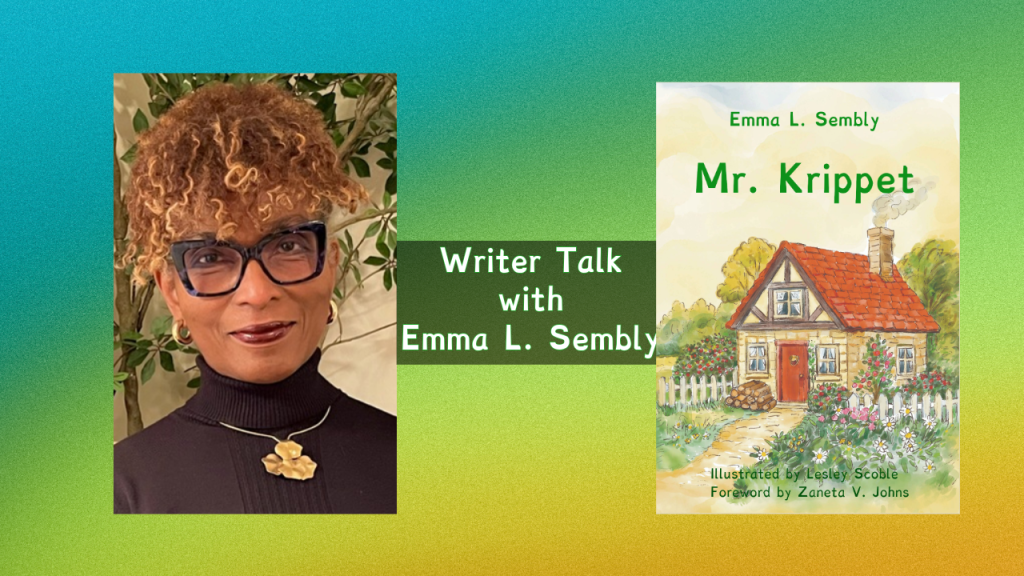
Writer Talk with Emma L. Sembly – With her Debut Children’s Book “Mr. Krippet”

From Classroom to Children’s Books — An Interview with Emma L. Sembly

For Emma L. Sembly, every story teaches a lesson, and every life is a story.

Emma is a life-long storyteller and lover of stories. As a child, Emma loved telling fantastical tales, starting with a captive audience consisting of her little sister. After she grew up, Emma continued to create stories that her students loved.

With a bachelor’s degree in psychology from Elmhurst College and a master’s degree in reading from Johns Hopkins University, Emma set out on a thirty-seven-year journey as an educator in the Baltimore City Public School System, where she taught children with different abilities on both elementary and high school levels. During that time, she also created stories for her own daughter and niece, then for her grandchildren and great nieces.

Now, Emma creates stories for children of all ages, especially the young at heart.

Emma also has a podcast, Just Folks: Conversations with Emma, in which she provides a platform where regular, everyday humans can share their own stories with listeners of all persuasions. Life lessons shared.

Drawing and writing poetry are among Emma’s favorite things to do. She also enjoys planting red flowers around her home. And when she’s not chatting it up with her kitty of thirteen years, she’s having a blast with both of her Favorite Number One Grandchildren.

“What I have learned as a writer and podcaster, is that our stories, our bedtime stories, our fables, are the gateways to life’s lessons,” Emma says, “and we all have a story to tell.”

https://emmaleesembly.com/
https://www.prolificpulse.com/emmalsembly

In a meadow full of chirping, squawking, climbing, crawling creatures, Mr. Krippet is the most industrious, well-mannered, and well-respected of them all. Known for his magnificent tenor voice and his skill as a shoemaker for the ants, he’s spent all summer singing, working, and making friends. But winter is coming — and Mr. Krippet has nowhere to live and nothing stored away to eat. Will he make the baker’s acquaintance — and earn a place by the fire — before the first snow falls? Written by veteran educator Emma L. Sembly and illustrated by Lesley Scoble, with a foreword by celebrated poet Zaneta V. Johns, Mr. Krippet is a gentle, richly imagined tale about dedication, preparation, and friendship. It’s a natural companion to classic fable-and-fall stories about industriousness and community — perfect for bedtime, classroom read-alouds, and quiet corner adventures. Author: Emma L. Sembly – Illustrator: Lesley Scoble – Foreword: Zaneta V. Johns

Get the book: https://www.prolificpulse.com/emmalsembly #MrKrippet #ChildrensBooks #ReadAloud #BedtimeStory #KidsBooks

book launch, interview, poetry

“After Every Storm, the Sun Always Rises” – Poet Irma Kurti on Grief, Nostalgia, and Writing Through Censorship

There’s a particular kind of writer who treats poetry not as performance but as practice as someone who shows up to the page the way others show up to a job, notebook in hand, revising the same lines across years until they finally ring true. Irma Kurti is that kind of writer.

In this interview, the Albanian-born poet talks about the childhood literary circle that started it all, the discipline behind her editing process, the authors who became her “secret world” under a censorship regime, and the simple, hard-won advice she has for anyone facing rejection: “don’t stop.”

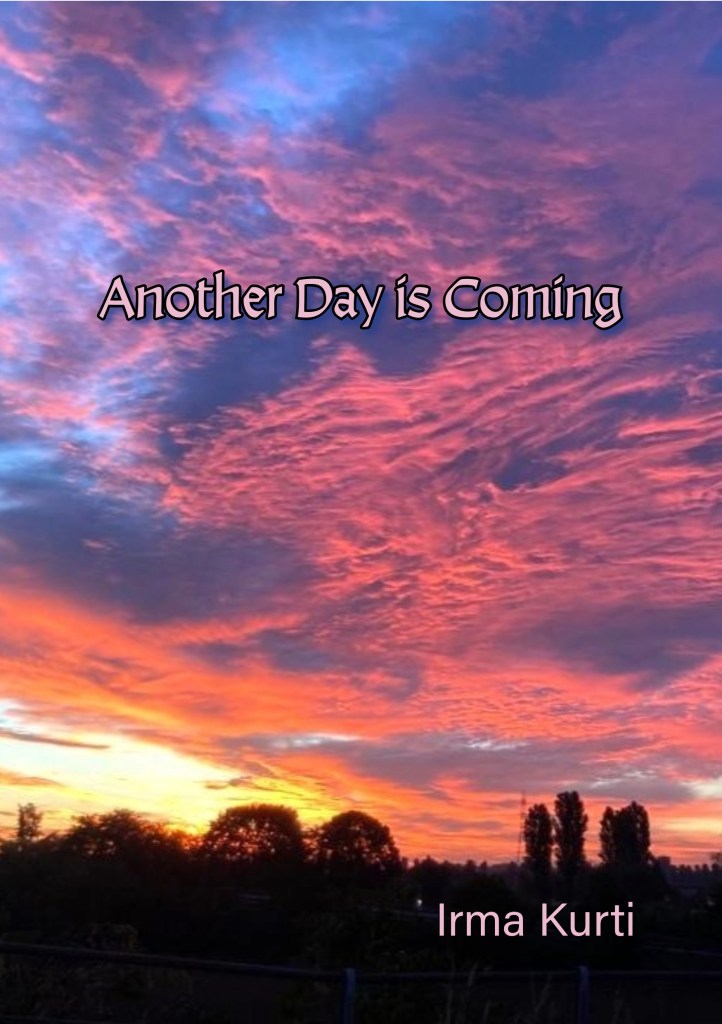
Her new collection, Another Day is Coming, is ready for pre-order, to be released July 30, 2026, from Prolific Pulse Press LLC.

A Childhood in the Pioneers’ House

Kurti’s writing life didn’t start with an epiphany. It started with a room.

1. Introduction and Background:

   – Please tell us a bit about yourself and your journey as a writer.

   – What inspired you to start writing?

   – How would you describe your writing style and the themes you often explore in your work?

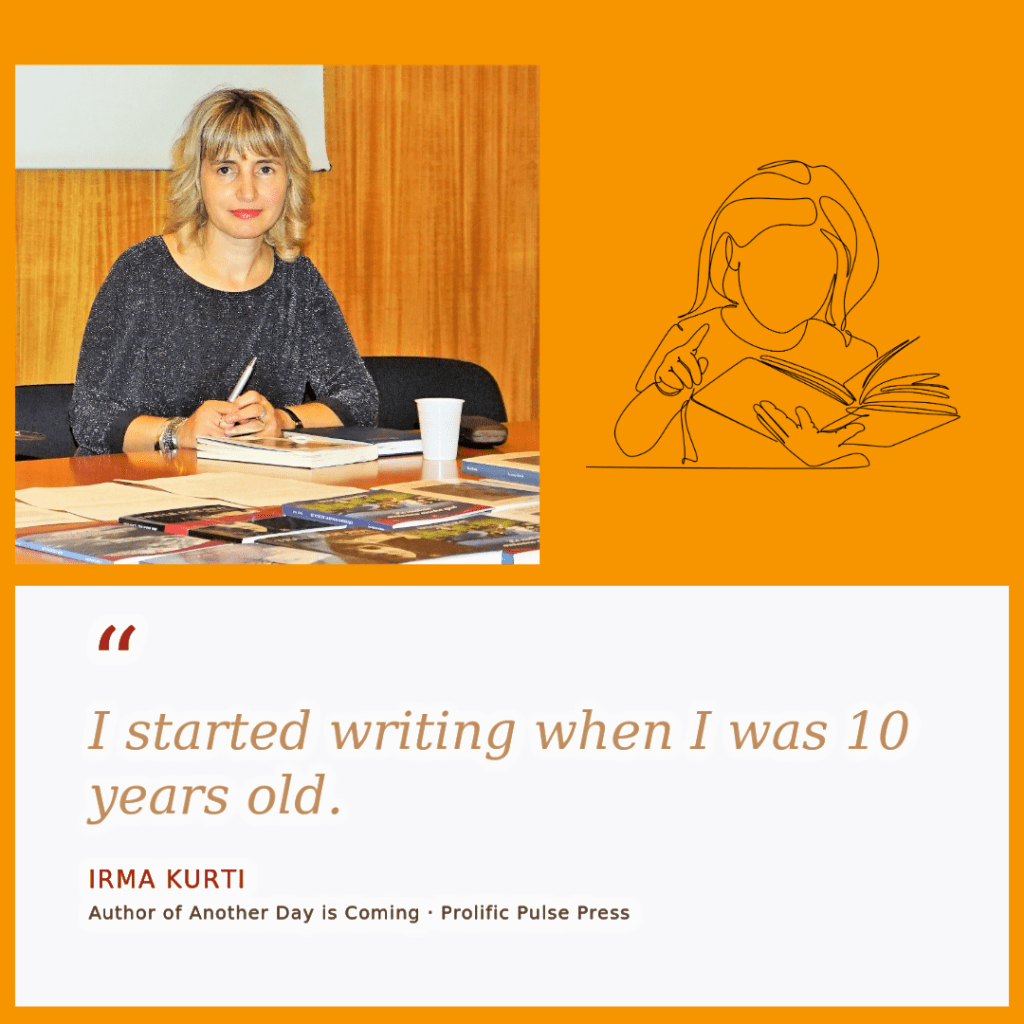
I started writing when I was 10 years old. My parents, noticing my passion for words, enrolled me in the literary circle at the Pioneers’ House in Elbasan, Albania, the city where I grew up. I remember that slightly chilly, dimly lit room as clearly as if it were today—where I went twice a week to share my passion for writing. My style wasn’t much different from that of my peers. I wrote poems dedicated to my teacher, to school, and to the joys of childhood—poems that were sincere but still bore the stamp of the communist system’s propaganda.

My writing style today is characterized by simplicity and transparency. Some of the themes I explore include nostalgia, love, affection for my parents, memories, time, and the fragility of the human condition.

Inside Another Day is Coming

Ask Kurti what the new collection is about, and she doesn’t reach for a marketing pitch. She reaches for the truth:

2. Your Books:

   – Congratulations on the publication of your poetry book! Please give us an overview of what readers can expect from Another Day is Coming.

   – What was the inspiration behind this book?

   – Were there any specific challenges or highlights you encountered during the writing process?

A new collection of poems is another source of joy and an attempt to forge a connection with the reader. This book is a diary of my feelings and emotions during the period in which it was written. Several poems are dedicated to the home where I grew up, which represents not only a nest of memories, affection, and nostalgia for a time that seems long gone, but also my homeland itself.

One of the most significant challenges I faced in writing this book was avoiding the repetition of concepts and ideas I had already explored. I devoted time to researching and exploring new perspectives and angles in addressing the various themes.

The Discipline Behind the Poems

When it comes to the writing process, ask Kurti, and you get a routine.

3. Creative Process:

   – Could you walk us through your creative process when writing?

   – What rituals or routines help you get into the right mindset for writing?

   – How do you know when a book is “finished”?

My day begins with writing. I always carry a notebook with me in which I write down verses and ideas. Once I’ve accumulated enough to form a collection, I type them up on the computer. Then I begin editing them to give them their final form. I don’t rely on inspiration; instead, I edit, delete, and add to drafts and verses that were written even years earlier. Usually, I go over all the poems three or four times. It’s not easy to discern the line between a manuscript and a finished work. When the poems don’t satisfy me or don’t stir any emotions in me, I keep revising them. The more time passes, the more demanding I become about what I write.

What She Wants Readers to Feel

At the heart of Kurti’s work is a simple wish: to offer readers something steady in an unsteady world.

4. Themes and Messages:

   – What particular messages or emotions do you believe that readers take away from your books?

Through my poetry, I wish to celebrate the values I consider the foundation of a fulfilling life: peace, love, and family harmony. By exploring my deep affection for my parents and the power of kindness, I want to offer readers an oasis of tranquility. In life, nothing can be taken for granted—least of all family and romantic relationships—as we are caught up in a daily routine that often blurs our vision and doesn’t let us time to stop and reflect.

Poetry as a Secret World


Kurti’s literary influences read like a quiet act of resistance. Growing up under Albania’s dictatorial regime meant living with “fierce censorship, which reduced literature to a mere tool of propaganda.” And yet, from a young age, she found nourishment in the work of Alexander Pushkin, Vladimir Mayakovsky, Adam Mickiewicz, and Pablo Neruda.

5. Influences and Inspirations

   – Who are some writers who have influenced your work?

Living under the dictatorial regime in Albania meant enduring fierce censorship, which reduced literature to a mere tool of propaganda. Ever since I was very young, however, I have been nourished by the poetry of Alexander Pushkin, Vladimir Mayakovsky, Adam Mickiewicz, and Pablo Neruda. These authors represented my secret world, an intimate refuge whose verses I still remember today.

On Publishing and Not Giving Up

Kurti describes the editorial process behind Another Day is Coming as “a deliberate and deeply rewarding journey,” crediting her editor, Lisa Tomey-Zonneveld, and calling Prolific Pulse Press “an exceptional discovery” after years of working with other publishers.

Her advice to writers hoping to get published is refreshingly unglamorous: slow down.

To reach readers directly, Kurti leans on social media and sharing excerpts from her collections and sending work to bloggers for review. It’s a strategy she describes candidly as an ongoing challenge: building “authentic connections with readers” in a digital age that doesn’t always reward authenticity.

6. Publishing Journey:

   – Can you share a bit about your experience with the publishing process for this book?

   – What advice would you give to others who are looking to publish their own work?

   – How do you approach marketing and promoting your poetry book to reach a wider audience?

The editorial process for this book was a deliberate and deeply rewarding journey. I worked closely with my editor, Lisa Tomey-Zonneveld, and I found in her someone who works with passion and dedication. Having collaborated with many publishers, I consider Prolific Pulse Press an exceptional discovery.

My advice to anyone hoping to get published is not to rush and to work carefully on the text to refine their style. Sooner or later, a work of merit will find a publisher and a way to reach readers.

To promote my book and reach a wider audience, I use social media. I share excerpts from my collection and, when I can, send them also to bloggers for reviews. These strategies allow me to build authentic connections with readers—a goal that’s not without challenges in this digital age.

Future Projects

Kurti isn’t slowing down. She’s currently working on a new book while continuing her long-running work translating international authors for online newspapers and magazines.

7. Are there any upcoming projects or plans you can share with us?

I’m currently working on a new book and, as always, translating works by international authors, which I publish in online newspapers and magazines. At the same time, I’m trying to carve out some time for myself in this holiday season: I’m enjoying moments of calm, outdoor walks, a little rest, and a few days at the beach.

Closing Thoughts

Asked what she wants readers to take away not just from this book, but from her body of work — Kurti returns to the people who’ve shaped her career from the beginning.

   – Is there anything else you’d like readers to know about you or your writing?

   – Where can listeners find your books and connect with you online?

   – Any final words of encouragement or wisdom for aspiring writers and others listening to this podcast?

Ordinary people have always been the lifeblood of my literary journey. Their encouragement and affection have been my support from the very beginning and my greatest source of inspiration.

For those who’d like to discover my work, my books are available on major online platforms. I also invite you to follow me on Facebook and Instagram, where I share updates on my projects and interact with readers.

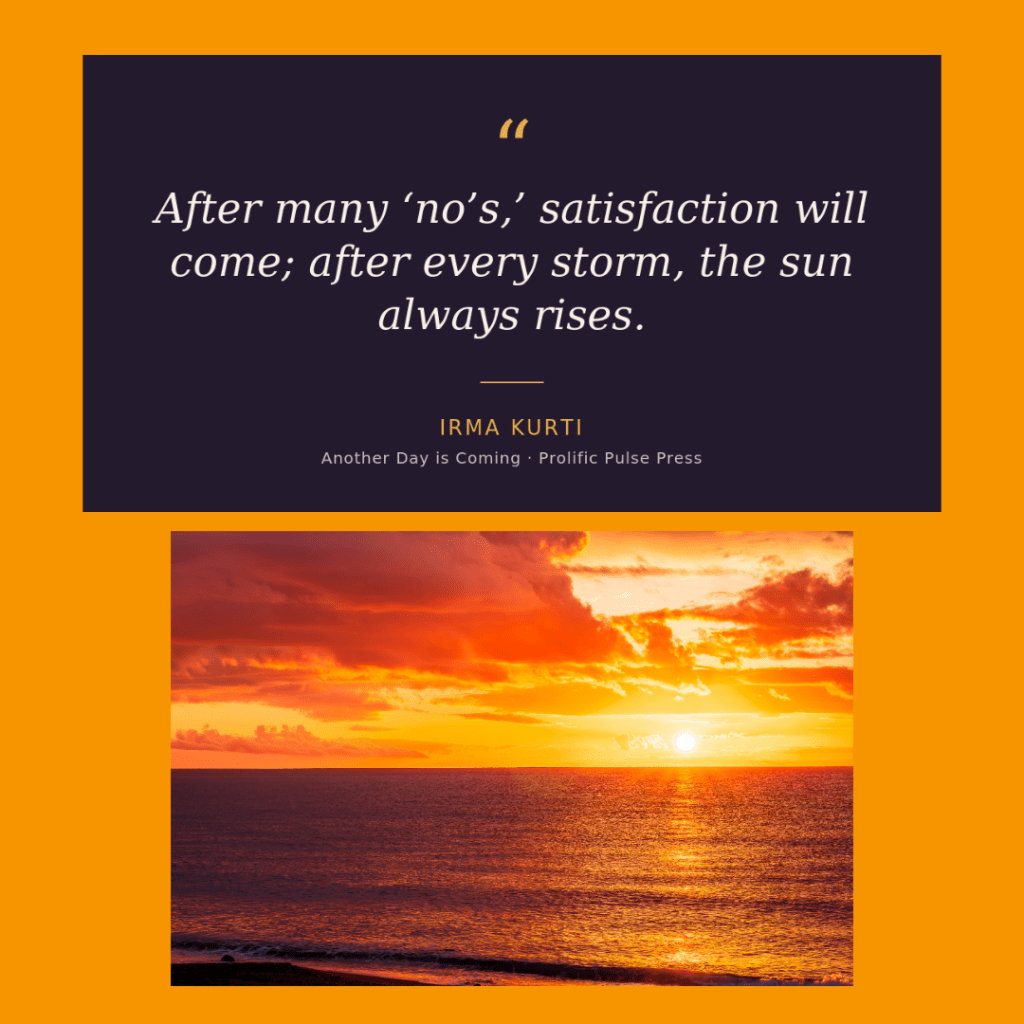
To aspiring writers, I’d like to offer a simple piece of advice: don’t let closed doors or rejections from publishers discourage you. Believe in yourselves and in the value of your words. Only then will you be able to convey the purity of your emotions and the beauty of your art. After many “no’s,” satisfaction will come; after every storm, the sun always rises.

Another Day is Coming by Irma Kurti is available now for pre-order from Prolific Pulse Press LLC and major online retailers. Follow Irma on Facebook and Instagram for updates on her work.


Announcements, Book Announcements, book launch, Book Reviews, Celebrations, novella, Short Fiction, short story

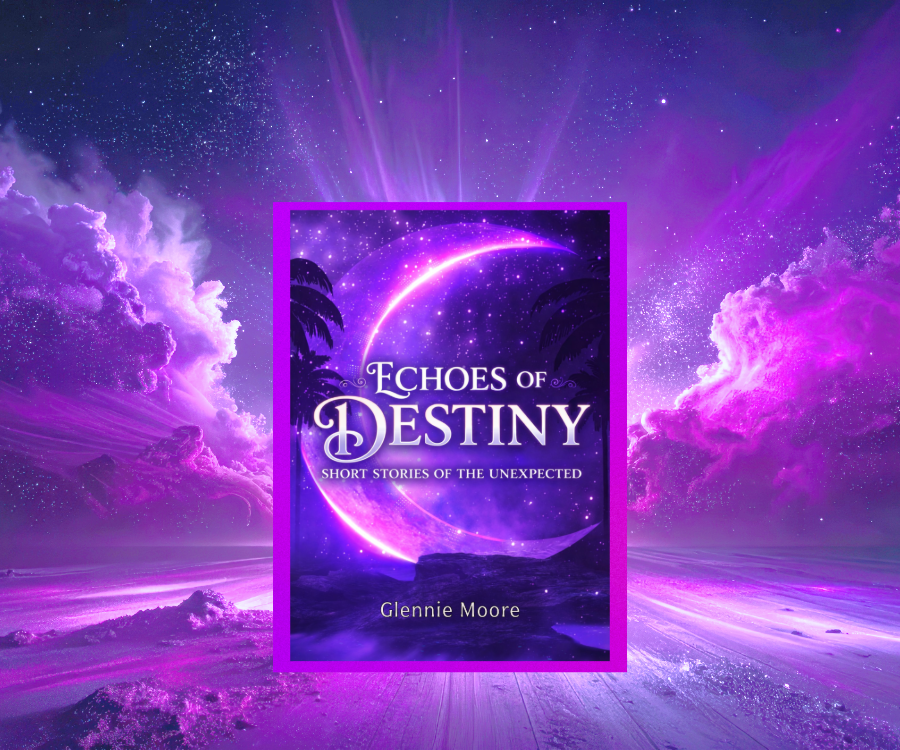
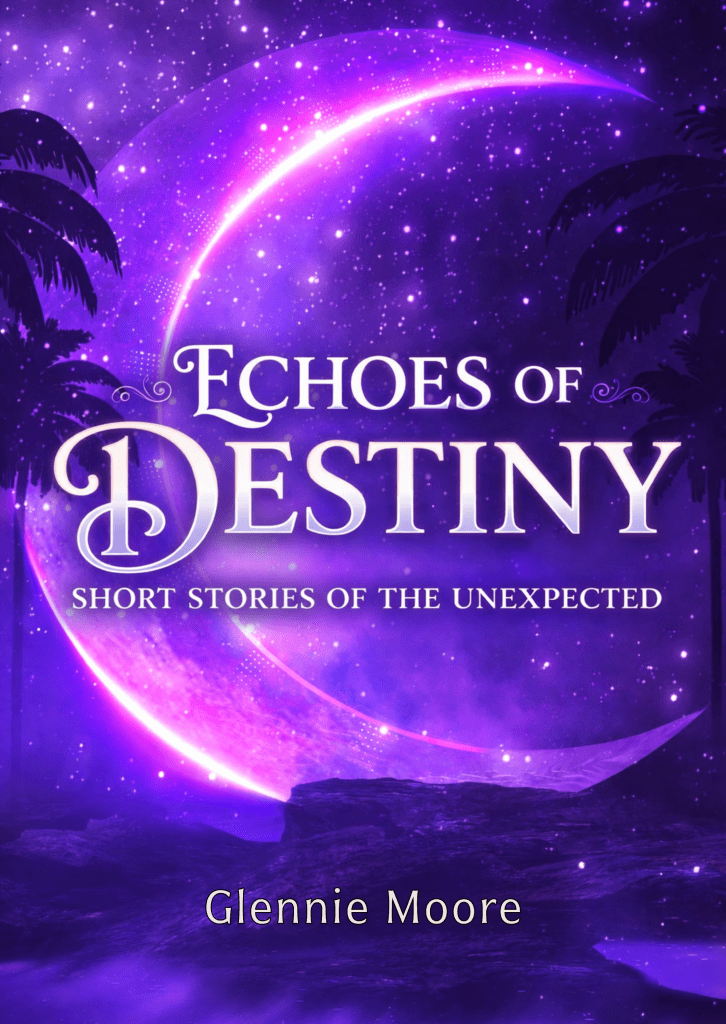
Echoes of Destiny – Short Stories of the Unexpected by Glennie Moore is Now Released!

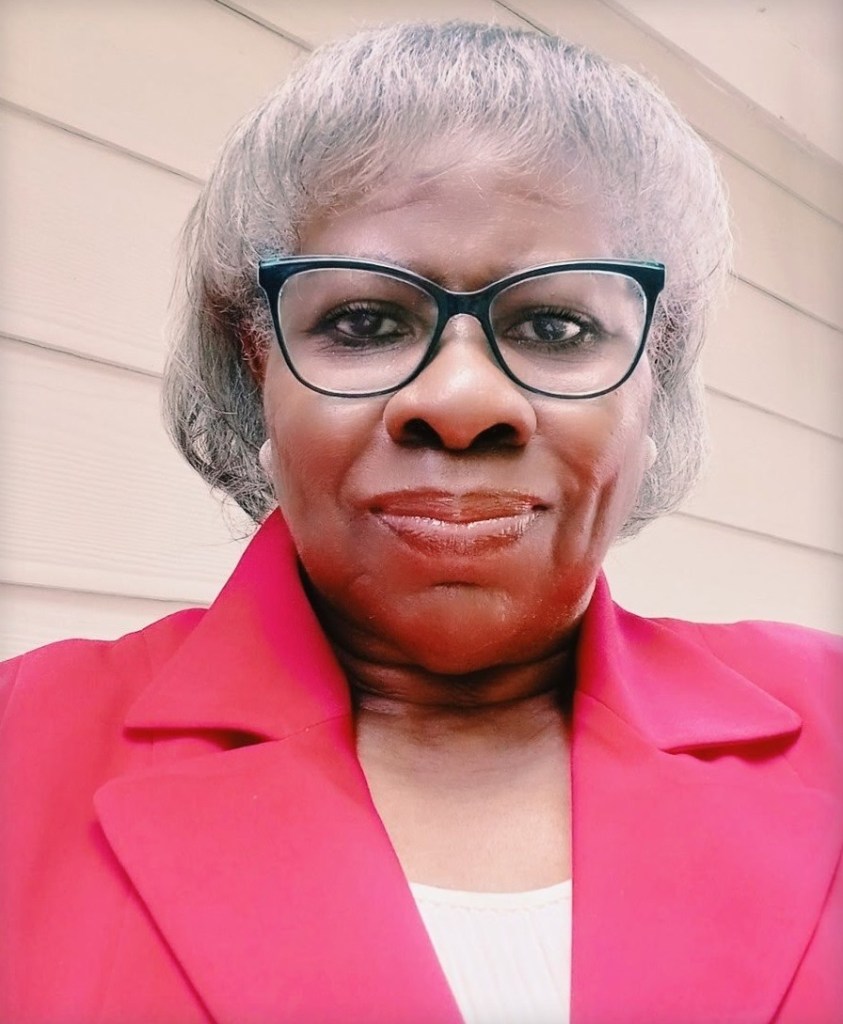
About the Author

Glennie Moore is a semi-retired substitute teacher who enjoys writing Christian fiction, weaving elements of the gospel in every story. She holds a B.A. in English from North Carolina State University and a Master of Divinity in Biblical Counseling from Southeastern Baptist Theological Seminary. She enjoys teaching Sunday School and Bible study as well as family gatherings, photography and observing nature.

About the Book

In Echoes of Destiny – Short Stories of the Unexpected, nothing is as it appears and everything changes once destiny arrives – unannounced. This collection of short stories and a novella explore what happens when life takes an irreversible turn and it’s the stranger we meet, the enemy we fear or the unseen spirits who guide us toward our destiny. Journey through time where the past collides with the present and the ordinary with the extraordinary.​

​In Inside the Flame, a woman escaping an abusive marriage seeks refuge in a cabin by the lake until an intruder on the property shatters her peace. But the stranger she holds at gunpoint rekindles a love she thought was lost forever.

​In Unlikely Allies, two feuding coworkers are stranded on a desolate country road only to be “rescued” by a dangerous hate group. Can they put aside their grievances and trust one another in what becomes a literal fight for their lives.

In Picture Perfect, travel photographer, Kayla, on assignment in the beautiful Bahamas meets a grieving widower with his young daughter and finds unexpected love. But his heart is lost in the past until a benevolent spirit reveals the love they secretly share – in the perfect picture.

​In The Unquiet Guest, Shoney Harris, owner of a bed and breakfast restored from an old plantation home, is visited by the ghost of an enslaved man seeking justice for a centuries old murder he never committed. Only Shoney can free him from the hidden lies of the past.

​In Echoes of Destiny, the title novella, two infants who miraculously survive a tragic accident capture the townspeople in a cultic devotion and a prophecy declaring them bound by divine intervention. Decades later, their paths unexpectedly cross and they discover the destiny the townspeople spoke over them. Feeling the heavy mantle of expectation placed upon their heads, they must decide if their undeniable connection is one of true love or the lingering echoes of a past that won’t let go.

In this collection, stories of mystery, revelation, love, and the twist of fate, takes us on a journey that proves it is the unexpected that truly defines us.

What Others Have to Say

In Echoes of Destiny by Glennie Moore, strangers become lifelines, enemies become allies, and lives collide in unexpected ways when ordinary people face extraordinary moments. A woman frightened of an abusive marriage finds unexpected comfort beside a lonely lake. Two rivals trapped in a nightmare must depend on each other to survive. Mysterious prophecy binds two souls across decades. Filled with suspense, romance, heartbreak, and hope, this collection will leave readers questioning whether destiny is written or created by the choices we make.

Munmun Samanta author of Yellow Chrysanthemum

Echoes of Destiny by Glennie Moore is aptly named. As you read each story, you recognize a crossing of the future into the present. Each character has a specific purpose of revealing the secrets of the past and showing how they affect the present and the future. Each story shows the supernatural part of life that is out of our control. The collection of short stories and the novella will keep the lover of a love story tuned in.

G. Elaine Sneed – Customer Contact Specialist

These short stories are exceptionally well written, and the way suspense is built is breathtaking. Each story is phenomenal in its own right. Which one was my favorite? Honestly, I don’t know. Every time I finished one, I was convinced it was my favorite… until I read the next. Each story brought something fresh and compelling that made it hard to choose just one. Scripture was woven in perfectly.

What stood out most to me is how these stories highlight the value of relationships. They remind us not to minimize their importance. When relationships begin with strain, they can only get better. And when they begin well, they establish a standard for what greatness in relationships can look like. These stories beautifully echo what Glennie Moore says: “It is the unexpected that truly defines us.” That idea lingers long after the stories end. It causes me to reflect on my own relationships. I found myself asking: What will I do when the unexpected brings me joy? And how will I respond when my relationships bring unexpected sorrow?

Lori Jones Moss – Author of My Heavenly Father’s Eyes: A Relationship-Building Study, Mental Health and Professional Life Coach

BUY THE BOOK

Announcements, art, Book Announcements, Celebrations, essays, photography, poetry

Unhoused – Yearning for Home is Now Available!

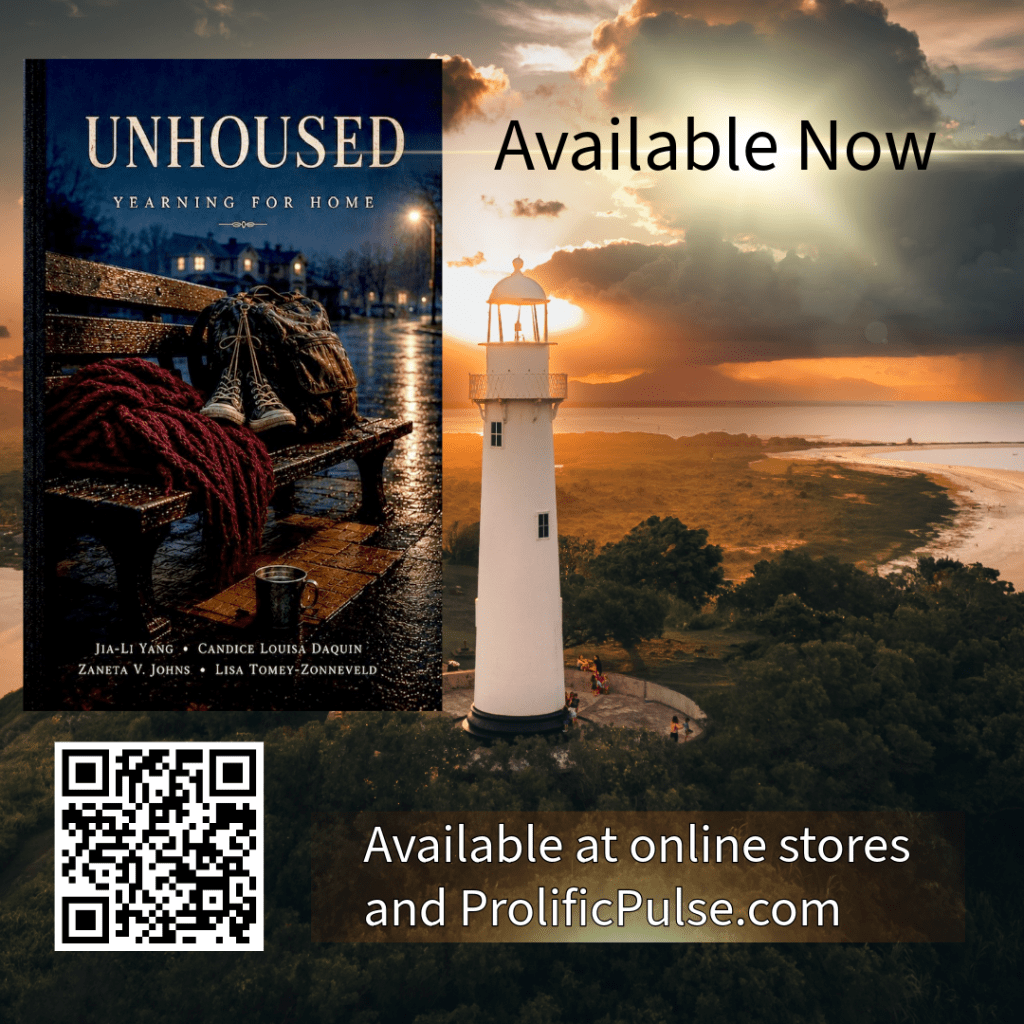
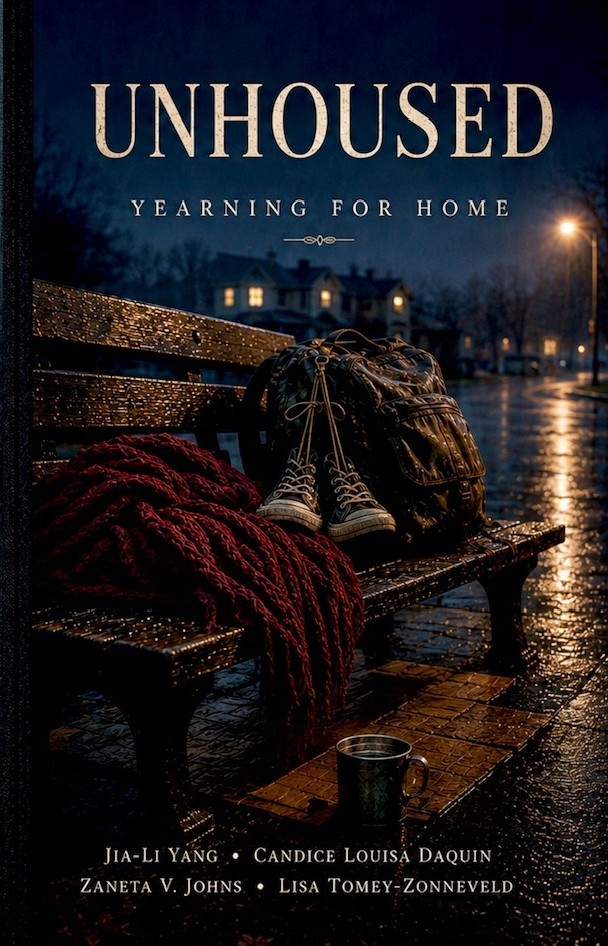
Announcement about Unhoused – Yearning for Home Anthology of Poetry, Art, Photography, and Essays. Lighthouse background with book cover forefront with art featuring a bench, backpack, shoes under a beacon of light on a rainy night. Homes with lights on are in the background.

About Unhoused – Yearning for Home

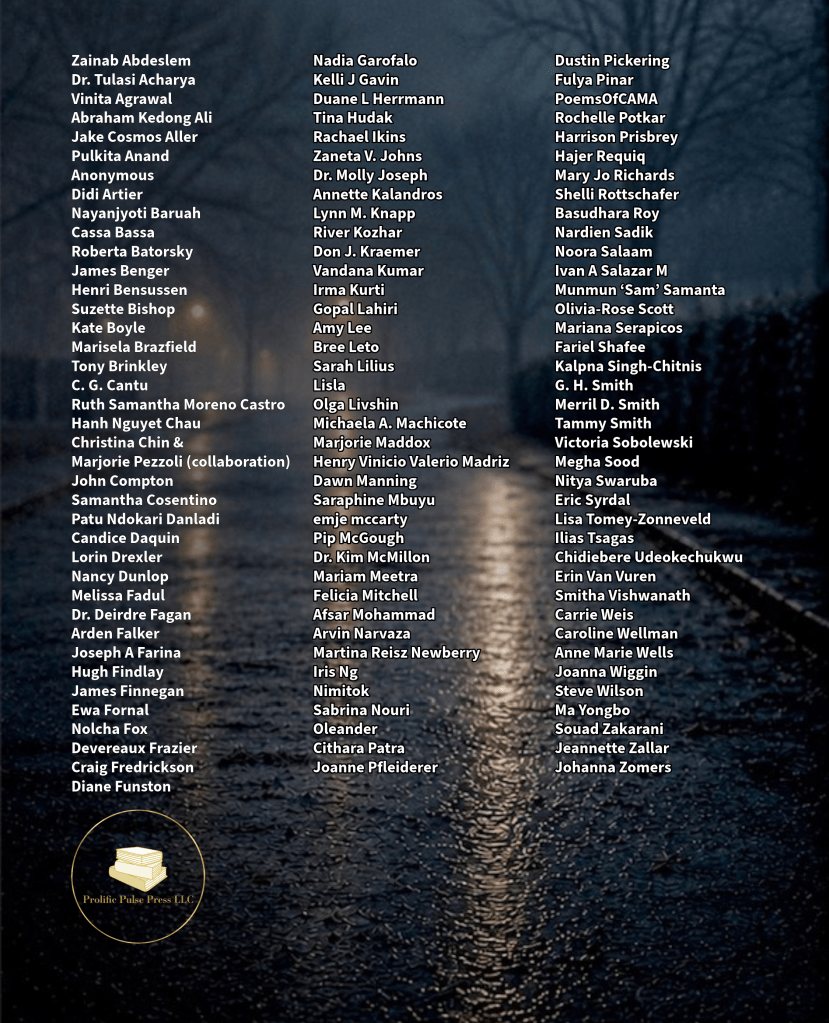
UNHOUSED – Yearning for Home is a powerful and deeply human anthology exploring the realities of homelessness, displacement, migration, statelessness, and the universal search for belonging. Through evocative poetry, poignant flash writing, true stories, and compelling artwork, this collection gives voice to those who have experienced the loss of home—whether through war, poverty, immigration struggles, discrimination, economic hardship, or social instability—and to those who bear compassionate witness to these experiences.

Far beyond politics and headlines, UNHOUSED – Yearning for Home focuses on the emotional truths behind displacement: the grief of losing safety, the ache of isolation, the resilience required to survive, and the enduring hope of finding connection, identity, and peace. The anthology shines a light on the invisible struggles faced by unhoused and marginalized individuals around the world while honoring their courage, humanity, and determination to endure.

Editors Jia-Li Yang and Candice Louisa Daquin are both immigrants with extensive experience working in homelessness and crisis support services. It was their inspiration that drew the interest of Prolific Pulse Press LLC. This collection continues the press’s tradition of publishing meaningful social justice anthologies that amplify underrepresented voices. All four editors offer a glimpse of their experiences in the foreword.

Raw, compassionate, heartbreaking, and hopeful, UNHOUSED – Yearning for Home invites readers to look beyond stereotypes and statistics to witness the deeply personal realities of what it means to search for safety, stability, and a place to call home.

A portion of the UNHOUSED – Yearning for Home proceeds will benefit The Women’s Center of Wake County, Raleigh, North Carolina.

BUY UNHOUSED