Announcements, Book Announcements, book launch, books, poetry, Poets & Events

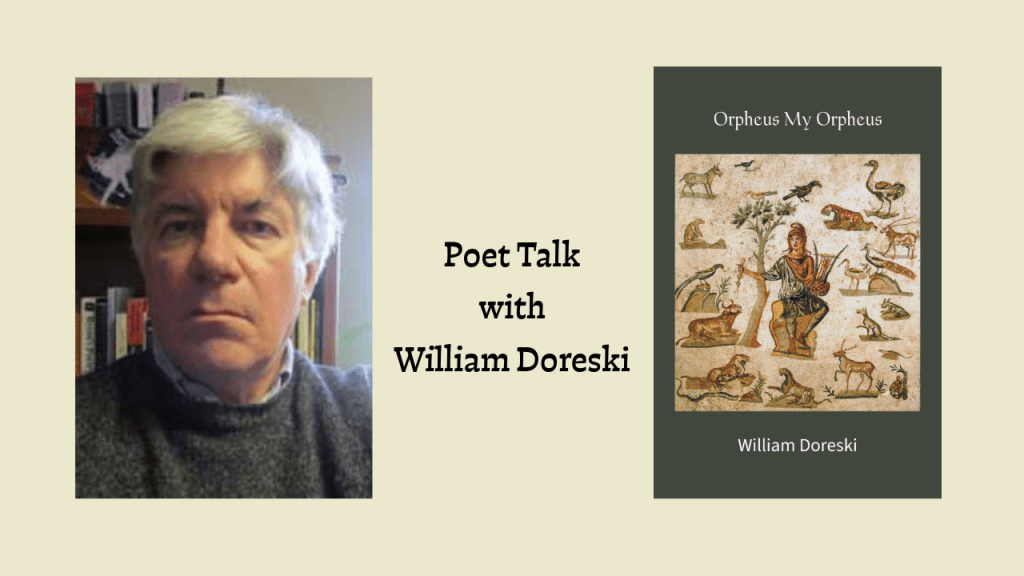
William Doreski on “Orpheus My Orpheus,” Myth, and a Life Devoted to Verse

When New Hampshire poet William Doreski sat down with Lisa Tomey-Zonneveld of Prolific Pulse Press to talk about his new collection, Orpheus My Orpheus, the conversation ranged from a stubborn high school argument about E.E. Cummings to an early morning writing routine, and from Robert Lowell to a poem about RadioShack laptops that write their own deranged love poetry. It’s a wide-ranging, generous conversation — and it offers a rare window into how a poet’s voice gets built over a lifetime.

A poet almost by accident

Doreski’s origin story starts with resistance, not inspiration. As a high schooler in Connecticut, he was assigned some E.E. Cummings poems by a teacher barely older than his students — and he wasn’t impressed. “This doesn’t seem like poetry to me,” he told his teacher. “Anybody could write this stuff.” His teacher’s response became a turning point: go home and try it yourself.

“I spent several frustrating hours,” Doreski recalls, “learning what Mr. Cummings was doing was held a lot better than I could do.” Cummings never became a favorite, but the exercise cracked something open. From there, Doreski found his way to Wallace Stevens — drawn in partly because Stevens was, like him, a Connecticut poet — and then to Hart Crane, whose Collected Poems was handed to him by a working poet he met in a Springfield, Massachusetts bookstore. Reading about Crane’s death by suicide at 32 was, in Doreski’s words, horrifying — but Crane became an essential influence all the same. Rounding out his early education was Allen Tate, whose Pulitzer- and National Book Award–winning debut left Doreski impressed by a voice he found “very hard to imitate” — a lesson that would shape his own search for a distinctive style.

A career, and a well-timed exit

Doreski went on to teach for 34 years at Keene State College in New Hampshire, with a decade before that as an adjunct at several Boston-area universities, including Boston University, where he studied under the influential critic Helen Vendler. He’s candid about why he chose to retire when he did, at 70: “There comes a point where you may know a lot more than the students, but… their culture has become so different, so far from mine, that I’m really not the right person to be teaching them anymore.” He’d seen colleagues stay too long and become, in his words, “objects of ridicule among the students” — and he wanted to leave on his own terms.

It turned out to be well-timed. Just a few years after Doreski retired, Keene State laid off several tenured English faculty amid enrollment declines tied to New Hampshire’s shifting demographics. “I probably, with my seniority and higher salary, probably would have been a ripe candidate,” he notes.

The discipline of retirement

Retirement didn’t slow Doreski’s writing down — if anything, it gave it more shape. He describes waking early in the morning simply to have quiet, uninterrupted time to read and, some mornings, to write. “It gets sets the right kind of pace for your day,” he says. The flexibility of retirement means he can step away from gardening or painting the house to return to a poem started that morning — “a luxury,” as he puts it, “to be able to pick and choose your time.”

Inside the poems

During the conversation, Doreski reads two poems from the new collection. The title poem, “Orpheus My Orpheus,” restages the Greek myth as a piece of avant-garde 1960s-style theater — complete with a fiberglass fish tank stage, a disembodied singing head placed in a cooler by EMTs, maenads in “fright wigs,” and a narrator accepting a Pulitzer for drama before retreating, Eurydice in hand, toward the underworld. Doreski traces some of its spirit back to a book he’d been reading about the New York avant-garde scene of the 1960s — happenings, underground film, and the kind of theatrical strangeness he was, in his words, “too young to really fully appreciate” at the time.

The second poem he reads, “Computers Go Crazy,” imagines RadioShack display computers spontaneously generating and publishing deranged lyric fragments — and refusing to stop even after being unplugged and smashed on the floor. It’s a playful premise, but it illustrates something Doreski returns to throughout the interview: his belief in verse as a shaped thing, distinct from “broken prose.” Years ago, he says, he stopped writing free verse entirely, worried he was just writing sentences with line breaks. Returning to Wallace Stevens’s example — deceptively simple, but unmistakably verse — helped him find his way back to line, rhythm, and form as meaning-making tools in their own right.

On reading poems aloud — and the people who shaped him

Doreski credits Helen Vendler with instilling in him the practice of reading poems aloud, even alone — a habit he says has taught him more about a poem than silent reading ever could. “A lot of poetry… does not read aloud very well at all,” he observes, even work published in respected magazines.

The conversation also touches on the poets and friends who shaped him — including Robert Lowell, whom Doreski knew personally but has deliberately never written about, wary of adding to the “gush of memoir” that followed Lowell’s death. Of Helen Vendler, he jokes that her ghost would “tell me off” if he tried. It’s a glimpse of how seriously Doreski takes the boundary between friendship and material — a poem, he says, quoting T.S. Eliot’s idea of the “objective correlative,” has to become its own thing, not a sermon or a memoir.

A candid note on where poetry stands today

Later in the conversation, Doreski reflects frankly on the state of the literary world — the shrinking audience for poetry, bookstores where used poetry collections outsell new ones simply because they’re cheaper, and a broader cultural shift away from reading. It’s a wistful, clear-eyed assessment from someone who has spent a lifetime inside that world, delivered without bitterness — just honest observation, and an unmistakable commitment to keep writing anyway.

About the book

Orpheus My Orpheus is a slim, restless collection of seventeen poems in which art is never mere decoration — it’s a disruptive force that exposes the hidden dimensions of experience, and poetry itself becomes a form of survival even when the body fails. Written in fast-swerving accentual verse, the collection moves from the domestic to the mythic to the grotesque with startling emotional agility, echoing poets like Mark Strand and Stephen Dobyns.

Order Orpheus My Orpheus and learn more about William Doreski here 🎥 Watch the full interview on YouTube.
Announcements, Book Announcements, books, Children's Books, illustrator, interview, kindness, Poets & Events, writing

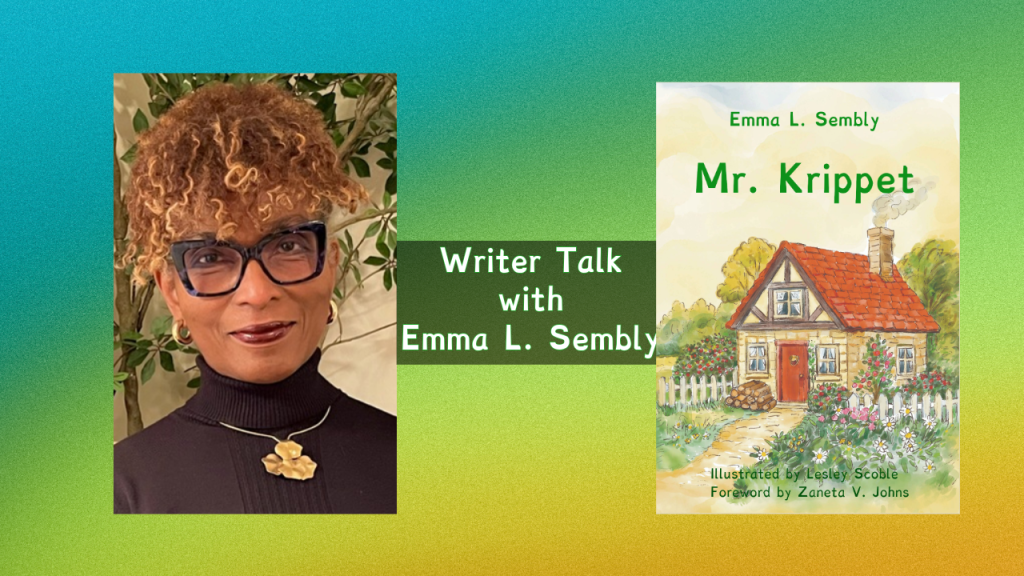
Writer Talk with Emma L. Sembly – With her Debut Children’s Book “Mr. Krippet”

From Classroom to Children’s Books — An Interview with Emma L. Sembly

For Emma L. Sembly, every story teaches a lesson, and every life is a story.

Emma is a life-long storyteller and lover of stories. As a child, Emma loved telling fantastical tales, starting with a captive audience consisting of her little sister. After she grew up, Emma continued to create stories that her students loved.

With a bachelor’s degree in psychology from Elmhurst College and a master’s degree in reading from Johns Hopkins University, Emma set out on a thirty-seven-year journey as an educator in the Baltimore City Public School System, where she taught children with different abilities on both elementary and high school levels. During that time, she also created stories for her own daughter and niece, then for her grandchildren and great nieces.

Now, Emma creates stories for children of all ages, especially the young at heart.

Emma also has a podcast, Just Folks: Conversations with Emma, in which she provides a platform where regular, everyday humans can share their own stories with listeners of all persuasions. Life lessons shared.

Drawing and writing poetry are among Emma’s favorite things to do. She also enjoys planting red flowers around her home. And when she’s not chatting it up with her kitty of thirteen years, she’s having a blast with both of her Favorite Number One Grandchildren.

“What I have learned as a writer and podcaster, is that our stories, our bedtime stories, our fables, are the gateways to life’s lessons,” Emma says, “and we all have a story to tell.”

https://emmaleesembly.com/
https://www.prolificpulse.com/emmalsembly

In a meadow full of chirping, squawking, climbing, crawling creatures, Mr. Krippet is the most industrious, well-mannered, and well-respected of them all. Known for his magnificent tenor voice and his skill as a shoemaker for the ants, he’s spent all summer singing, working, and making friends. But winter is coming — and Mr. Krippet has nowhere to live and nothing stored away to eat. Will he make the baker’s acquaintance — and earn a place by the fire — before the first snow falls? Written by veteran educator Emma L. Sembly and illustrated by Lesley Scoble, with a foreword by celebrated poet Zaneta V. Johns, Mr. Krippet is a gentle, richly imagined tale about dedication, preparation, and friendship. It’s a natural companion to classic fable-and-fall stories about industriousness and community — perfect for bedtime, classroom read-alouds, and quiet corner adventures. Author: Emma L. Sembly – Illustrator: Lesley Scoble – Foreword: Zaneta V. Johns

Get the book: https://www.prolificpulse.com/emmalsembly #MrKrippet #ChildrensBooks #ReadAloud #BedtimeStory #KidsBooks

Announcements, Book Announcements, book launch, books, poetry, Poetry Forms, Poets & Events

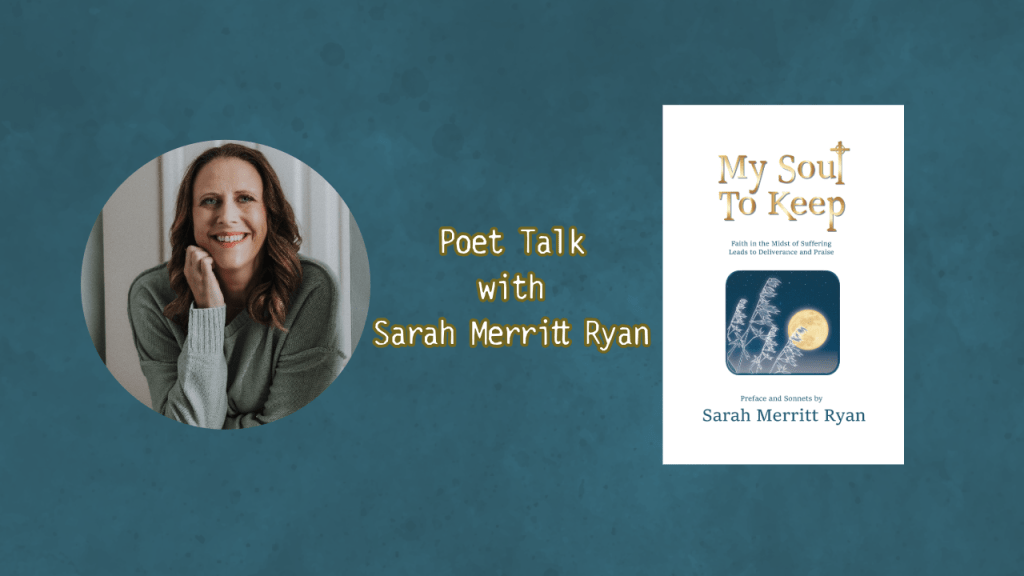
Poet Talk: My Soul to Keep by Sarah Merritt Ryan

I met with Sarah Merritt Ryan recently to discuss her upcoming book My Soul to Keep.

Have a listen or watch and listen.

Podcast

About the Book

My Soul to Keep is a deeply personal and spiritually resonant collection of sonnets that explores what it truly means to walk with God through the darkest seasons of life. Written primarily from a Christian perspective, these poems offer an intimate portrait of faith — not as a smooth and effortless journey, but as a living, breathing relationship that is tested, stretched, and ultimately strengthened through suffering.

At the heart of this collection is a profound truth: hardship does not have to destroy us. Long-suffering, when carried in faith, becomes a crucible that deepens our connection to God and shapes us into something more resilient, more compassionate, and more whole. Faith here is not static — it ebbs and flows, wavers and steadies — and that honest portrayal makes these sonnets feel achingly real.

Many of these poems are written from a woman’s perspective, and several speak with quiet courage to the wounds left by broken relationships and the pain inflicted by others. Yet even these most tender and difficult places are held within a larger story of survival and grace.

What ultimately distinguishes this collection is its vision of the final destination of enduring trial — not merely survival, but praise. To give thanks to God in the aftermath of suffering is portrayed here as both an act of healing and an act of liberation. Praise cleanses the heart of bitterness, loosens the grip of the past, and opens the soul to receive what God has always intended: wholeness, peace, and renewed purpose.

My Soul to Keep is for anyone who has ever wrestled with God and refused to let go.

Get your copy: https://www.prolificpulse.com/sarahmerrittryan

About the Author

Sarah Merritt Ryan is a North Carolina native who writes from a Christian perspective on faith and suffering, and this collection of sonnets is her first book. She is a member of the United Church of Christ. Her faith has helped her survive many trials, including her battle with schizophrenia.

     Through patience, a refusal to give up, and believing there could be a bigger picture for her life, even when she could not see it, she persisted and did make a full recovery, going on to get married, become a mother, and rebuild her career. She has been symptom-free for 14 years while on medication for life, after having three psychotic breaks in two years.

     Through a desire to help others have a better emotional experience than she did, she is now also a writer, speaker, and advocate for emotional recovery from psychotic disorders. Her writings on mental health include poetry, blogging, memoir, fiction, and academic publications.

     She has a blog on Psychology Today called Healing Mind: My journey to cognitive and emotional recovery, which is used as training material for resident psychiatrists at the University of North Carolina at Chapel Hill (UNC-CH) Schizophrenia Treatment and Evaluation (STEP) Program and is republished on the UNC School of Medicine website. She is a Certified Peer Support Specialist who works for the UNC Center for Community Excellence in Mental Health.

     She also blogs for Nami.org and Life Effects, a blog by Teva Pharmaceuticals. She has been published twice in Writer’s Digest on topics related to mental illness. She has been published twice in the academic journal, Schizophrenia Bulletin Open. She has a full-length memoir in the works.

     She is also a public speaker and NAMI volunteer who was named Hometown Hero in 2024 by the North Carolina Women’s Courage Professional Soccer Team, Lenovo, and NAMI Wake County for her mental health advocacy work in the Raleigh-Durham area. She is also the Parent Advocate for the Wake County Public School System, representing parents living with mental illness.

     She has a degree in Journalism from UNC-Chapel Hill and a Master of Science degree in Communication from NCSU.

​Her website is sarahmerrittryan.com

Book Launch

If you are in the Raleigh, North Carolina area, you are welcome to join the Book Launch. Registration

Announcements, Book Announcements, Book Reviews, poetry, Poets & Events

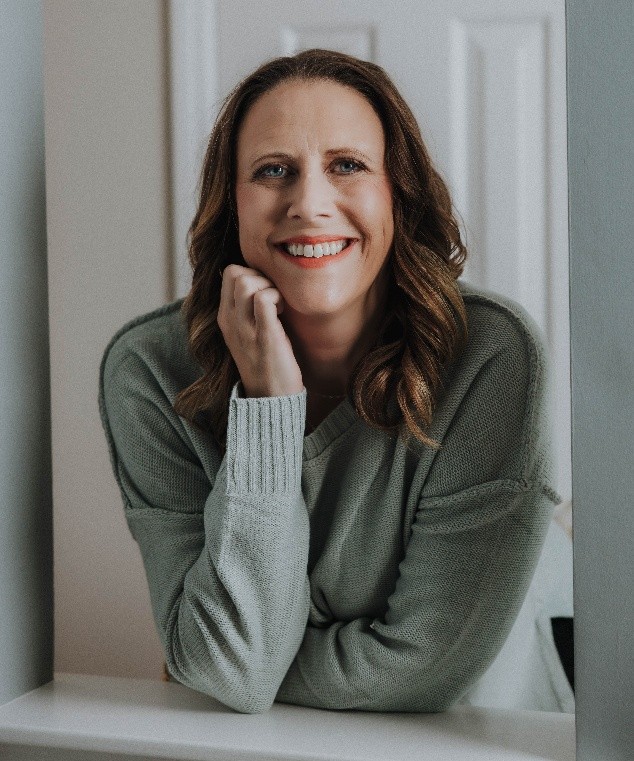
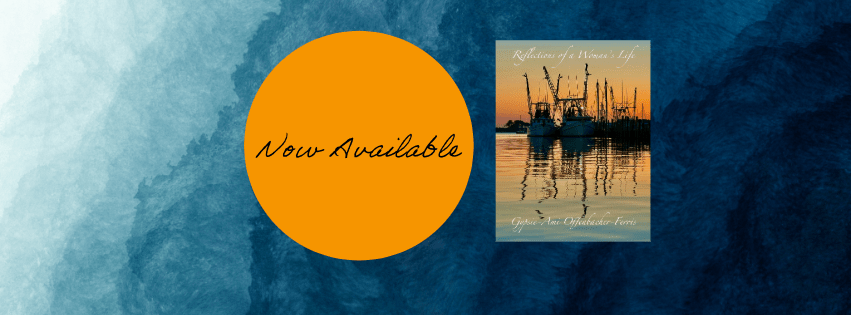
New Arrival! “Reflections of a Woman’s Life” by Gypsie-Ami Offenbacher-Ferris

Meet the Author:

Gypsie-Ami Offenbacher-Ferris lives in Southport, NC, USA.  Gypsie-Ami’s photographic artwork was chosen beside twenty-four other artist’s works by “Up Your Arts” and the City of Southport as winners in the fourth annual pole banner art project, “Raise Up Your Arts,” May through November 2026. 

She is a twice published poet in Cameron Art Museum’s Writers Respond to Art Program and was awarded the Certificate of Completion for completing the 2021 – 24 Hour Poetry Marathon and the 2022 – 24 Hour Poetry Marathon. Her poem “Wheels” was published in the 2021, 24 Hour Poetry Marathon Anthology. Her poem, “The Date”has been chosen for publication in the 2022 – 24 Hour Poetry Marathon.

She is a published author in Whisper’s & Echoes, an on-line literary magazine and in 50 Give or Take for her 50-word stories, “Love,” “The Wedding” and “The Sleep Doctor.”In Visual Verse with her poem “Mother Earth” and several editions of The Virtual Poetorium. Ami is also published in Spillwords Press with her stories, “No Ghosts This Christmas!,” “Look!” and “I Am Not A Man!”

Gypsie-Ami has had the honor of being published by Carrot Ranch Literary Community in their Baby Ducks Ate My Lunch Collection for her 99 word story, Duckling Survival Guide.

Gypsie-Ami writes flash fiction, short stories, creative non-fiction, and fiction as well as poetry. Her short story, “Conversations With My Neighbor” is published in the anthology, Trouble, by Daniel Boone Publishing. Ami received Honorable Mention in Tales from the Moonlit Path 2021, a yearly Halloween Issue titled Abandoned Places Halloween Challenge, for her short story, “Abandoned Memories.” Her short story “Grandmother And The Strawberry Moon”was chosen as a semi-finalist in Stories That Need to Be Told: The Contest.

Gypsie-Ami’s first chapbook of poetry and photography is titled Flowers Flowers Everywhere! She has written two stage plays to date and is currently completing her second action/adventure/romance preternatural novel.

Ami is a member of NCWN (North Carolina Writer’s Network) and WWN (Women Writer’s Network). Ami’s core writing group and the women who literally saved her life during her COVID-19 illness, Coastal Women’s Writer’s Group of Wilmington, NC.

Ami is known to her closest friends and relatives as Gypsie.