Announcements, Book Announcements, books, Children's Books, illustrator, interview, kindness, Poets & Events, writing

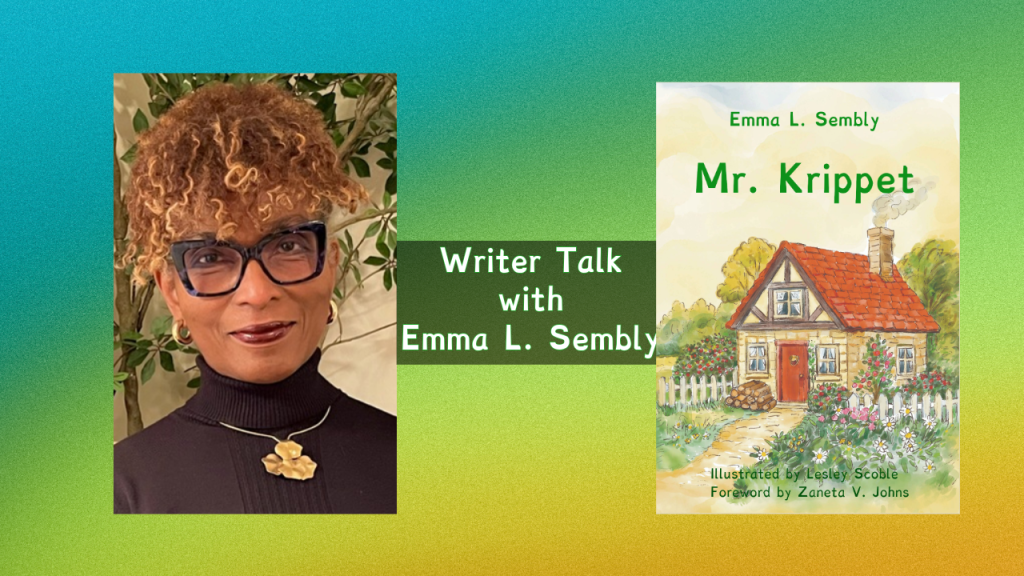
Writer Talk with Emma L. Sembly – With her Debut Children’s Book “Mr. Krippet”

From Classroom to Children’s Books — An Interview with Emma L. Sembly
For Emma L. Sembly, every story teaches a lesson, and every life is a story.

Emma is a life-long storyteller and lover of stories. As a child, Emma loved telling fantastical tales, starting with a captive audience consisting of her little sister. After she grew up, Emma continued to create stories that her students loved.

With a bachelor’s degree in psychology from Elmhurst College and a master’s degree in reading from Johns Hopkins University, Emma set out on a thirty-seven-year journey as an educator in the Baltimore City Public School System, where she taught children with different abilities on both elementary and high school levels. During that time, she also created stories for her own daughter and niece, then for her grandchildren and great nieces.

Now, Emma creates stories for children of all ages, especially the young at heart.

Emma also has a podcast, Just Folks: Conversations with Emma, in which she provides a platform where regular, everyday humans can share their own stories with listeners of all persuasions. Life lessons shared.

Drawing and writing poetry are among Emma’s favorite things to do. She also enjoys planting red flowers around her home. And when she’s not chatting it up with her kitty of thirteen years, she’s having a blast with both of her Favorite Number One Grandchildren.

“What I have learned as a writer and podcaster, is that our stories, our bedtime stories, our fables, are the gateways to life’s lessons,” Emma says, “and we all have a story to tell.”

https://emmaleesembly.com/
https://www.prolificpulse.com/emmalsembly

In a meadow full of chirping, squawking, climbing, crawling creatures, Mr. Krippet is the most industrious, well-mannered, and well-respected of them all. Known for his magnificent tenor voice and his skill as a shoemaker for the ants, he’s spent all summer singing, working, and making friends. But winter is coming — and Mr. Krippet has nowhere to live and nothing stored away to eat. Will he make the baker’s acquaintance — and earn a place by the fire — before the first snow falls? Written by veteran educator Emma L. Sembly and illustrated by Lesley Scoble, with a foreword by celebrated poet Zaneta V. Johns, Mr. Krippet is a gentle, richly imagined tale about dedication, preparation, and friendship. It’s a natural companion to classic fable-and-fall stories about industriousness and community — perfect for bedtime, classroom read-alouds, and quiet corner adventures. Author: Emma L. Sembly – Illustrator: Lesley Scoble – Foreword: Zaneta V. Johns

Get the book: https://www.prolificpulse.com/emmalsembly #MrKrippet #ChildrensBooks #ReadAloud #BedtimeStory #KidsBooks
Book Reviews, poetry

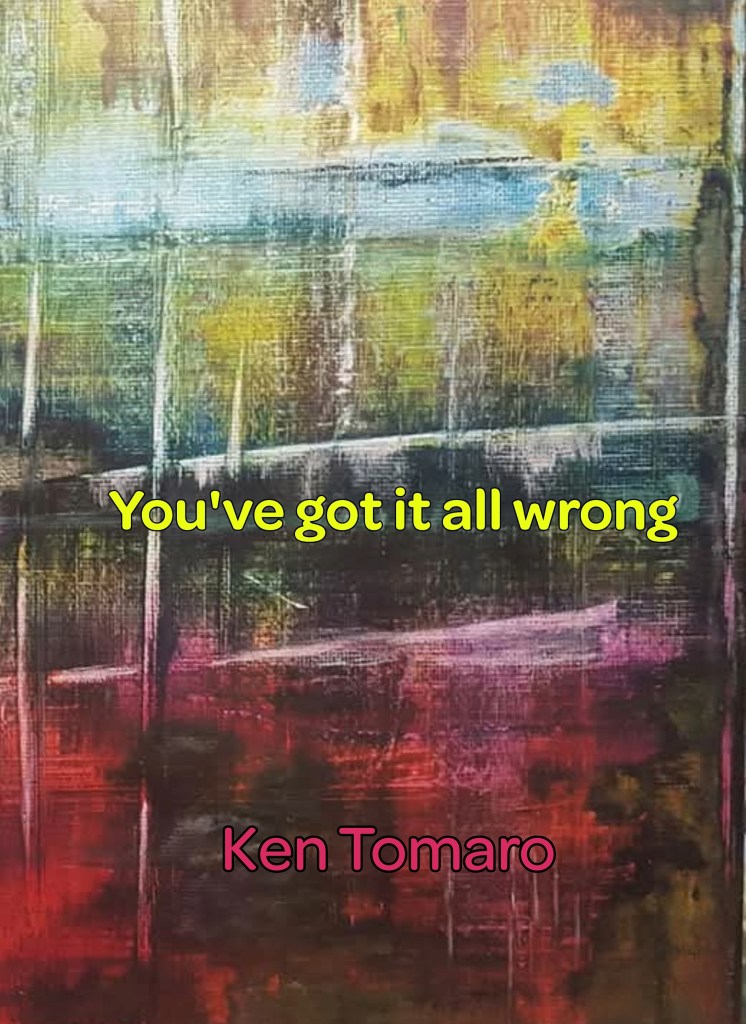
The House of Representatives: a review by Peter Mladinic of “You’ve got it all wrong” by Ken Tomaro

Thank you to Peter Mladinic for this excellent review of Ken Tomaro's latest collection. [Sensitive Content Warning]

The House of Representatives: a review of You’ve got it all wrong, by Ken Tomaro. Prolific Pulse Press. Raleigh, NC. 2025. $12.95 paper.

Reviewed by Peter Mladinic

Just as there are representatives in politics, poetry too has its representatives, one difference being: there’s no party line to the imagination. Ken Tomaro, in the state of Ohio, is reminiscent of two poets in the neighboring state of Pennsylvania, John Yamrus and Dan Flore III. Like them, he eschews capitalization and standard punctuation, and like them, his comments are blunt, succinct, and direct. Yet all there are distinct voices. Ken Tomaro, like the hero in Frank Capra’s film Mr. Smith Goes to Washington, speaks for all of us. Three things worth noting in Tomaro’s poems are his imagery: his syntax, particularly his interpolated interjections, and his use of the first-person plural we.

Tomaro’s images are exacting, “on the mark, in that they are essential to the whole poem. In “I remember the distinct aroma” as the title indicates, the olfactory takes precedence. The speaker, in a coffee shop smelled an aroma reminiscent of “Polish donuts…from childhood.” The coffee shop workers “couldn’t tell me which pastry it was because I couldn’t describe it.” At the end, his question “but it goes deeper than that, doesn’t it?” is like the donut image at the start, absolutely essential to an appreciation of this imagist poem about memory. “Make it stop” relies on a tactile image. The speaker is irked or annoyed by people violating his personal space.

they were standing 3 feet from my desk
talking about their kids,
comparing all the sports they were in
all the after-school activities
which coach does his job, which one needs to retire
blocking the isle so I couldn’t escape if I wanted to

This tactile image leads to a comment on society that is both poignant and funny. His pain is his readers’ pleasure as he says, “death is 5 feet away from me in the living room every night.” "Cash,” paper money, in “I can’t give you that” is what the speaker wants for Christmas. It leads him to say, “I can’t give her her old life back / I can’t give her a new set of legs / I can’t give her a million dollars.” This poem is similar to, yet opposite from “Playing God.” In that poem he looks out a window, “down on the traffic / speeding down the highways.” Rather than the person painfully aware of his limitations in “I can’t give you that,” here, in “Playing God” he pretends the cars are little race cars, “toys / running on an electric track / and I am …deciding how fast or slow they go.” The interpolated interjection is an element of syntax Tomaro uses to achieve compactness in his poems. It is particularly effective in “Summer of ‘89, where he puts one complete comment inside another.

the cement blocks we walked along were perfect squares
but now, after years of Lake Erie slapping against them
made them worn down and smooth
there were little pockets along the surface

“Lake Erie slapping against them made them warm and smooth” the complete comment within the other complete comment “The cement blocks …were perfect squares / but now …there were little pockets along the surface “layers the texture of those blocks, adds to these things readers can touch. In “Chickens,” the speaker, running errands, sees something out of the ordinary, “two chickens pecking away at a pile of leaves …in suburbia.” He says, “I laugh for a moment at the absurdity of what I’ve seen / this is truly absurd; I can’t be the only one who thinks so.”

The comment within the comment— “this is truly absurd” accents his surprise at seeing “chickens where chickens shouldn’t be.” Other poems in which interpolated interjections play a vital part are “Reminiscence” and “Bad genes. In “A glittering shitshow of smash-faced adults” the interpolated interjection acts as a bridge of time linking adulthood to childhood:

I’m sitting in the office
listening to John Prine
pining for that good old country life
feeling all weepy and shit
he knew the deal
he knew how it was
and there I was
a 14-year-old boy
with a half-assed mustache
surrounded by a town full of smashed-faced kids

The interjections “he knew the deal / he knew how it was” are followed by “I was,” and a memory of childhood.

Like the hero in Frank Capra’s Mr. Smith Goes to Washington, Ken Tomaro speaks for we, the people. One of his talents is that his deeply personal voice speaks for all of us. Like us, the speaker is an imperfect person living in an imperfect world. If he could he’d tell God that “this masterpiece he created / is just a pile of mud and sticks / slapped together haphazardly.” The title of the book comes from the first line of “We all carry anger.” With his direct address, the speaker conveys empathy. “I think you’ve got it all wrong / but I can see your grief from losing something.” Farther along, “I know you had a plan / and maybe it didn’t go as planned.” And finally, (profoundly), “you continue to do all these things / you say you can’t do /without even realizing you’re doing them.” This book does not lack for humor. “The big God damned bang” gives a unique spin to Adam and Eve’s fall from grace:

This is for you and only you. Go forth and explore, take in all the beauty and the glory. Go wherever you want, do whatever you want. Think and feel however you want. Just don’t touch that fucking apple, is all I’m saying. Give me a fucking break, man. Don’t invite me into your house for a party and tell me eat, drink, be merry, just don’t sit on the couch in the family room. It’s an antique, my grandmother’s, in pristine condition…

This irreverently funny passage conveys an exasperation people must feel at one time or another when thinking about Adam and Eve’s being cast out of paradise, to toil and sweat and grow old and die.

This passage of satire depicts the human condition of transience and mortality. Ken Tomaro’s topic is the human condition. The quotable passages in his poems are many. He is poignant, funny, irreverent, inquisitive, and contemplative. With an attentively attuned ear and a sharp eye for beauty, he makes the subjective objective, the local universal. He says things his way, as he simultaneously instructs and entertains. At the end of the book, he addresses his readers. “Here’s wishing you well and safe travels.” He means it. And his book is deserving of many readers.
...
Peter Mladinic was born and raised in New Jersey. He graduated from the University of Minnesota in 1973 and earned an MFA in Creative Writing at the University of Arkansas in 1985. Professor emeritus at New Mexico Junior College, where he was a member of the English faculty for thirty years. During that time, he was a board member of the Lea County Museum and president of the Lea County Humane Society. He is the author of seven books of poems; his most recent book, Maiden Rock, is available from Uncollected Press (2024). An animal rights advocate, he lives in Hobbs, New Mexico, USA.

You've Got it All Wrong, Prolific Pulse Press LLC (2025) is available at online stores.
Announcements, Book Announcements, children's books

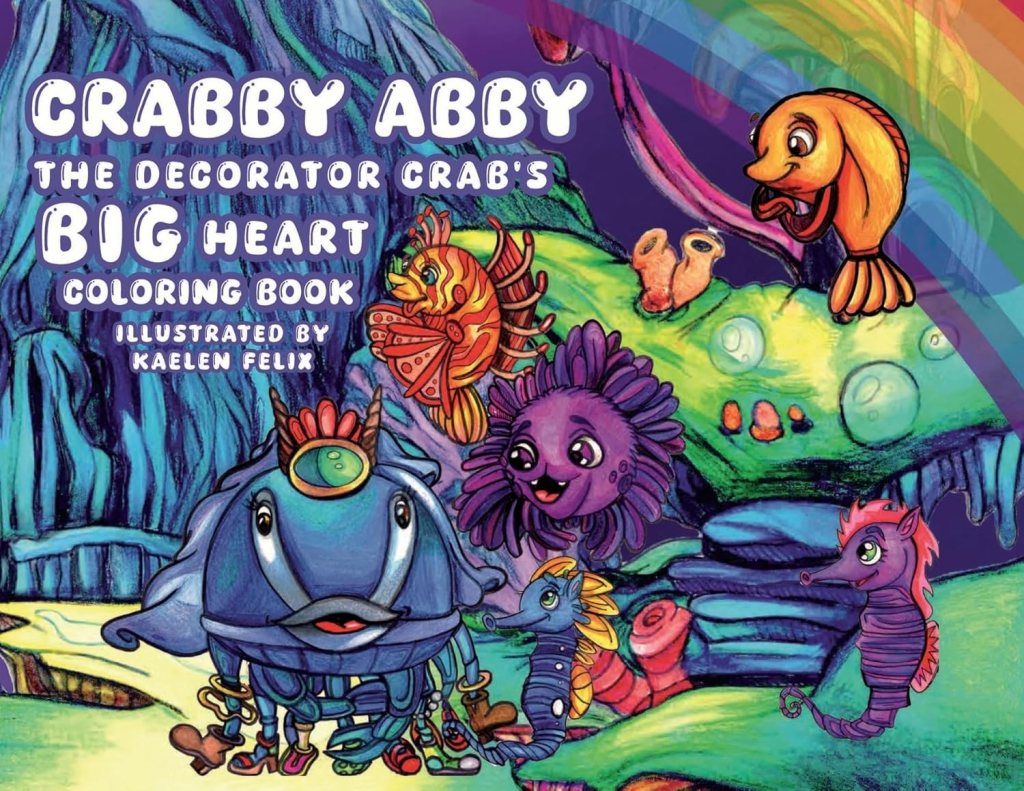
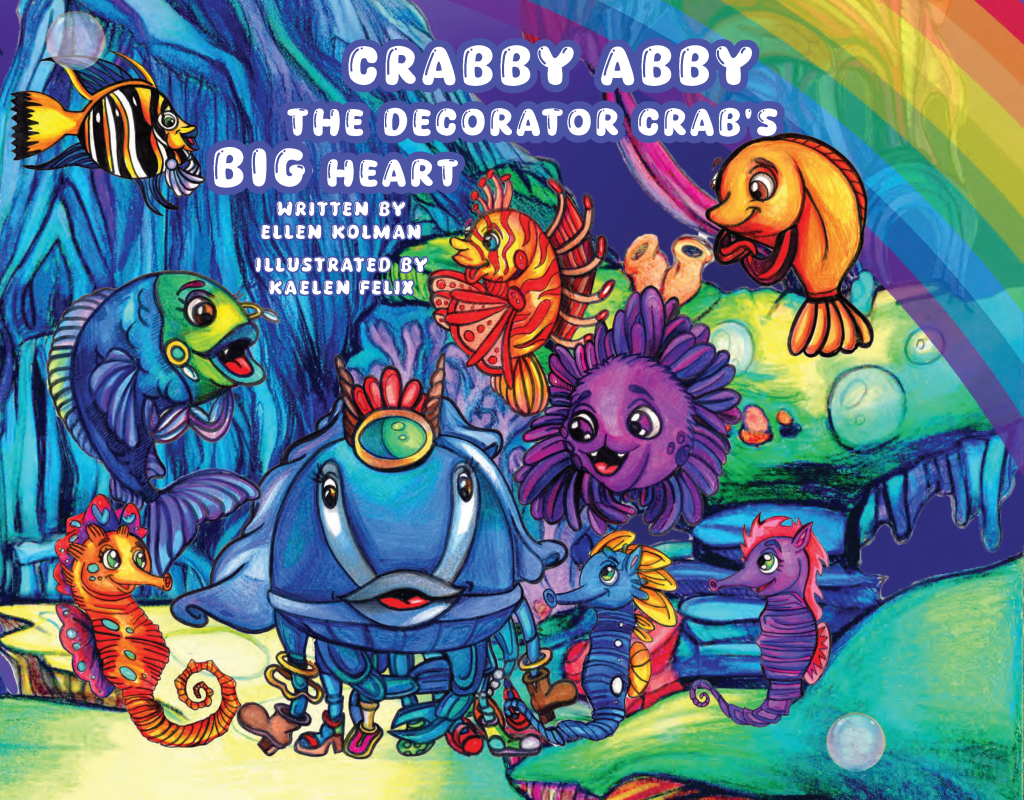
ANNOUNCEMENT! It’s Book Release Day for Ellen Kolman’s “Crabby Abby the Decorator Crab’s Big Heart”

We are excited to share this new release of Crabby Abby the Decorator Crab’s Big Heart!

Crabby Abby is a decorator crab who literally looks like a sparkly boutique on ten legs! Abby’s clothing choices are unusual but so is Abby. Decorator crabs use whatever materials are nearby to camouflage themselves from predators. Abby is not worried about her safety; she just wants to pile on all the clothing and accessories she can because she loves them all!

Get yours now!

What Reviewers Say:

Crabby Abby the Decorator Crab’s Big Heart by Ellen Kolman is a colorful story about friendship, forgiveness and God’s love. When Abby the Crab starts a new school she struggles to fit in because she’s different and many of her classmates make fun of her. But there is one kind sea animal who comes alongside her and teaches Abby an important lesson from John 3:16 that helps her to forgive those who have hurt her. In the end, Abby shows kindness to her classmates even when it’s hard and she makes many new friends! This book delivers an important message that will make an eternal impact on young readers! 

Karen Ferguson, author of the Questions for Kids series and Podcast Host of 5-Minute Parenting

This story was lovely. We enjoyed the different characters and how well you described them. We loved the journey Crabby Abby went on and the lovely message the book had – I personally loved the way it pointed to Jesus.

Kayley Bernhardt, Durban, South Africa

Mom of two girls ages 5 &; 7

I really liked this story! I liked how Abby had first day of school jitters, because it reminded me of my first day of school and how I was nervous. I also love how the characters are sea creatures, because those are my favorite animals. Lastly, I liked how Abby forgives Gabby by giving her a tiara. Friendship and forgiveness are a great thing.I rate this book 5 stars!

Logan Kish, Madison, Ohio

Age 11


Check out this interview with Ellen Kolman. We had a lot of fun!

About Ellen Kolman, Author:

Ohio native, Ellen Kolman is an award winning author driven by a passion to teach children the love of Jesus. She has been teaching and entertaining children in the church and Christian school settings for more than 35 years. Her young students inspired her to write stories to help them understand kindness, forgiveness, empathy, and friendship. Seeds of Sunshine, (2024 Firebird Book Award Winner), is her first published book. The vision for Ellen’s books is to provide Christian families with sweet engaging stories about sharing Jesus’ love and forgiveness with those around usEllen and her husband Andy have five adult children and three grandchildren. Learn more at EllenKolman.com

About Kaelen Felix, Illustrator:

Kaelen Felix is a children’s book illustrator, graphic artist, and poet from the Saint Louis, Missouri area, where she also currently resides as a freelancer who has been specializing in this field since 2018. Ms. Felix is a graduate of Memphis College of Art where she obtained her BFA (Bachelor of Fine Arts) in Illustration and has been professionally creating children’s books for clients that can be seen on Barnes & Noble, Amazon, Books-A-Million, Bookshop, Booktopia, Goodreads, Walmart, plus more. Learn ore at KaelenFelix.com

How would you like a Coloring Book with Crabby Abby? Here you go!

Enjoy the fun of coloring the characters from Crabby Abby, the Decorator Crab. A lovely companion or standalone book, this coloring and activity book offers opportunotes to encourage imagination and creativity. There are several pages with characters from the Crabby Abby story plus challenges to draw and color the characters. Have fun with your child and become their coloring companion. You can even read Crabby Abby the Decorator Crab’s Big Heart while children color. What great family fun!

By now, you surely want to get copies of this sweet book and companion coloring book…

Here’s the link to get yours! And, take a gander at the discount when you buy direct.

Crabby Abby Purchase Links and More

Book Reviews, short story

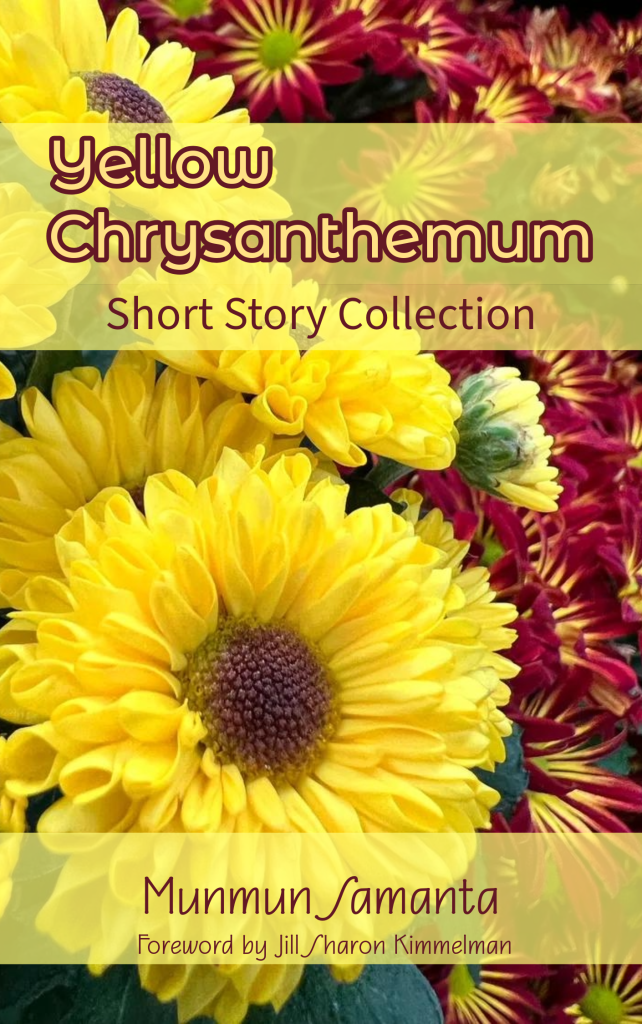
Peter Mladinic’s “The Light of Day,” a review of “Yellow Chrysanthemum”

The Light of Day, a review of Yellow Chrysanthemum by Munmun Samanta. Prolific Pulse LLC. Raleigh, North Carolina. 2025.

In “Sia’s Dream of Dawn” a woman is alone in a garden, thinking, and very attuned to her surroundings. Readers at first think she may be an artist and she’s going to paint the sky. As the story unfolds, readers learn she’s a writer, and it’s as if she’s giving the sky a story, with characters, a plot, a conflict to be developed, heightened, and resolved. And she is. And the sky’s story, like clouds in a river, mirrors the writers. It’s original, poetic, and well worth reading again. Yellow Chrysanthemum as a collection is a story of struggle. Sia “loves this part of the garden. But more than that she loves this confluence of light and shadow.” A struggle to be honest with herself. The collection comprises a struggle for freedom as an artist; for freedom as a wife, daughter, mother, sibling; and for freedom as a person, for equality. “But conventional society never teaches a woman to strike back,” the narrator says in “Written in Blood.”

The stories that depict artists, and scholars are: “Peacock’s Feather,” “Sia’s Dream of Dawn,” “Come Back Somlata,” “Long-forgotten Line,” “A Girl Made of Darkness,” which also involves an individual’s struggle to overcome a society’s prejudice; “Lullaby,” as it invokes the bonding of mother and daughter through song; and “Mad Woman in the Attic,” the story of a woman married to a man who is a successful writer and an emotionally cold, distant husband. His books show empathy for others, but the women in his books reject the woman, just as he does, so she burns his books (his women), and feels at peace.

Stories that involve the struggle of women as members of families are: “Mother India,” “The Caged Bird,” “The Scar,” “Beast of Burden,” “Bright Big Bananas,” “Written in Blood,” and “Uproot.” “Mother India,” the first story in the collection is about hunger and poverty, a mother’s plight to feed herself and her children. It is very visceral; readers feel the hunger in it, and the mother’s desperation. “Uproot,” also about a mother, is contemplative. Should the protagonist stay where she is, or give into her married son’s wish that she leave her home, her job of teaching very young children, and go far away to live with him and his wife? Like “Sia’s Dream …” “Uproot” is a garden story. It begins with Sumita telling the children how a monkey-gardener uprooted trees, to analyze how much water they needed. The children are as delighted with their teacher as she is them, and in the end the story comes back to the garden.

While “Special Dish” has shades of scholastic research, it is primarily a story of the bonding of two women from different classes in society. “A Home of One’s Own,” while it involves family, depicts the plight of women in society at large, a society that says in its morays and traditions that women have no home, the home is the man’s. And in this story, there’s this wonderful sentence: “People say many things, but things are different.” Other stories that involve a woman’s struggle for equality are: “Uma,” “The Kitten and Cleopatra,” and “The Shut Door.” In all these, the plight of one woman is the plight of many.

In “The Shut Door” the narrator says, “It happens sometimes you cannot recognize yourself.” All twenty stories have the unstated adage “be honest with yourself.” Each is an attempt to arrive at some truth. Some stories seem sketched in gray pencils, others in dark blue ink. The light of day is the page on which the story appears. Labels limit. The struggle of the artist, the wife and mother, and the individual all intersect, or seem to, many of them. But in each the author, Munmun Samanta has made a thing of beauty, from her imagination, her vision, and her skill with words. These are stories that ring true; stories of India, of women, of lived lives.

Open her book and see for yourself. You’ll be rewarded. ProlificPulse.com

Peter Mladinic‘s most recent book of poems, Maiden Rock is available from UnCollected Press. An animal rights advocate, he lives in Hobbs, New Mexico, United States.

Maiden Rock: Mladinic, Peter: 9798990558557: Amazon.com: Books