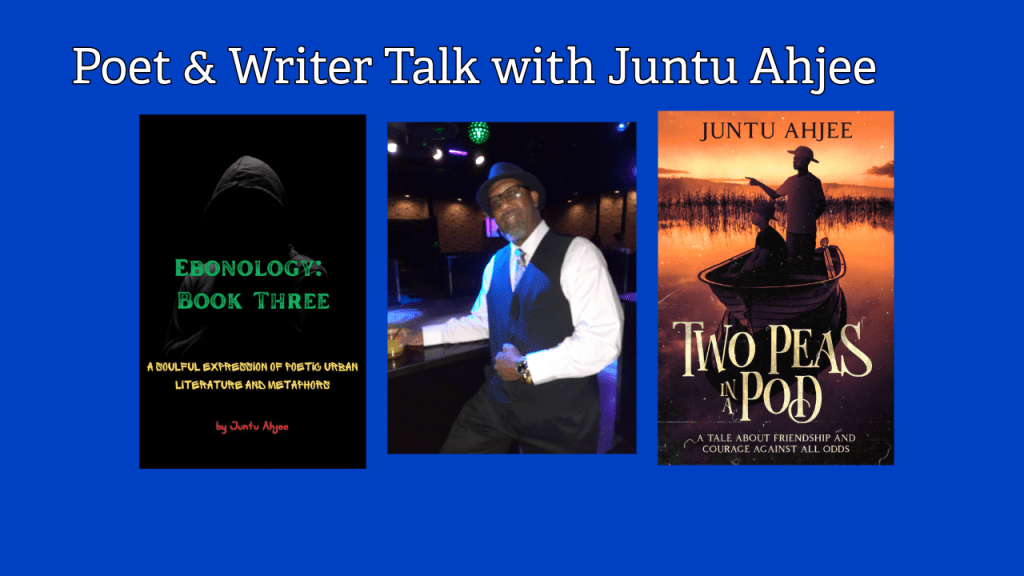
What a wonderful time we had discussing this and that and, oh yeah, writing and poetry. Juntu Ahjee is as much a friend as an artist in his own right. It’s been four years since our last talk and a lot of changes have happened. Just sit back and listen in on this fun interview. When you’re done, go check out Ahjee’s books. There’s not a one I have not fallen in love with. Give it a shot. https://www.amazon.com/Kindle-Store-Juntu-Ahjee/s?rh=n%3A133140011%2Cp_27%3AJuntu%2BAhjee
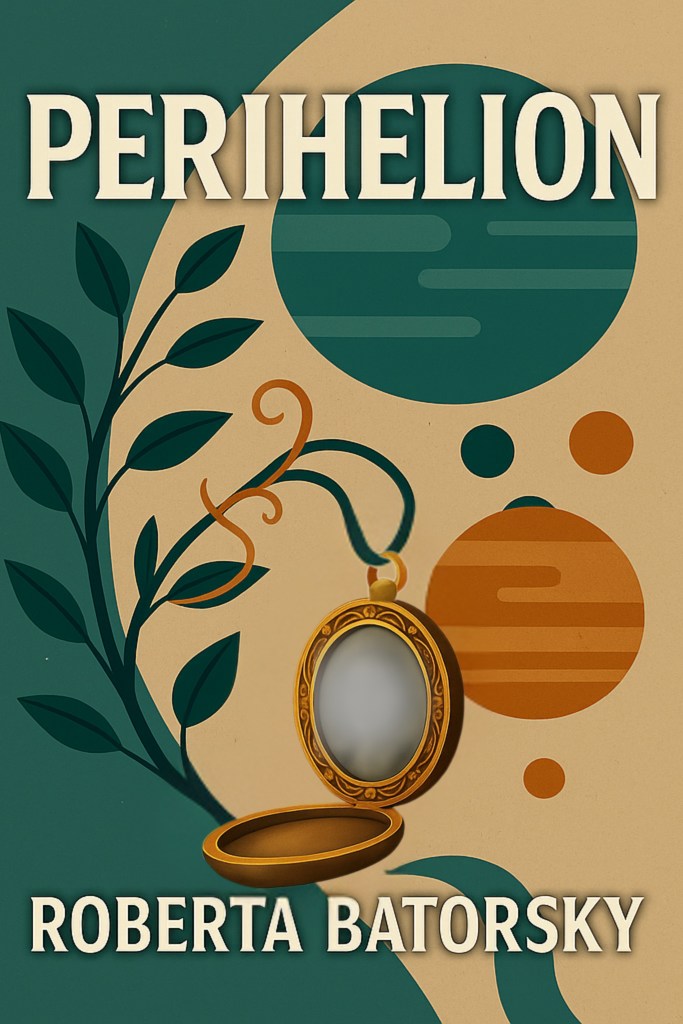
We are pleased to announce that “Perihelion” by Roberta Batorsky is now ready for your bookshelf. Her debut poetry book, “Perihelion” is a poetry collection which has been carefully crafted, critiqued, and polished for the best of reading.
About “Perihelion”
This book uses powerful, colorful imagery and often humor, applied to everyday life situations, to delve deep into the realms of love, loss, childhood, memory, aging, relationships, partnership and friendship. The writer’s command of language, including colorful and strong vocabulary, will appeal to poetry readers of all stripes in its accuracy, insight and universality. Her critical insight and unsparing explorations of feelings will bring readers into her circle with recognition of the beauty of her words and the similarities with their own experiences. Her love for nature and ability to describe people’s lived experiences, mental problems, societal upheaval, relationship struggles, love for family, and deep love for, and familiarity with, literature will inspire all who pick up her book. Her style is a giving and loving one which will be meaningful to all readers.
Note the cover design by Kelli Jackson of KRynae Design Co. She really captured the meaning of the poem by the same name.
What others have to say:
It gives me great pleasure to introduce you to Perihelion, the debut collection of poetry by Roberta Batorsky. Roberta’s poetry has taken the literary community by storm, her words will make you want to sit up and think, stir emotions, as she pulls you into her world. Her poetry reflects her interest in people, through lived experiences and the world of science. Each one is full of humour, pathos, and empathy. She is incredibly articulate and precise, reflecting her intellectual ability as an educator.
This collection has over one hundred poems; each one is a masterpiece in its own right, beautifully crafted to perfection. Each poem gives you an insight into her life and the lives of others, incredibly observant and full of wit, as you are transported to her world.
This book will appeal to readers of all ages and genders because it is relatable, to enchant, move and delight. Stand out poems include “American Standard or The Loo’s Lament,” “Social Dancing on Neptoon,” “Lost Lives Matter,” “Unstrung, for Richard,” “I Remember It,” “If I die first,” “Picking Apples in Stilettos,” “Bismillah,” “Autumn Finds Me,” “My Dis Connect,” “Drinking with Mom,” “Man to Man,” “The Walkers in the Rain,” and “Gasp.” This poignant book of poetry is an entertaining read, will make you laugh out loud, smile in places and shed a tear, extremely relatable and utterly brilliant, it will be a welcome addition to your bookshelf, a classic in the making.
Sarfraz Ahmed, Poet and Writer (UK)
Roberta Batorsky’s “Perihelion” carries rich layers of meaning in the context of poetic creativity. Like planets drawing close to the sun, the poet’s voice circles the most intense experiences of human life: mental health struggles (“Unit 4,” “New Year to Be Born”), grief (“Irreplaceable, for Mariana”, “Tremolo”), and love (“You Are All I Need”). These are moments of most excellent exposure, where both illumination and pain work together. It suggests that poetry itself becomes a perihelion. In this space, the poet dares to move nearest to the burning core of experience, and in doing so, offers illumination to the readers. In “Perihelion”, readers encounter humour, grief, survival, and renewal in equal measure. It is a collection that burns close, like its namesake, leaving the reader illuminated.
Roberta Batorsky is a Biology teacher and freelance science writer. Her poetry reflects her interest in people, their lived experiences and science. She writes with empathy, knowledge and humor and has been published in Heron Clan, Fine Lines, NJ Bards, Delaware Valley Poets and other collections. This is her first book. She lives in NJ with her husband and has 2 children and 2 grandchildren.
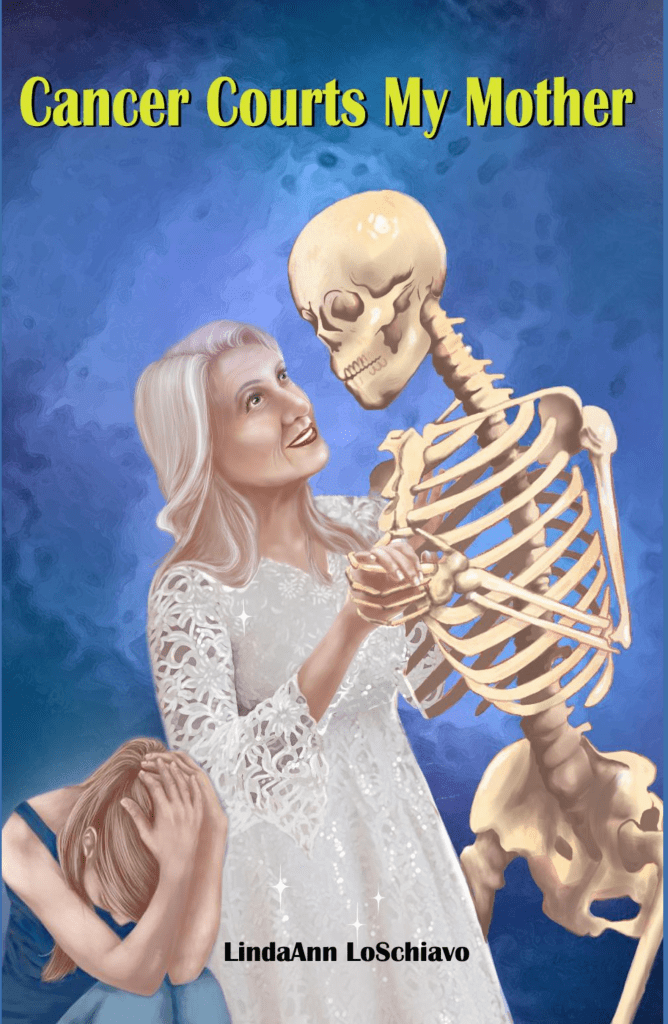
Home Remedies: a review of Cancer Courts My Mother by LindaAnn LoSchiavo. Prolific Pulse Press. Raleigh, NC. November 2025
It would be hard to find a person whose life, directly or indirectly, has not been touched by cancer. Just as cancer takes many forms, people’s mental, emotional, and physical responses vary. LindaAnn LoSchiavo’s response is this book. Out of ugliness, the frightful fact cancer kills, she has wrought beauty, this sequence of poems. A reader’s appreciation of them may be heightened by taking a look at their metaphorical resonance and their distinction between honesty and artifice; and, ultimately, by considering the voice of the poet, a daughter speaking about her parents.
The book’s title Cancer Courts My Mother suggests an extended metaphor. The tenor, cancer, is a suitor. A suitor is defined as a man who courts a woman. Although the title suggests otherwise, the woman the suitor courts is the daughter, the poet. In “Arrival” she says, “I know he’s made himself at home, the dark prince …conveying her into his sunless realm.” Yes, death is conveying the mother but it’s daughter who knows. And she is the one being courted, the one who hears the dark prince’s seductive whispers, the one for whom “terminal illness / twirls out of the speech of men.” At the end of “Tick Tick” she says, “Cancer, biding his time, taunts me.” In “Early Visit from the Grim Reaper,” “His baritone commanded me to GO!” In the “Bartering with Cancer,” the octave begins with “When medicine has nothing more to give / There’s only daughters and morphine…” And in the turn, the second half, she says, “I’m stunned.” In “Jaundice,” she says, “my mother wound up with him —Cancer —,” but in the realm of life, cancer courts the daughter, the maker of these poems.
They are interesting for their distinction between fact and fiction, honesty and artifice. Interesting, compelling, haunting. “Diagnosis” begins the sequence. Its abrupt enjambments signal an urgency that inclines the speaker towards artifice.
Transformation’s required, starting with your voice, Hemorrhaging with euphemisms, lies. You could Be an actor fed fake dialogue, words almost A well-rehearsed performance. You could be- Come an acrobat, clutching the girders of hope. A Safety net’s missing. The laughter is a ghost’s.
The abiding artifice is the poems.
Even imagination threatened to betray me, failing to make good on the fancies I’d hope to invent. But pen and paper became the dependable parents I’d always longed for. With them, I sketched realities I could eventually escape to.
That passage is the conclusion of “Mother Magnified,” which is an honest account of the friction between the speaker and her mother, one aspect of this mother and daughter relationship. Yet another realm of reality, that not only counters the artifice “an actor fed fake dialogue” but also the wooing of “the dark prince” is the life of plants. In “Green Nursemaid” the daughter tends her mother’s plants, “suturing new healthiness into the exhausted potting mixture.” While other flourishes of artifice appear in the forms of mythic “mermaids” and the “prayer candles” of religious ritual, the plants symbolize continual life, and, in “Living through the Dying,” which begins with the imperative “Resuscitate the wilted,” their tenacity and the poet’s.
To consider the voice in the poems is to consider the speaker, a poet facing the grim reality that many of her reading audience have faced or will face: cancer kills. The poet’s mother’s suffering is terminal; then there’s her father’s suffering and her own. Her voice, what is said, and how, reflects the human heart in conflict with itself. Signs that say Fuck Cancer are brandished by people who hate the thing that is killing their love ones. I love, I hate —they suggest, conveying that conflict. The poet’s “realities” she “could escape to” suggests her speaking, and putting pen to paper is cathartic. She is also defiant. In “Early Visit …” the reaper says, “GO! She says “No!”
Cancer Courts My Mother consists of poems in free verse and in tradition forms. While its rhymes resolve, there is no closure; the poet’s turmoil remains. Cancer took her mother. A mother’s suffering and eventual absence, left a daughter and a spouse/ father to grieve. The poet’s grief is poignantly conveyed throughout this sequence. Towards the end she says, “When my mother died, she took home along with her.”
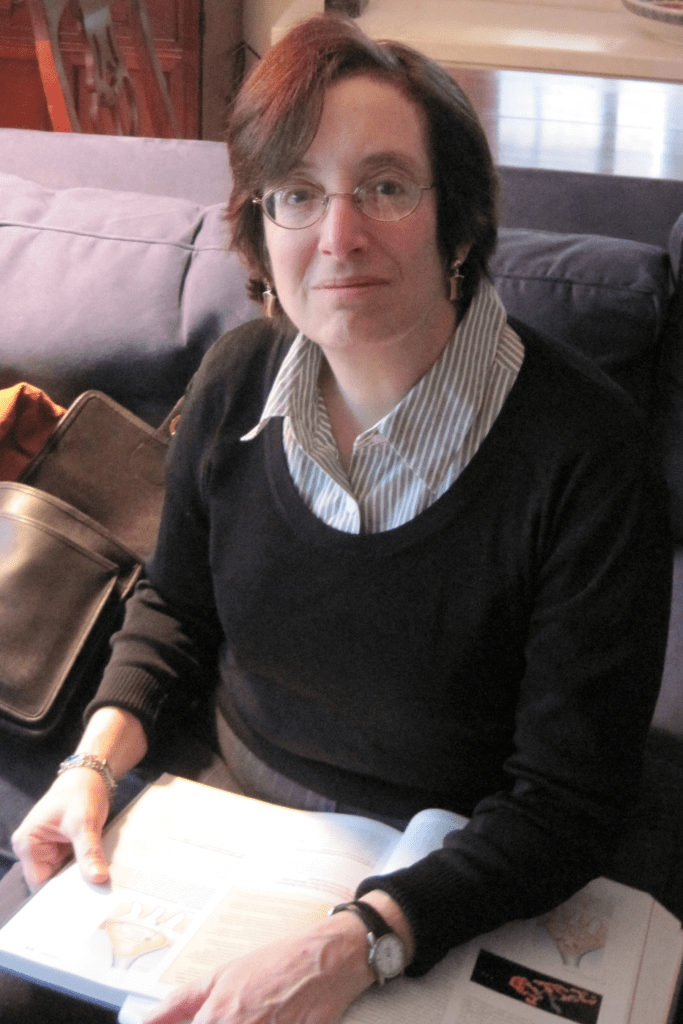
Peter Mladinic was born and raised in New Jersey. He graduated from the University of Minnesota in 1973 and earned an MFA in Creative Writing at the University of Arkansas in 1985. Professor emeritus at New Mexico Junior College, where he was a member of the English faculty for thirty years. During that time, he was a board member of the Lea County Museum and president of the Lea County Humane Society. He is the author of several poetry collections.
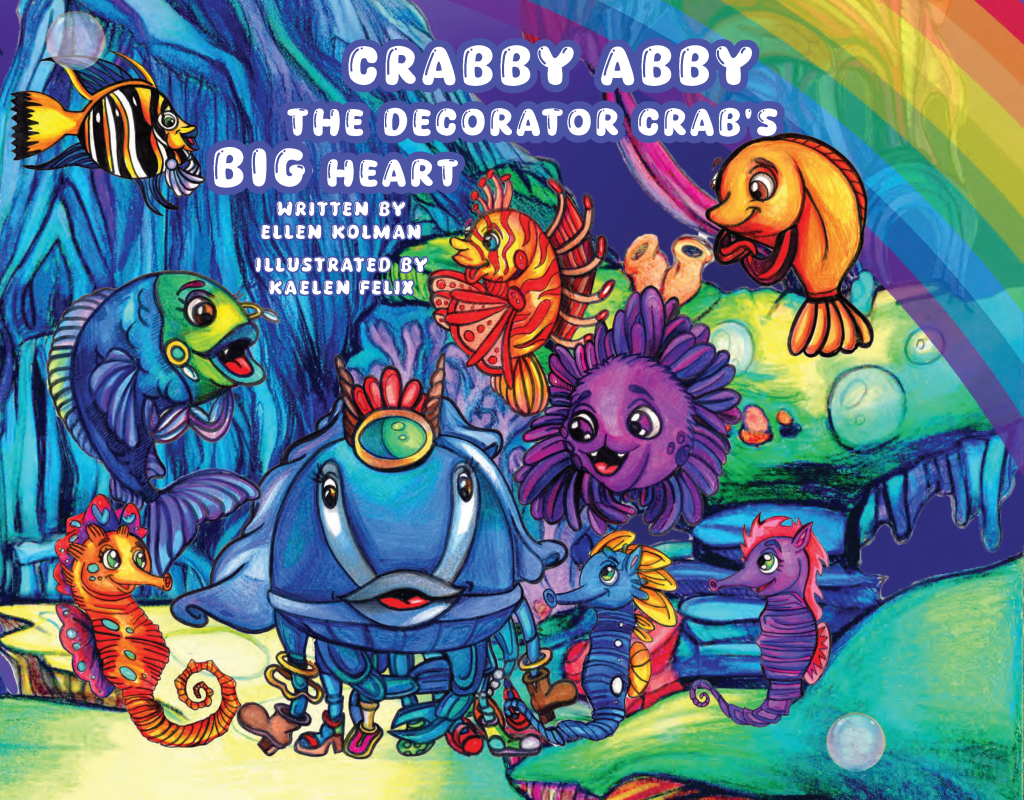
We are excited to share this new release of Crabby Abby the Decorator Crab’s Big Heart!
Crabby Abby is a decorator crab who literally looks like a sparkly boutique on ten legs! Abby’s clothing choices are unusual but so is Abby. Decorator crabs use whatever materials are nearby to camouflage themselves from predators. Abby is not worried about her safety; she just wants to pile on all the clothing and accessories she can because she loves them all!
Crabby Abby the Decorator Crab’s Big Heart by Ellen Kolman is a colorful story about friendship, forgiveness and God’s love. When Abby the Crab starts a new school she struggles to fit in because she’s different and many of her classmates make fun of her. But there is one kind sea animal who comes alongside her and teaches Abby an important lesson from John 3:16 that helps her to forgive those who have hurt her. In the end, Abby shows kindness to her classmates even when it’s hard and she makes many new friends! This book delivers an important message that will make an eternal impact on young readers!
Karen Ferguson, author of the Questions for Kids series and Podcast Host of 5-Minute Parenting
This story was lovely. We enjoyed the different characters and how well you described them. We loved the journey Crabby Abby went on and the lovely message the book had – I personally loved the way it pointed to Jesus.
Kayley Bernhardt, Durban, South Africa
Mom of two girls ages 5 &; 7
I really liked this story! I liked how Abby had first day of school jitters, because it reminded me of my first day of school and how I was nervous. I also love how the characters are sea creatures, because those are my favorite animals. Lastly, I liked how Abby forgives Gabby by giving her a tiara. Friendship and forgiveness are a great thing.I rate this book 5 stars!
Logan Kish, Madison, Ohio
Age 11
Check out this interview with Ellen Kolman. We had a lot of fun!
About Ellen Kolman, Author:
Ohio native, Ellen Kolman is an award winning author driven by a passion to teach children the love of Jesus. She has been teaching and entertaining children in the church and Christian school settings for more than 35 years. Her young students inspired her to write stories to help them understand kindness, forgiveness, empathy, and friendship. Seeds of Sunshine, (2024 Firebird Book Award Winner), is her first published book. The vision for Ellen’s books is to provide Christian families with sweet engaging stories about sharing Jesus’ love and forgiveness with those around usEllen and her husband Andy have five adult children and three grandchildren. Learn more at EllenKolman.com
About Kaelen Felix, Illustrator:
Kaelen Felix is a children’s book illustrator, graphic artist, and poet from the Saint Louis, Missouri area, where she also currently resides as a freelancer who has been specializing in this field since 2018. Ms. Felix is a graduate of Memphis College of Art where she obtained her BFA (Bachelor of Fine Arts) in Illustration and has been professionally creating children’s books for clients that can be seen on Barnes & Noble, Amazon, Books-A-Million, Bookshop, Booktopia, Goodreads, Walmart, plus more. Learn ore at KaelenFelix.com
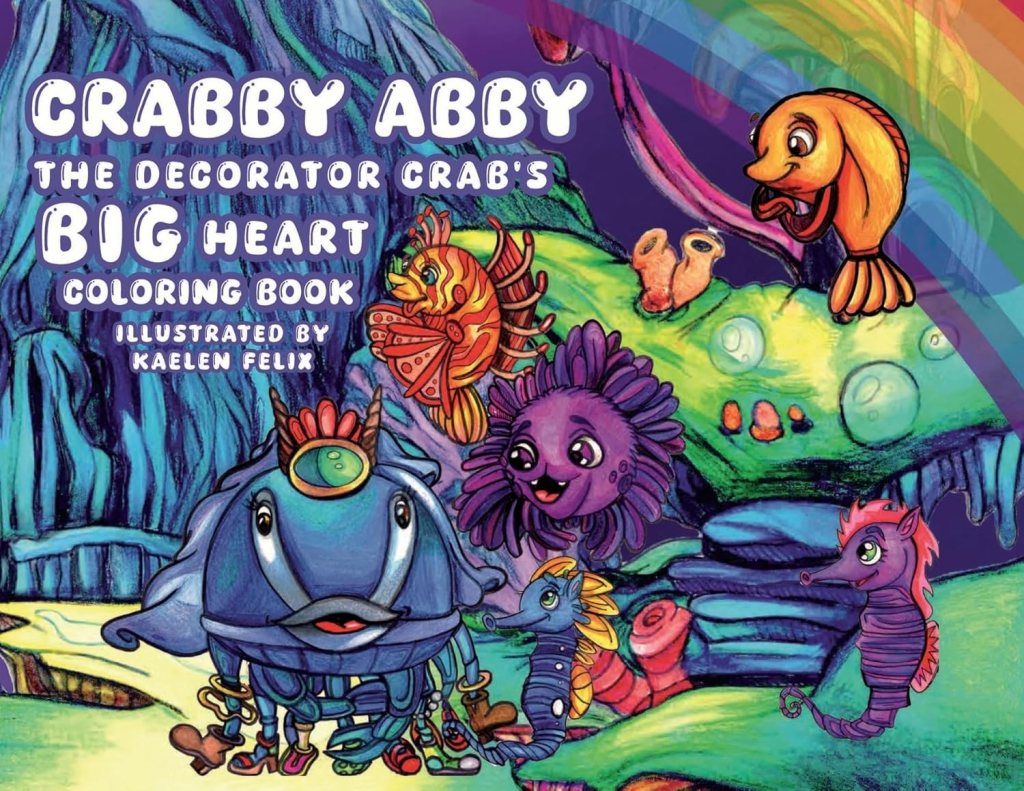
How would you like a Coloring Book with Crabby Abby? Here you go!
Enjoy the fun of coloring the characters from Crabby Abby, the Decorator Crab. A lovely companion or standalone book, this coloring and activity book offers opportunotes to encourage imagination and creativity. There are several pages with characters from the Crabby Abby story plus challenges to draw and color the characters. Have fun with your child and become their coloring companion. You can even read Crabby Abby the Decorator Crab’s Big Heart while children color. What great family fun!
By now, you surely want to get copies of this sweet book and companion coloring book…
Here’s the link to get yours! And, take a gander at the discount when you buy direct.
and made stew from the leftover lamb my sister didn’t eat
I’m tired, it’s cold and dark here
and I am afraid of what’s out there
beyond the glass of the balcony door
beyond the neighbor who yells at his wife,
and kids, and brother
I’m afraid I’ll never find
what it is I don’t even know I’m looking for
or maybe I’m afraid
I won’t be able to change those things that need it…”
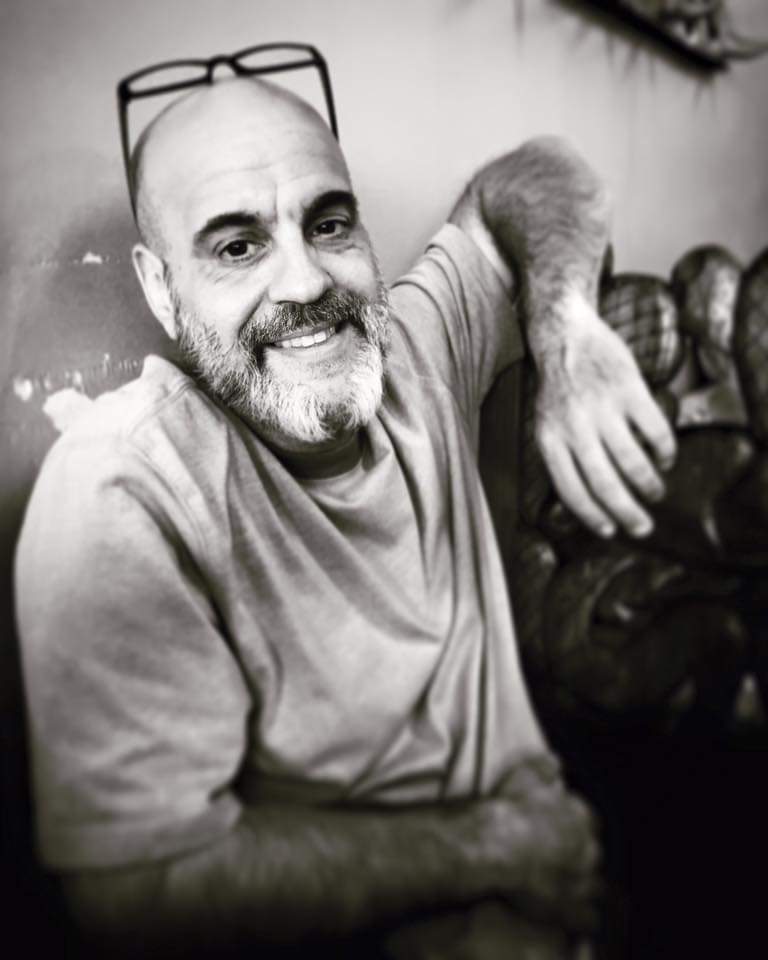
This is Ken Tomaro, so easy yet so profound.
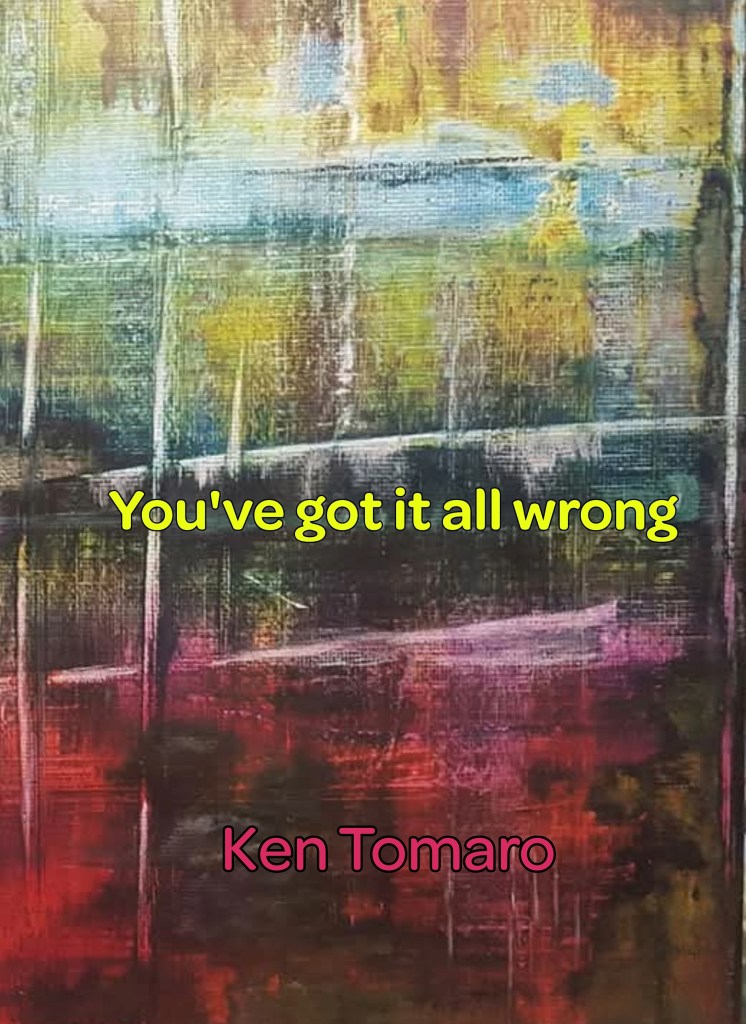
Ken Tomaro’s collection “You’ve Got it All Wrong” explores nostalgia, loss, and the absurdities of existence through poignant, reflective poems. It is a collection of poetry that resists lyric ornament in favour of blunt realism, irony, and dark humour. Written in a conversational style, these poems traverse memory, absurdity, faith, mortality, and working-class identity.
The first poem, “I remember the distinct aroma,” begins with the scent of Polish doughnuts, using this family memory to reflect on the passing of time, the loss of childhood innocence, and fleeting moments that cannot be reclaimed.
“I was robbed” is a fierce monologue where Tomaro likens life to a thief: it brandishes a gun, steals sanity, dreams, and certainty, yet he refuses to yield.
“Playing God” conjures the fantasy of manipulating fate, depicted through cars on a highway—miniature models in the mind’s grip. “Summer of ‘89” is a lyrical meditation on teenage nights at Lake Erie.
“Life is very much a horror movie” is a standout poem that likens office life to an unending nightmare.
“If I believed in God” and “The big God damn bang” both question religious belief, exposing the flaws Tomaro perceives in the idea of a universe created by an indifferent force. In contrast, “Chickens” injects humour with its absurd image of chickens wandering a city road, disrupting the poet’s brooding thoughts.
“We all carry anger.”
A compassionate poem speaking to grief, persistence, and the will to keep breathing. “Make it stop” is among the darkest, most unflinching poems:
“word of warning –
It’s not a happy ending.”
“Breathworks” is a brief yet powerful poem that reminds us that trauma begins at birth. “Bad genes” is a satiric poem wrapped in humour and rage. Tomaro’s bluntness, “fuck all of you!” is cathartic. “Rosemarie” is a deeply nostalgic and tender poem that evokes memories of childhood winters, fireplaces, and Christmas music from 1976.
“Sometimes a dog’s butthole” leans into shock value, but its humour reveals genuine affection for Cleveland, using the city’s quirks—potholes, pierogies, grey winters—to illustrate imperfect love.
“A glittering shitshow of smash-faced adults” distils Tomaro’s outlook: absurdity, bluntness, and unyielding truth. The poem confronts adolescence, broken towns, and fragmented adulthood.
“Beyond the Glass” is one of the most vulnerable poems by Tomaro. It captures the threads of loneliness, seasonal depression, and the fear of the unknown that linger in the human heart. The “cold and dark” beyond the balcony glass becomes a metaphor for uncertainty and existential dread. “Well, hello” is the closing poem. It is structured around the word “well,” and ties together themes of health, survival, and cautious hope.
Tomaro writes with honesty and sharp wit, never sugarcoating his words. His poetry speaks to those who want the truth, humour that doesn’t hold back, and a clear-eyed look at life. “You’ve Got It All Wrong” reminds us that being human means living with contradictions and sometimes finding reasons to laugh anyway.
“You’ve Got It All Wrong” isn’t for readers who want romance or flowery language. Tomaro’s poems are stripped down, gritty, and often hit hard. He writes about life’s odd moments, the pull of memory, and the humour that helps us get by. This is poetry about surviving with honesty and wit, not by escaping reality. Fans of Charles Bukowski, Diane Seuss, John Prine, or anyone ready to face life’s absurdities with a grin must grab a copy:
“and it’s time for your annual wellness check/ to make sure you and your doctor/ remember each other’s faces.”
As a teacher, I will always remain a student. In the classroom of life, l wish to work with and educate others. Whether you’re a teacher, student, or just your average person, here are a few of my "TEACHERble" moments.
Hi! my name is Sebastian (You can call me Seb!) ...welcome to my Blog. I'm a photographer from Worcester, Worcestershire, England. Thanks for dropping by! I hope you enjoy my work.


 Prolific Pulse Blog