When I saw the following interview with Nolcha Fox, I was so pleased that I just had to share. It’s been such a pleasure to work with Nolcha Fox with the publishing of the above books. All are available on ProlificPulse.com/NolchaFox
Thank you to Poetic Bloomings for interviewing this prolific poet!
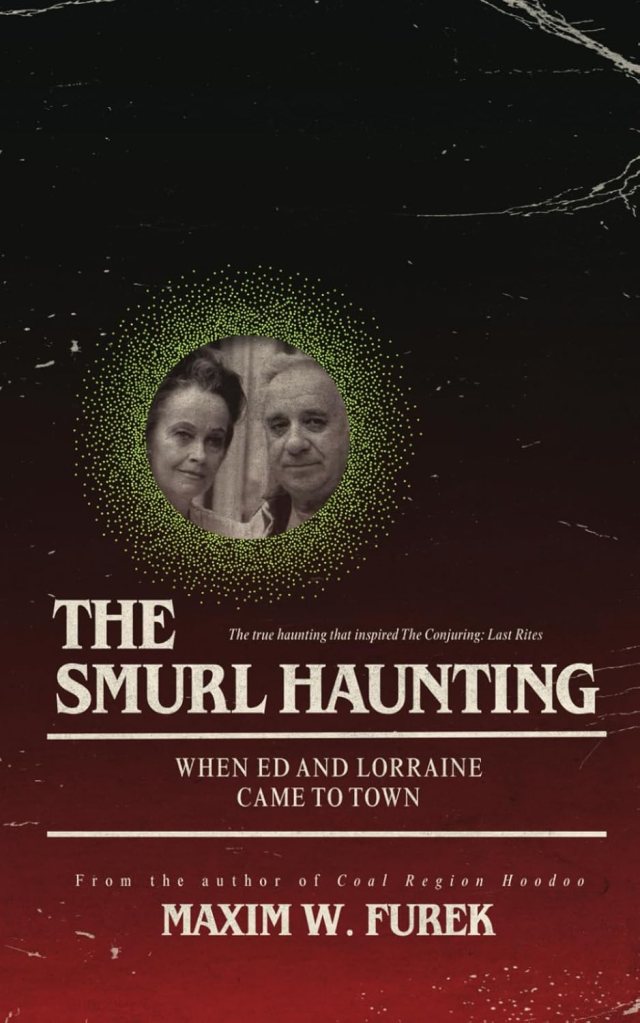
This is a guest post for the book review of The Smurl Haunting, Independently Published (2025) as reviewed by Levi Hill.
It is clear Maxim W. Furek has forgotten more about the occult and paranormal than most people will ever know, and his 176-page joyride through some of most prominent paranormal cases of famed ghosthunters and demonologists Ed and Lorraine Warren is a testament to that fact. At first, it may not be clear to casual readers the picture Mr. Furek is painting as he tours us through some of the Warrens’ most famous cases. But his detours into events connect to those cases and glimpses into the lives of some of the most prolific and horrific mass murderers of our time are all leading the uninitiated and open-minded to the Smurl House haunting.
Was the Smurl haunting a genuine demonic event or simply another stopping off point on the impressive literary and cinematic empire the Warren’s gathered around themselves? Were the Warrens indeed spiritual warriors fighting an incorporeal battle with the forces of evil, or clever charlatans capitalizing on the world’s fascination with the ethereal as their detractors contend?
The reader can decide for themselves and Furek has given them plenty to consider before they make up their minds. If you’re not every-day-familiar with the other-worldly, Mr. Furek’s book is a solid stepping off point into the vast and terrifying world of the paranormal and is sure to give the reader plenty of dark alleyways to venture down as they delve deeper into the world of the occult.
If you’re a devotee of the demonic and supernatural, you may not find much in Furek’s book that you probably haven’t already brushed up against on a cold, dark night surfing the paranormal backwaters of the Internet but who knows what specter may linger yet undiscovered? Whether new to the field of paranormal investigations, or a seasoned veteran of cemetery seances, Furek’s book is a quick and interesting delve into the Ed and Lorraine mythos and sure to leave the reader hungering for more.
Levi Hill Jal, New Mexico Oct. 15, 2025. Levi Hill is a 20-year veteran, award-winning journalist. He grew up in southeast New Mexico in a haunted house and has had multiple paranormal experiences. He writes an ongoing outdoors column and a series of stories focusing on hauntings in his local area.
Thank you to Peter Mladinic for this excellent review of Ken Tomaro's latest collection. [Sensitive Content Warning]
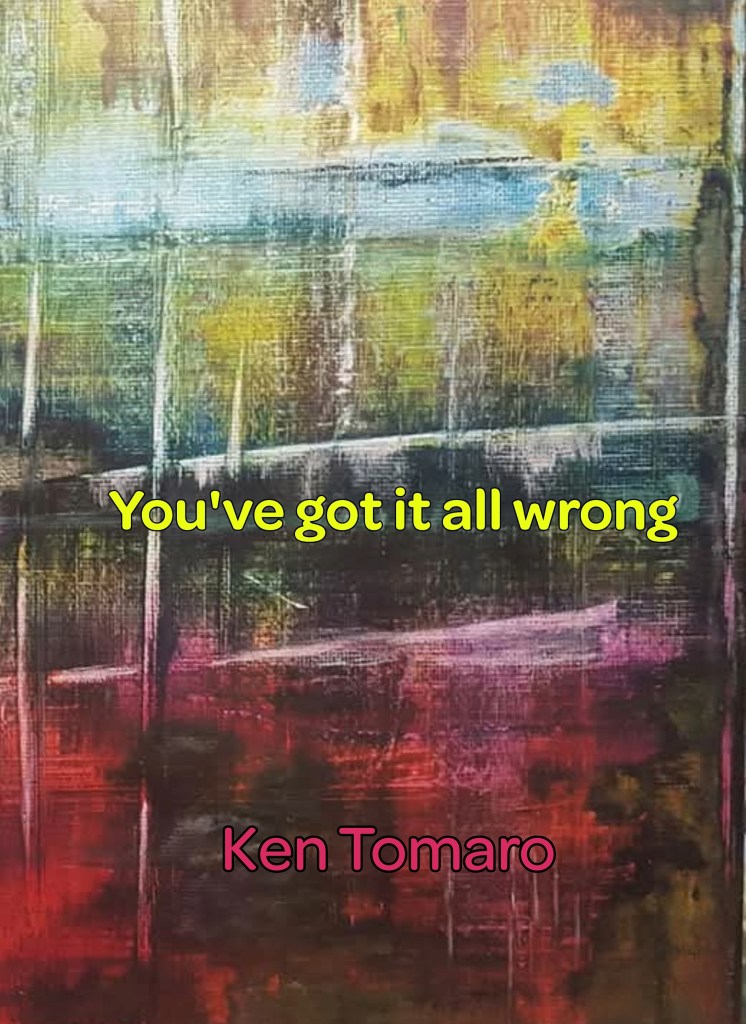
The House of Representatives: a review of You’ve got it all wrong, by Ken Tomaro. Prolific Pulse Press. Raleigh, NC. 2025. $12.95 paper.
Reviewed by Peter Mladinic
Just as there are representatives in politics, poetry too has its representatives, one difference being: there’s no party line to the imagination. Ken Tomaro, in the state of Ohio, is reminiscent of two poets in the neighboring state of Pennsylvania, John Yamrus and Dan Flore III. Like them, he eschews capitalization and standard punctuation, and like them, his comments are blunt, succinct, and direct. Yet all there are distinct voices. Ken Tomaro, like the hero in Frank Capra’s film Mr. Smith Goes to Washington, speaks for all of us. Three things worth noting in Tomaro’s poems are his imagery: his syntax, particularly his interpolated interjections, and his use of the first-person plural we.
Tomaro’s images are exacting, “on the mark, in that they are essential to the whole poem. In “I remember the distinct aroma” as the title indicates, the olfactory takes precedence. The speaker, in a coffee shop smelled an aroma reminiscent of “Polish donuts…from childhood.” The coffee shop workers “couldn’t tell me which pastry it was because I couldn’t describe it.” At the end, his question “but it goes deeper than that, doesn’t it?” is like the donut image at the start, absolutely essential to an appreciation of this imagist poem about memory. “Make it stop” relies on a tactile image. The speaker is irked or annoyed by people violating his personal space.
they were standing 3 feet from my desk talking about their kids, comparing all the sports they were in all the after-school activities which coach does his job, which one needs to retire blocking the isle so I couldn’t escape if I wanted to
This tactile image leads to a comment on society that is both poignant and funny. His pain is his readers’ pleasure as he says, “death is 5 feet away from me in the living room every night.” "Cash,” paper money, in “I can’t give you that” is what the speaker wants for Christmas. It leads him to say, “I can’t give her her old life back / I can’t give her a new set of legs / I can’t give her a million dollars.” This poem is similar to, yet opposite from “Playing God.” In that poem he looks out a window, “down on the traffic / speeding down the highways.” Rather than the person painfully aware of his limitations in “I can’t give you that,” here, in “Playing God” he pretends the cars are little race cars, “toys / running on an electric track / and I am …deciding how fast or slow they go.” The interpolated interjection is an element of syntax Tomaro uses to achieve compactness in his poems. It is particularly effective in “Summer of ‘89, where he puts one complete comment inside another.
the cement blocks we walked along were perfect squares but now, after years of Lake Erie slapping against them made them worn down and smooth there were little pockets along the surface
“Lake Erie slapping against them made them warm and smooth” the complete comment within the other complete comment “The cement blocks …were perfect squares / but now …there were little pockets along the surface “layers the texture of those blocks, adds to these things readers can touch. In “Chickens,” the speaker, running errands, sees something out of the ordinary, “two chickens pecking away at a pile of leaves …in suburbia.” He says, “I laugh for a moment at the absurdity of what I’ve seen / this is truly absurd; I can’t be the only one who thinks so.”
The comment within the comment— “this is truly absurd” accents his surprise at seeing “chickens where chickens shouldn’t be.” Other poems in which interpolated interjections play a vital part are “Reminiscence” and “Bad genes. In “A glittering shitshow of smash-faced adults” the interpolated interjection acts as a bridge of time linking adulthood to childhood:
I’m sitting in the office listening to John Prine pining for that good old country life feeling all weepy and shit he knew the deal he knew how it was and there I was a 14-year-old boy with a half-assed mustache surrounded by a town full of smashed-faced kids
The interjections “he knew the deal / he knew how it was” are followed by “I was,” and a memory of childhood.
Like the hero in Frank Capra’s Mr. Smith Goes to Washington, Ken Tomaro speaks for we, the people. One of his talents is that his deeply personal voice speaks for all of us. Like us, the speaker is an imperfect person living in an imperfect world. If he could he’d tell God that “this masterpiece he created / is just a pile of mud and sticks / slapped together haphazardly.” The title of the book comes from the first line of “We all carry anger.” With his direct address, the speaker conveys empathy. “I think you’ve got it all wrong / but I can see your grief from losing something.” Farther along, “I know you had a plan / and maybe it didn’t go as planned.” And finally, (profoundly), “you continue to do all these things / you say you can’t do /without even realizing you’re doing them.” This book does not lack for humor. “The big God damned bang” gives a unique spin to Adam and Eve’s fall from grace:
This is for you and only you. Go forth and explore, take in all the beauty and the glory. Go wherever you want, do whatever you want. Think and feel however you want. Just don’t touch that fucking apple, is all I’m saying. Give me a fucking break, man. Don’t invite me into your house for a party and tell me eat, drink, be merry, just don’t sit on the couch in the family room. It’s an antique, my grandmother’s, in pristine condition…
This irreverently funny passage conveys an exasperation people must feel at one time or another when thinking about Adam and Eve’s being cast out of paradise, to toil and sweat and grow old and die.
This passage of satire depicts the human condition of transience and mortality. Ken Tomaro’s topic is the human condition. The quotable passages in his poems are many. He is poignant, funny, irreverent, inquisitive, and contemplative. With an attentively attuned ear and a sharp eye for beauty, he makes the subjective objective, the local universal. He says things his way, as he simultaneously instructs and entertains. At the end of the book, he addresses his readers. “Here’s wishing you well and safe travels.” He means it. And his book is deserving of many readers. ... Peter Mladinic was born and raised in New Jersey. He graduated from the University of Minnesota in 1973 and earned an MFA in Creative Writing at the University of Arkansas in 1985. Professor emeritus at New Mexico Junior College, where he was a member of the English faculty for thirty years. During that time, he was a board member of the Lea County Museum and president of the Lea County Humane Society. He is the author of seven books of poems; his most recent book, Maiden Rock, is available from Uncollected Press (2024). An animal rights advocate, he lives in Hobbs, New Mexico, USA.
We gathered together on Tuesday night to celebrate prolific poetry. I thought I would share this event. There are some announcements included and more.
A Celebration of “Prolific Poets of 2025” #poetrylovers #poetry
Roberta Batorsky is a Biology teacher and freelance science writer. Her poetry reflects her interest in people, their lived experiences and science. She lives in NJ with her husband and has 2 children and 2 grandchildren. she writes with empathy, knowledge and humor and has been published in Heron Clan, Fine Lines, NJ Bards, Delaware Valley Poets and other collections. This is her first book. https://www.prolificpulse.com/robertabatorsky #poetrycollection #poetsofnewjersey #perihelion
Loralee Clark is a writer who grew up learning a love for nature and her place in it, in Maine. She resides in Virginia now as a writer and artist, with two awesome kids and a loving husband. She writes poetry and non-fiction. Myth is her love language. https://www.prolificpulse.com/loraleeclark #myth #poetsofvirginia #solemnity #rites
Zaneta V. Johns is a world-class author of three poetry collections and What Matters Journal. She has co-authored five international bestselling collaborative books and co-edited three poetry anthologies. Johns is an editor of Fine Lines Journal and Women Speakers Association Poet Laureate. Johns resides in Colorado, USA. https://www.prolificpulse.com/zan-johns #poetlaureate #coloradopoets #colorado #awardwinningpoet #poetryeditor
Melissa Lemay lives in Lancaster County, Pennsylvania, with her children and cats. She writes about God, addiction, trauma, healing, motherhood, and many other things. She enjoys spending time with family, drinking good coffee, and being outdoors. She loves animals. Her poem, “Ephemeral,” was chosen as Poetic Publication of the Year for 2023 at Spillwords Press; she was Author of the Month for July 2024 and Author of the Year for 2024. Find her at melissalemay.wordpress, collaborature.blogspot, and at dVerse Poets Pub. https://www.prolificpulse.com/melissalemay #rengay #pennsylvaniapoets #poetrycollection #collaboration #humor
LindaAnn LoSchiavo is a dramatist, writer, and poet. A native New Yorker, LoSchiavo has received nominations for the Pushcart Prize, Rhysling Award, Best of the Net, the IPPY Award, CLMP’s Firecracker Award, Balcones Poetry Prize, and Dwarf Stars. She is a member of Science Fiction Poetry Assoc., The British Fantasy Society, and The Dramatists Guild. She has won Two Awards for Cancer Courts My Mother. https://www.prolificpulse.com/lindaannloschiavo #cancer #grief #caregiving #parentchildrelationship #newyorkpoets #awardwinningpoet

Never until recently did Ken Tomaro consider writing poetry. Not when he slid from the womb. Not when he felt the first tingle of teen hormones. Not after he got married, divorced, moved to another city, lost a couple jobs, moved back. It just sort of happened. Ken Tomaro, self-proclaimed poet laureate of the Cleveland sewer system, has been writing poetry for a few short years. He’s not famous, rich, recognized or read in schools across America. He has been published in several literary journals, done a couple podcasts, started the YouTube channel, Screaming Down the Poetic Highway, and that’s pretty damn impressive. Ken Tomaro.com https://www.prolificpulse.com/kentomaro #poetry #lifesterms #contemporary #ohiopoets
Defying expectations, a caregiver’s journey is told as a story of adultery. In "Cancer Courts My Mother" by LindaAnn LoSchiavo, disease becomes a Casanova. Book Awards: Winner of . . . . Award nomination: The Brew Awards, nominee, The Chrysalis BREW Project Award nomination: CLMP’s Firecracker Award
In "Cancer Courts My Mother," a daughter becomes caregiver to her abusive, soul-scorching mother, discovering that tending to the dying can unexpectedly heal the living. In this intimate drama, cancer plays Casanova—a relentless suitor determined to steal a mother from her family. Essence: Defying expectations, a caregiver’s journey is told as a story of adultery. In "Cancer Courts My Mother" by LindaAnn LoSchiavo, disease becomes a Casanova. Death ends a life but memories hang on.
Haiku Summary:
Cancer’s intrusions cannot prevent lifelong wounds from healing
Advanced Acclaim:
When an adult child becomes caretaker for a parent with cancer, family dynamics shift profoundly. In “Cancer Courts My Mother,” LindaAnn LoSchiavo captures this complex journey through poetry that balances tenderness with brutal honesty. She navigates caregiving’s challenges with grace, inviting readers to witness the delicate interplay of love and fear while portraying her mother as a fully realized, complex human being. The journey isn’t pretty—sometimes the words are fierce—but this collection digs deep into universal experiences of loss and care. ― Kellie Scott Reed, Poetry Editor, Roi Fainéant(USA)
In “Cancer Courts My Mother,” LindaAnn LoSchiavo chronicles an emotional journey through varied poetic forms. She weaves a metaphor of nurturing plants back to life while her mother finds remission, then faces cancer’s return. The collection reconciles memories of a difficult mother with the current, vulnerable one—”Bad memories are cadavers that refuse burial.” As both subject and narrator, LoSchiavo illuminates the delicate balance between personal autonomy and familial duty. ― Karen Cline-Tardiff, poet and Editor-in-Chief of Gnashing Teeth Publishing (USA)
Real and harried, purposeful and comprehensive, when understanding is sought and reason is not always kind, “Cancer Courts My Mother” provides readers with great measures of meaning. ― Matt Potter, Editor-in-Chief of Pure Slush Publishing (Australia) and author of “Hamburgers and Berliners”
They’d bickered over her like two suitors: Vitality, her birthright, who had known My mother well before her married life, And Cancer, who’d mapped out his own terrain, Unravelled secret strands of resistance, Until oncologists chased him away.
Remission Christmas reunited us, Our joy like steam escaping after frost.
I shipped my gifts to Florida ahead: Biscotti, pignola cookies, torrone From Little Italy, fine leather goods, And for her green thumb, a red amaryllis.
But Safety Harbor’s Gulf of Mexico, Producing Christmastime’s Cancerian Heat in December, had confused this bulb.
Amidst the presents and nativity, Its empty cradle strewn with straw, green life Ripped up gay mummy wrapping, and tore loose, Unhampered by its ground like Lazarus Unbound. My parents, unprepared for ghosts Of miracles, became unnerved by sounds Newborn right by their crèche, the fir tree’s base, Invisible and inexplicable Like faith. Or like remission. After Mass, They found a determined amaryllis, force Which sleeps but cannot die, that mother took to heart.
As a teacher, I will always remain a student. In the classroom of life, l wish to work with and educate others. Whether you’re a teacher, student, or just your average person, here are a few of my "TEACHERble" moments.
Hi! my name is Sebastian (You can call me Seb!) ...welcome to my Blog. I'm a photographer from Worcester, Worcestershire, England. Thanks for dropping by! I hope you enjoy my work.