Announcements, Book Announcements, Celebrations, poetry

Seesaw: Quirky Poems by Ken Tomaro & Nolcha Fox

This Poetry Collection is available for purchase through online stores. Born from a shared love of dark humor and playful wordplay, Seesaw is a delightful balancing act of wit, whimsy, and poetic mischief. Ken Tomaro and Nolcha Fox first crossed creative paths in the Thursday Night Poets group, where their mutual knack for quirky, offbeat humor sparked an unexpected collaboration. What began as playful exchanges-plucking words and phrases from each other’s poems to craft something new-quickly evolved into a collection that swings between the light and the dark, the serious and the absurd. Seesaw is poetry at its most spontaneous and fun, a reminder that even in life’s heavier moments, there’s always room to laugh, twist the narrative, and dance on the edge of meaning. Dive into this collection and let the playful push and pull of their voices keep you balanced right in the middle of the seesaw.

About the Authors

Ken Tomaro Never until recently did he consider writing poetry. Not when he slid from the womb. Not when he felt the first tingle of teen hormones. Not after he got married, divorced, moved to another city, lost a couple jobs, moved back. It just sort of happened. Ken Tomaro, self-proclaimed poet laureate of the Cleveland sewer system, has been writing poetry for a few short years. He’s not famous, rich, recognized or read in schools across America. He has been published in several literary journals, done a couple podcasts, started the YouTube channel, Screaming Down the Poetic Highway KenTomaro.com

Nolcha Fox’s poems have been curated in print and online journals. Her poetry books are available on Amazon and Dancing Girl Press. Nominee for 2023, 2024, and 2025 Best of The Net. Nominee for 2023 and 2024 Pushcart Prize. Editor of Chewers by Masticadores. Co-Poetry Editor of LatinosUSA. Websites: https://bit.ly/3bT9tYu and https://nolchafox2.wixsite.com/nolcha… Facebook:   / nolcha.fox  

ProlificPuise.com (links)

Book Reviews

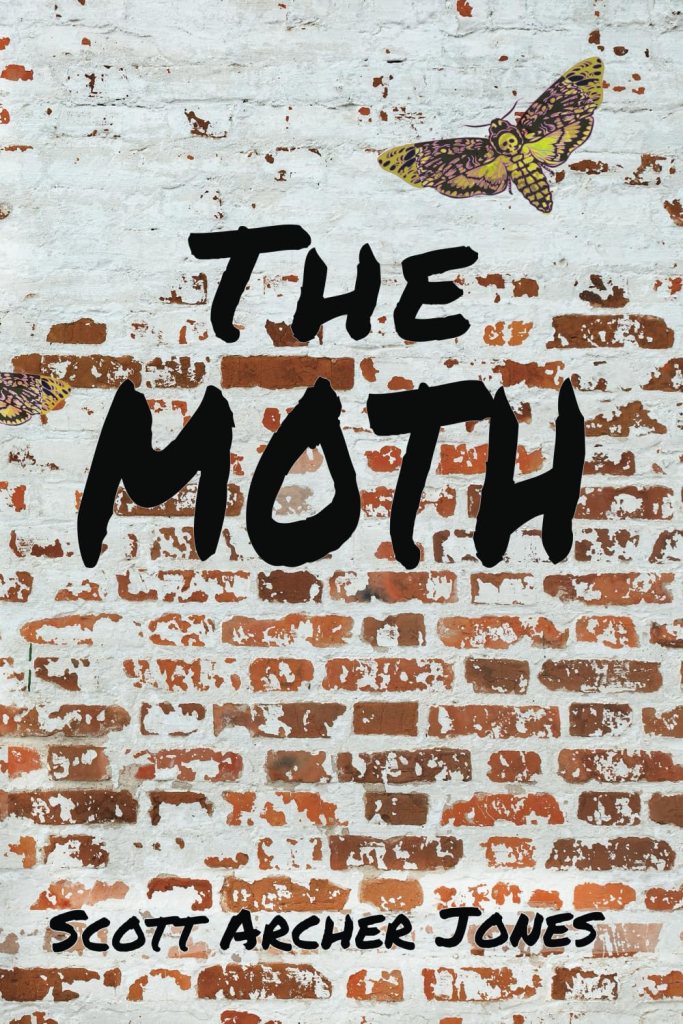
Watches, Cameras, Firearms, Fake IDs: a review of “The Moth” by Scott Archer Jones; Reviewed by Peter Mladinic

Watches, Cameras, Firearms, Fake IDs: a review of The Moth by Scott Archer Jones. Fomite. Burlington, VT. 2025. $15 paper.

The Moth takes readers on a ride to East L.A. and keeps them on the edge of their seats right to the end as its protagonist, Frank, a.k.a., The Moth, a pawn shop proprietor, sinks deeper and deeper into circumstances beyond his control. Part of the tension is that Frank is the sum of his choices, but he can’t control everything. A fusion of person and place, strong character relationships, and an abiding sense of danger make The Moth a memorable thriller in a noir style that calls to mind the fictional turf of Raymond Chandler and John Fante.

     The Moth is character driven. Scott Jones knows that if his readers don’t know they can’t care. One way Jones makes his readers care is by rendering scenes from The Moth’s childhood in the Midwest of the United States. Before he was The Moth, he was Frank, son of a Lithuanian mother and an Irish American father. A central place in Frank’s childhood is the kitchen. It’s in the kitchen that Frank has a scene with his philandering and often absent father that evokes the tension in their relationship, and it’s in the kitchen that Frank learns of the industrial accident that claimed his father’s life. And it’s from the artificial light of the kitchen that Frank and his mother sojourn to the natural light of East L.A., where most of the novel is set. Scott Jones indeed places his readers in that expansive world vastly different from Frank’s claustrophobic roots. It is in East L.A. that he evolves into The Moth. The hospital where Frank’s mother, terminally ill with cancer, lives out her final days; the sidewalks where Frank sells contraband tapes; the food distributing company from which he is fired for giving food to a homeless family; the dark alley where he meets and falls in love with the prostitute Molly; and finally the pawn shop where The Moth works and lives alone in a back apartment are all part of who he is. Similarly other characters in The Moth’s East L.A. neighborhood are products of place. In this place of natural light, the dark of the pawn shop, crowded with items on display and hidden, seems comforting, a refuge, a place where The Moth can be himself.

     The Moth evolves into a part of his East L.A. community. A community of people. Some are seasoned criminals, others have criminal ties and indulge in illegal activities; and still others are people who have little and never enough and are in desperate need of help. Molly, drug-addled and controlled by a pimp, is one such desperate person. Some of the best scenes in the novel occur as she and The Moth bond. Her death at the hands of a psychotic, sadistic john is an irreparable loss. It was with Molly that The Moth had a chance for the life he dreamed of when he moved to L.A. Because there are so many shady, seedy characters in The Moth’s East L.A., the innocents (and Molly is at heart an innocent) are all the more valued. The Moth tries to help Molly live a better life. He tries to help a father living with two children in a car get off the streets, and he tries to shelter a teenage girl from her physically abusive father—all to tragic results. But The Moth’s essential goodness, his generosity and empathy for people in dire need of help comes through in carefully rendered scenes.

     A person steps into the pawn shop and sees lots of things, but what they don’t see are the fake IDs, the array of firearms, and other weaponry The Moth conceals from the eyes of the casual browser. In one scene he sells a high-powered rifle to the son of a criminal kingpin. The son wants that rifle to right a wrong, but the figurative tables turn, and he dies. The kingpin blames The Moth. For The Moth to keep on living, he must at atone for the son’s death by killing four of the kingpin’s enemies. The Moth is in a bind, and danger abides. Danger is integral to the plot, as The Moth knows violent criminals. What he has is of value to some of those criminals, and what he knows is of value to the police, as represented by a woman, an officer whose career is on the rise. She and The Moth met when she was investigating Molly’s murder. She uses The Moth as a snitch, as he knows things the average shopkeeper would never know. Scott Jones lucidly shows their meetings and The Moth’s dealings with people in his shop and in his community.

     The idea of a pawn shop proprietor mixed up in shady dealings is not new, but it plays out beautifully in this novel. Scott Jones makes it believable by giving his readers flesh and blood characters and a well-rounded protagonist. People bring items into a pawn shop and take them out. Or, often those items are taken out by others. In the pawn shop that metaphorically is this novel, through ironic twists and turns, and good storytelling, proprietor-author Scott Jones knows what to put in and what to leave out. The Moth has arrived, an achievement that makes its mark in contemporary literature.

Review Written by Peter Mladinic

About Peter Mladinic

Peter Mladinic’s most recent book of poems, Maiden Rock is available from UnCollected Press. An animal rights advocate, he lives in Hobbs, New Mexico, United States.

Maiden Rock


Announcements, awards, Book Announcements, Celebrations, poetry

Congratulations to the Winners of the “Seesaw Quirky Poems” Competition + Here’s the Deal!

It was tough call to decide on the top three poems for the “Seesaw Quirky Poems” competition, held during National Poetry Month. Ken Tomaro, Nolcha Fox, and I came to a consensus and here are the three winners:

These three winners are placed as #1 choices.

Loralee Clark for “A Lost Umbrella”

Tina Hudak for “Atrium”

Margaret Gibbons Kiernan for “Cranked the Metals”

Thank you to everyone who contributed to the contest. The three winners will receive a paperback copy of “Seesaw – Quirky Poems” and the runners up will be provided a Kindle copy of the same.

If you would like a copy of “Seesaw – Quirky Poems” you can go to this link and find the online stores where it can be purchased. Starting today and for a week, the Kindle copy is available for .99 in the US and UK.

Find Nolcha Fox

Find Ken Tomaro

call for submissions, Celebrations, garden of neuro, napowrimo, national poetry month, poetry, prompts, short story, workshop, writing

What now?

Photo by ANTONI SHKRABA production on Pexels.com

First of all, CONGRATULATIONS! If you participated in any way for National Poetry Month, BRAVO to you!

Do you have a stack of poetry to read, edit, scratch your head over? Where do you go from here?

There nothing quite like a critique group to help you sort this out. Do you have such a group? They are out there. Check with other poets to find out where they go. In this area of North Carolina there is an excellent group via Living Poetry. Here’s a link to check it out! https://www.meetup.com/living-poetry/events/305658373/?utm_medium=referral&utm_campaign=share-btn_savedevents_share_modal&utm_source=link

Poets and Writers AKA PW.org has a variety of groups, including online critique groups. You can check them out here: https://groups.pw.org/browse-all-groups

There are others, I have no doubts. Just ask around and I bet you find a group. Anything I have worked on via a critique group has been published and rather quickly.

Poetry Editors can also be helpful. You will have the advantage of 1:1 feedback. It takes a bit of time to find that right match. This is often a paid service unless you work out a mutual feedback relationship.

Meet others in common at Poetry Workshops. Chances are that if you put it out there that you would like a writing partner, you will find someone or a group to work with. I participate in a weekly prompt workshop. In this it’s up to you to be prompt centric or to veer off. I tend to veer off. It’s a PW.org group called The Time is Now. It only last about 30-45 minutes and it helps to interact with others.

Photo by Markus Winkler on Pexels.com

You have polished your work and now is the time to publish. There are multiple journals accepting submissions. Where do you find them? I use Duotrope. because I like the feedback feature in which you can determine if the publisher is a good match. There is also a tracking feature for all your submissions. As one who runs a Facebook group, I share when I find what sound like good matches. I especially focus on paying publications, preferably ones who don’t charge.

Submittable is another option for finding a variety of places to submit.

As an editor for FineLines.org I recommend this journal, which has been around for 35 years, for submissions of poetry, art, essays, short stories, and photography.

There are also several calls for submissions from poets and writers of which I regularly have contact. Here they are:

Feed the Holy

Chewers by Masticadores

Masticadores USA

Latinos USA

Photo by Pixabay on Pexels.com

Have you found that National Poetry Month has helped you with all the prompts? Check out the options for regular prompts.

Living Poetry has regular prompts and you can even share your work on their blog.

Metaphor Dice are fun for creating metaphors. You can make a game of these.

Garden of Neuro Institute has frequent poetry prompts and events in their Poetry Group. There are also regular workshops and open mics.

Wordsmith Weekly is a Saturday group in which attendees work with prompts and share.

If you are interested in a special Call for Submissions with a specific theme, you might want to check out this one: https://www.gardenofneuropublishing.com/

I hope this is helpful. There is a lot more information out there, but I thought I would open up the discussion.

Happy Writing!

Photo by Lisa from Pexels on Pexels.com

If you have a completed manuscript, feel free to submit to ProlificPulse.com We are reviewing submissions for 2026.