and made stew from the leftover lamb my sister didn’t eat
I’m tired, it’s cold and dark here
and I am afraid of what’s out there
beyond the glass of the balcony door
beyond the neighbor who yells at his wife,
and kids, and brother
I’m afraid I’ll never find
what it is I don’t even know I’m looking for
or maybe I’m afraid
I won’t be able to change those things that need it…”
This is Ken Tomaro, so easy yet so profound.
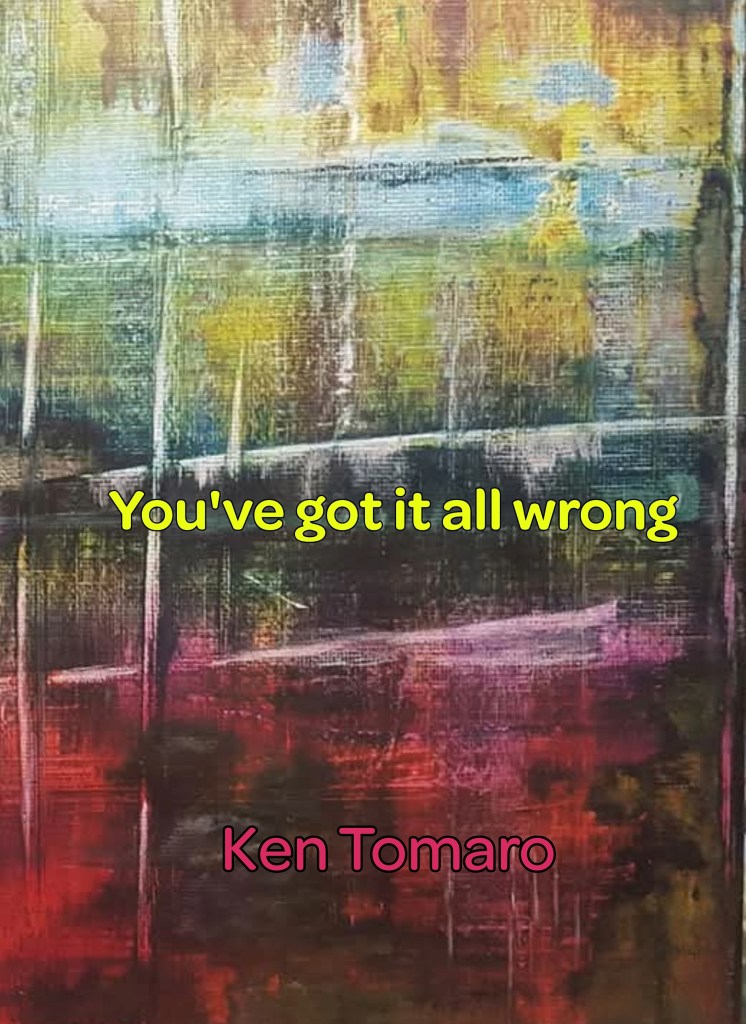
Ken Tomaro’s collection “You’ve Got it All Wrong” explores nostalgia, loss, and the absurdities of existence through poignant, reflective poems. It is a collection of poetry that resists lyric ornament in favour of blunt realism, irony, and dark humour. Written in a conversational style, these poems traverse memory, absurdity, faith, mortality, and working-class identity.
The first poem, “I remember the distinct aroma,” begins with the scent of Polish doughnuts, using this family memory to reflect on the passing of time, the loss of childhood innocence, and fleeting moments that cannot be reclaimed.
“I was robbed” is a fierce monologue where Tomaro likens life to a thief: it brandishes a gun, steals sanity, dreams, and certainty, yet he refuses to yield.
“Playing God” conjures the fantasy of manipulating fate, depicted through cars on a highway—miniature models in the mind’s grip. “Summer of ‘89” is a lyrical meditation on teenage nights at Lake Erie.
“Life is very much a horror movie” is a standout poem that likens office life to an unending nightmare.
“If I believed in God” and “The big God damn bang” both question religious belief, exposing the flaws Tomaro perceives in the idea of a universe created by an indifferent force. In contrast, “Chickens” injects humour with its absurd image of chickens wandering a city road, disrupting the poet’s brooding thoughts.
“We all carry anger.”
A compassionate poem speaking to grief, persistence, and the will to keep breathing. “Make it stop” is among the darkest, most unflinching poems:
“word of warning –
It’s not a happy ending.”
“Breathworks” is a brief yet powerful poem that reminds us that trauma begins at birth. “Bad genes” is a satiric poem wrapped in humour and rage. Tomaro’s bluntness, “fuck all of you!” is cathartic. “Rosemarie” is a deeply nostalgic and tender poem that evokes memories of childhood winters, fireplaces, and Christmas music from 1976.
“Sometimes a dog’s butthole” leans into shock value, but its humour reveals genuine affection for Cleveland, using the city’s quirks—potholes, pierogies, grey winters—to illustrate imperfect love.
“A glittering shitshow of smash-faced adults” distils Tomaro’s outlook: absurdity, bluntness, and unyielding truth. The poem confronts adolescence, broken towns, and fragmented adulthood.
“Beyond the Glass” is one of the most vulnerable poems by Tomaro. It captures the threads of loneliness, seasonal depression, and the fear of the unknown that linger in the human heart. The “cold and dark” beyond the balcony glass becomes a metaphor for uncertainty and existential dread. “Well, hello” is the closing poem. It is structured around the word “well,” and ties together themes of health, survival, and cautious hope.
Tomaro writes with honesty and sharp wit, never sugarcoating his words. His poetry speaks to those who want the truth, humour that doesn’t hold back, and a clear-eyed look at life. “You’ve Got It All Wrong” reminds us that being human means living with contradictions and sometimes finding reasons to laugh anyway.
“You’ve Got It All Wrong” isn’t for readers who want romance or flowery language. Tomaro’s poems are stripped down, gritty, and often hit hard. He writes about life’s odd moments, the pull of memory, and the humour that helps us get by. This is poetry about surviving with honesty and wit, not by escaping reality. Fans of Charles Bukowski, Diane Seuss, John Prine, or anyone ready to face life’s absurdities with a grin must grab a copy:
“and it’s time for your annual wellness check/ to make sure you and your doctor/ remember each other’s faces.”
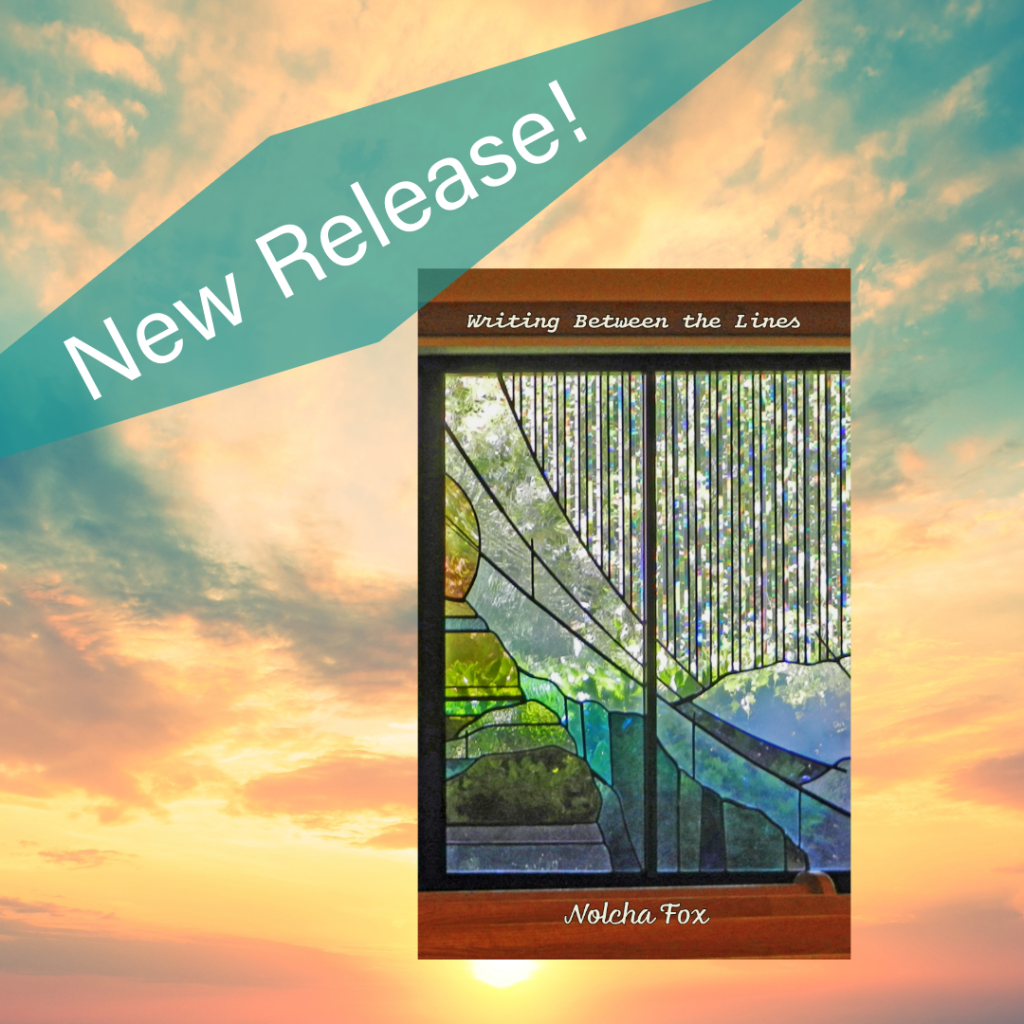
We are pleased to announce the new release of Nolcha Fox’s Poetry Collection, Writing Between the Lines”
Each natural jewel has its own unique brilliance. Catch the fire in a diamond and it’s like no other. As Nolcha catches the fire from other’s poems, these reflections create a whole new light show. As you read through the poems, you may find remnants of life’s experience weaving through. Like the light streams through stained glass windows, there are illuminations, sun dogs of brilliance, fractures melded into brilliant streams of color, of light. ~~~
Nolcha Fox is fearless. She walks the literary tightrope between success and failure with grace and elegance and she never ever disappoints. For my money, she’s simply one of the most remarkable writers to come along in years.
John Yamrus, author of Don’t Shoot the Messenger: Just Give Him a Good Place to Hide
*** Nolcha Fox’s new poetry book, Writing Between the Lines, is a keen collection of poems that begin and end with two lines from another poet’s poem. Although two lines are credited to another poet, the reader is taken into a new story and resolution decorated with vivid imagery and metaphors.
Barbara Leonhard, author of Three-Penny Memories: A Poetic Memoir
***
“Writing Between the Lines”by Nolcha Fox is a collection that surprises at every turn. Written as part of a 30-poems-in-30-days challenge, each piece begins and ends with borrowed lines from other poets, yet what happens in between is unmistakably Fox’s own voice.
The poems move effortlessly between humour and heartbreak. In “Drunk,” night, sleep, and dawn stumble together like a merry band of revellers, while “My Father’s Death” cuts deeply with raw grief and memory. “Dog Days” transforms the sun into a mischievous dog splashing through a creek, while “Keep Things Simple” delivers biting dark wit.
Nolcha Fox excels at capturing the contradictions of human experience, sorrow and absurdity, longing and laughter. Her imagery is sharp, her tone daring, and her honesty uncompromising.
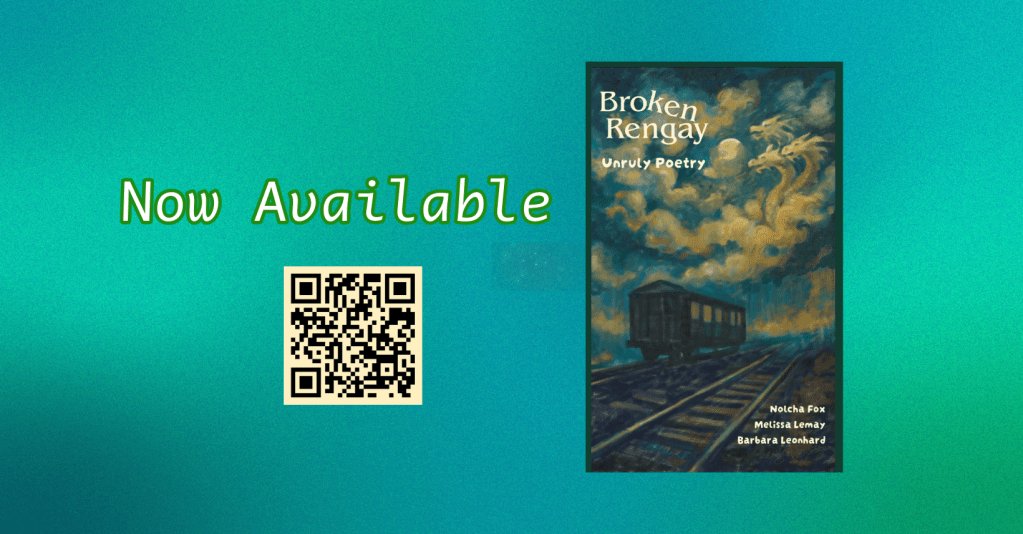
We are excited to announce the release of this fun and thoughtful collaboration known a “Bro ken Rengay – Unruly Poetry” written by the magnificent trio of Nolcha Fox, Melissa Lemay, and Barbara Leonhard.
Prolific Pulse Press LLC is pleased to welcome to new authors to our group. Melissa and Barbara are no strangers to writing, but this is their first full length publication with us.
Please join us with the hearty welcome! Nolcha is a returning author, and she has more under the secret dome of poetry. It won’t be much longer for you to find out what it is.
Get to know these women through their author pages on ProlificPulse.com
Recently, we completed an interview with these three women. It’s time to share and let you in on their thoughts and efforts to honor the beauty of poetry.
We would like to welcome the authors of Bro ken Rengay: Unruly Poems, Nolcha Fox, Melissa Lemay, and Barbara Leonhard.
Congratulations on your collaboration resulting in Bro ken Rengay: Unruly Poems
With this big release, I know you must feel much anticipation and excitement.
Tell us about Bro ken Rengay. So, what’s “rengay” anyway?”
NF: Other than alternating 3-line/2-line stanzas and a startling lack of punctuation, I’ve written them several ways. I’ve written a rengay with me and my multiple personalities. I’ve written rule-breaking rengays with Melissa and Barb. I recently wrote a rengay with David Bogomolny, in which the 3-line/2-line structure was different from what I’d done previously. It’s a form best written with coffee or wine, and a weird sense of humor.
ML: I like coffee. I think I have an explanation of rengay memorized at this point.😅It’s a form of linked verse invented by Garry Gay, whom I’ve had the pleasure of “meeting” at an international rengay gathering via Zoom. He created it as an alternative to the Japanese forms renga or renku. He named it “rengay” because of his last name. Initially, Garry created the form with two poets in mind. In a two-person rengay, the structure follows a 3-2-3-3-2-3 line count, with each 3-line stanza having a syllable count of 5-7-5, and each 2-line stanza having a syllable count 7-7. Or in Nolcha’s, Barbara’s, and my case, whatever-syllable-count-we-want (though I am the one who sticks most closely to the original form).🙃
If you’re confused, it’s okay. I still get confused with what I’m doing in rengay poetry, since I write them with different sets and numbers of people. Here is an example of a two-person rengay I wrote with Nancy Brady:
Totality
NB:
moonlight…
the violinist plays
a nocturne
ML:
shadows pirouette
across the sidewalk
NB:
the morning’s red sky–
we fear we’re in
for bad weather
ML:
sunlight
through the clouds
a robin’s song
NB:
eclipse totality
the birds go quiet
ML:
covered in
golden glow of twilight
the violinist plays
Here is an example of a three-person rengay (never-before-seen!) that I wrote with Barb and Nolcha:
Noteworthy Duel
ML:
tinkling piano keys
I blast classical music
to drown out the neighbor’s bass
NF:
bass is an earthquake
shaking my bones
BL:
I rock them with Rachmaninov
I would give them the keys to good living—
if they would listen
ML:
or perhaps hypnotize them
‘you will find a new apartment’
NF:
one of us has to
move or turn down the noise
it won’t be me
BL:
the discord is noteworthy
time to change the tunes
You can see the way the number of people alters the lines of each stanza. It is also common for writers to create solo rengay. Another variation is the six-person rengay, in which the line count follows that of the two-person rengay. I also modified the form to accommodate four writers. You may see an example of that here: https://skepticskaddish.com/2024/07/31/reflections-or-a-rengay/
BL: I believe Nolcha and Melissa have said it best. I don’t have anything to add except that it was fun learning about this form.
How did you each gain knowledge of this writing style?
NF: Melissa introduced the form to us, and suggested Barb and I write a rengay with her. Melissa is great with forms. Barb’s a real trooper, and I’m allergic to them. Melissa carefully described the form. Up until we submitted the manuscript, we still screwed up the number of lines we were each supposed to write.
ML: If I’m remembering correctly, I believe it was Nancy Brady who introduced me to the form. I enjoy collaborating on poetry with anyone and everyone, and I reached out to her and asked about writing together. I think I suggested renga, and she wasn’t very familiar. So, she suggested rengay. She also introduced me to Sherry and Zoe Grant, the creators of Raining Rengay. They hold international rengay gatherings (I believe twice a year) that are usually attended by Garry Gay and Michael Dylan Welch, one of the very first to write rengay.
BL: I had never written a rengay poem until Melissa invited Nolcha and me to collaborate. It was an interesting and enjoyable experience. Because the three of us were writing each poem, I sometimes forgot which stanzas would be mine. How all our voices came together was magical. Collaborations are becoming more popular these days because people can learn about new poetic forms and bond during the creation process.
Where have you published poetry of this style?
NF: We published in Raining Rengay (thanks, Melissa), Medusa’s Kitchen, Collaborature, MasticadoresCanada, Chewers by Masticadores, and LatinosUSA.
BL: I believe you’re right, Nolcha. Nolcha records our publications on a spreadsheet. She’s our historian.
ML: You’re welcome, Nolcha.🫶🏻I think they’ve covered most of the places we’ve published. I also have written rengay that have been published on The Skeptic’s Kaddish, as well as those that I’ve published on my personal blog.
How did you decide to create what must have been a somewhat challenging collection?
NF: It was in the back of our minds when we started writing the second rengay. The more we wrote together, the better we understood each other’s styles, the closer we became to each other, and the easier it was to collaborate. The rengays kept rolling out, and suddenly we had enough for a book.
BL: Yes, the process was organic. We didn’t set out to write a book. We just wanted to have fun. We even collaborated on record-keeping (Nolcha), the submission process (me), and editing (Melissa).
ML: Girls just wanna have fu-un.🎶 I don’t remember who suggested the idea of a collection. Maybe Nolcha? I’m glad it was suggested. As she mentioned, we wrote many of them, and so had the collection to begin with. We discussed putting together a manuscript and submitting it to you, Lisa. I curated the collection in the order that it appears in the book. I like it a lot. It has been a great experience from start to finish.
What challenges come with writing rengay?
NF: The biggest challenge was that we all had lives that sometimes interfered with collaborating. Very occasionally, we forgot to finish a rengay, and we had to remember who wrote the previous-to-last stanza.
BL: To add to what Nolcha said, like I said earlier, I sometimes lost track of which stanzas I wrote, especially if some time passed since the last share. Sometimes, based on what others wrote, I revised my lines for the sake of unity. I suppose the lack of unity would be good for a collection of broken poems.
ML: Part of the challenge for me has been letting go of expectation. It’s challenging in a good way. Let’s say I write the first stanza, or even any subsequent stanza, and pass it along to whoever is next. After that, it’s out of my hands. Wherever it goes is up to whoever comes next. Yet we still work together to bring into form something cohesive that unifies as a whole. Rengay are meant to be thematic or have a linking thread. They aren’t separated stanzas that have no context without each other.
I’ve learned through writing with people with different levels of experience writing rengay. I was taught to follow “link and shift.” In other words, I write the first stanza, then the next person writes their stanza so that it links back to mine and shifts away at the same time. That’s another one of the “rules” we broke. The rengay in this collection are more connected than some, in which each stanza can technically stand alone, yet links together with the others through a common thread.
The bottom line is that this is still a fairly new form. As Nolcha has said, I do like forms. Or she said I’m good with them. Something like that. I take a lot from learning how to write different poetry forms and write them well. However, I don’t like to be a stickler for rules, and I love to bend them and mold them so that I’m happy with what I create.
I would like to recognize Lesley Scoble, the amazing cover artist. Wow! Did she ever create a beautifully perfect cover!
Writing a unique poetry form has clearly been a challenge that you each have surpassed. Now, you have an amazing collection. Where do you go from here? What other forms would you like to try?
NF: We tried writing alternating haiku, and I thought we were successful. Or we just might continue with rengay. We haven’t had any serious conversations about what’s next.
BL: I vaguely recall the haiku, Nolcha. It would be fun to revisit that form and explore others, such as garland tanka or garland haibun. There are many possible forms to collaborate on.
ML: I second the vaguery.🤭I think I remember that. I’m always open to writing just about anything. In addition to rengay, I’ve written collaborative acrostic, tapestry, sestina, haiku sequences, and there might be more I’m not mentioning. As for the three of us together, I think we will write some more rengay poems, and whatever else we get up to. Garland tanka and haibun sound great!
Please share about each of your publications. It’s my understanding that poets and writers can share their work through your blogs and journals.
NF: I’m the editor of Chewers by Masticadores (https://chewersmasticadores.wordpress.com/). I publish a wide variety of writing, artwork, and photography from contributors all over the world. One of my contributors mentioned he could send me recipes from some fancy restaurants, but I’m not convinced it’s a great idea.
Barb and I are co-editors of a new section on LatinosUSA (https://latinosenglishedition.wordpress.com/) called Bookshelf. We use the section to promote books, reviews, and interviews.
BL: I’ve been editor for MasticadoresUSA since November 2022. https://masticadoresusa.wordpress.com/. In November 2024, I created a journal FEED THE HOLY on Blogger. I’m the sole editor and staff. https://feedthehol.blogspot.com/. Because I founded this journal, it holds a special place in my heart. And Nolcha and I enjoy co-editing Bookshelf on LatinosUSA. On my own WordPress blog, Extraordinary Sunshine Weaver, I record my publications and repost blurbs and reviews I’ve written under Barb’s Wordy Blurbs. https://extraordinarysunshineweaver.blog/. Now that I co-edit Bookshelf, I may post my reviews there instead. Although editing three journals takes time, I really enjoy it. Editing is a form of collaboration. I’ve found that in all my editing ventures, I am helping to build community. Supporting authors is fulfilling.
ML: Around the same time Barbara started FEED THE HOLY, I began Collaborature. It is a labor of love, as are most literary journals, I think. Collaborature is a forum dedicated to poetry and short fiction written collaboratively by two or more authors. To not pigeonhole anyone, I’ve allowed for a pretty wide interpretation of what this means. Submissions may include (but are not limited to) poems written by multiple authors, ekphrastic pieces, cento poetry, rengay written collectively… the sky really is the limit. There are as many ways to collaborate in writing as there are people to write with. Get out there and collaborate! Then send in your submissions. Find out more at https://collaborature.blogspot.com
I also host challenges (monthly) at both Tanka Tuesday and dVerse Poets Pub. Check out either or both of those for more collaborative writing opportunities!
Thank you for your time. Others are certain to value what you achieved, as well as your future direction.
ML: Thanks for having us, Lisa!
BL: I’m excited that Prolific Pulse Press believes in our collaborative Rengay collection. Thank you for your support, Lisa!
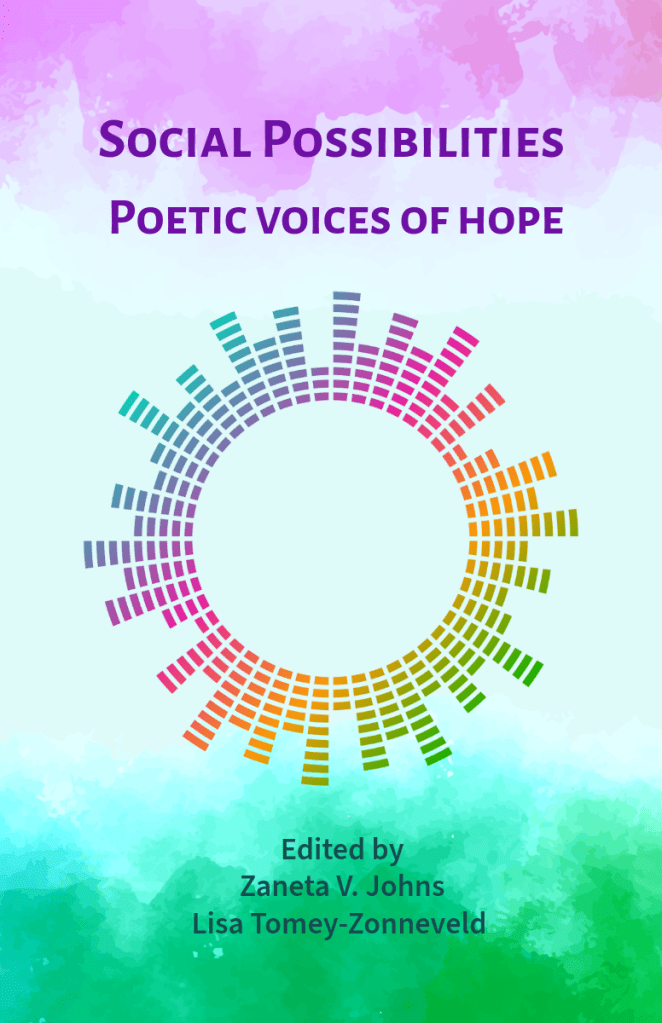
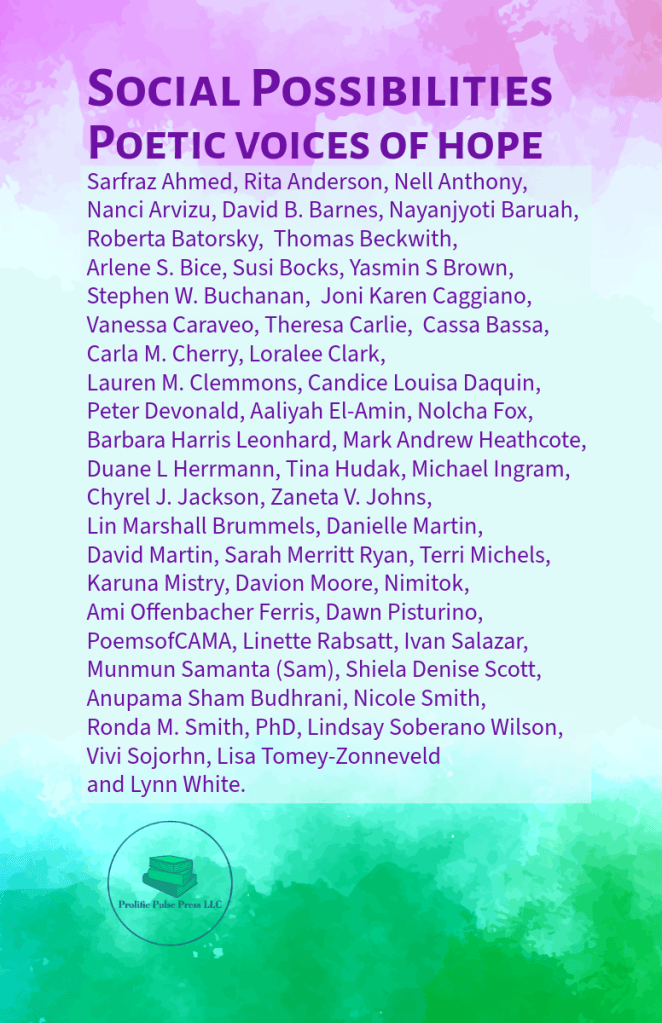
Social Possibilities – Poetic Voices of Hope is the result of a submissions call with the focus about possibilities to improve society. We asked the question” ” How can we bring hope?”
Zaneta V. Johns, Contributor and Co-Editor says it best with her introduction:
“Social Possibilities”is a literary sanctuary at a time of heightened uncertainty and distress. We assembled global poetic voices to ease our growing anxieties. We are faced with conflicting perspectives and occasional despair. This anthology is filled with thoughtful optimism. Rather than ignore the challenges facing our humanity, we lean in to acknowledge them while remaining hopeful. Poetry promotes understanding, empathy and compassion, which are crucial to bridging social and political divides. Featured poets illuminate a path to help you uphold justice. Similarly, we encourage you to challenge the status quo and not remain silent. Silence does not promote justice for the underserved. With unwavering devotion, please share your voice and light for the betterment of our global community.
This collection features poems that address themes of unity and serenity, ranging from calm to intense. From the first poem, “I Let Go,” through the last poem, “Into the Light,” these expressions are a compelling call to action. You will find personal insights, reassurance, and invaluable alternatives to fear and adversity. We celebrate these profound aspirations for a future of social connectedness.
It is not too late for The Beloved Community, envisioned and coined by Dr. Martin Luther King Jr. Armed with these impactful messages, let’s normalize kindness as an essential initial step toward harmony.”
Thank you to all the contributing poets for their prolific work.
You will find the links for purchase on ProlificPulse
This Poetry Collection is available for purchase through online stores. Born from a shared love of dark humor and playful wordplay, Seesaw is a delightful balancing act of wit, whimsy, and poetic mischief. Ken Tomaro and Nolcha Fox first crossed creative paths in the Thursday Night Poets group, where their mutual knack for quirky, offbeat humor sparked an unexpected collaboration. What began as playful exchanges-plucking words and phrases from each other’s poems to craft something new-quickly evolved into a collection that swings between the light and the dark, the serious and the absurd. Seesaw is poetry at its most spontaneous and fun, a reminder that even in life’s heavier moments, there’s always room to laugh, twist the narrative, and dance on the edge of meaning. Dive into this collection and let the playful push and pull of their voices keep you balanced right in the middle of the seesaw.
About the Authors
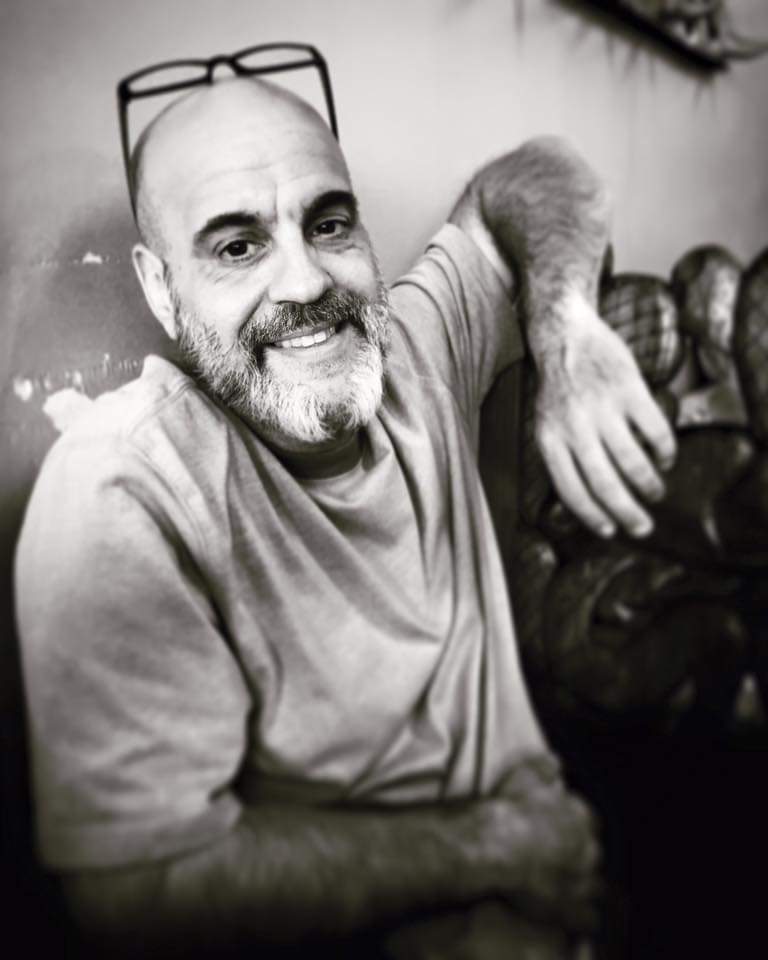
Ken Tomaro Never until recently did he consider writing poetry. Not when he slid from the womb. Not when he felt the first tingle of teen hormones. Not after he got married, divorced, moved to another city, lost a couple jobs, moved back. It just sort of happened. Ken Tomaro, self-proclaimed poet laureate of the Cleveland sewer system, has been writing poetry for a few short years. He’s not famous, rich, recognized or read in schools across America. He has been published in several literary journals, done a couple podcasts, started the YouTube channel, Screaming Down the Poetic Highway KenTomaro.com
Nolcha Fox’s poems have been curated in print and online journals. Her poetry books are available on Amazon and Dancing Girl Press. Nominee for 2023, 2024, and 2025 Best of The Net. Nominee for 2023 and 2024 Pushcart Prize. Editor of Chewers by Masticadores. Co-Poetry Editor of LatinosUSA. Websites: https://bit.ly/3bT9tYu and https://nolchafox2.wixsite.com/nolcha… Facebook: / nolcha.fox
As a teacher, I will always remain a student. In the classroom of life, l wish to work with and educate others. Whether you’re a teacher, student, or just your average person, here are a few of my "TEACHERble" moments.


 Prolific Pulse Blog