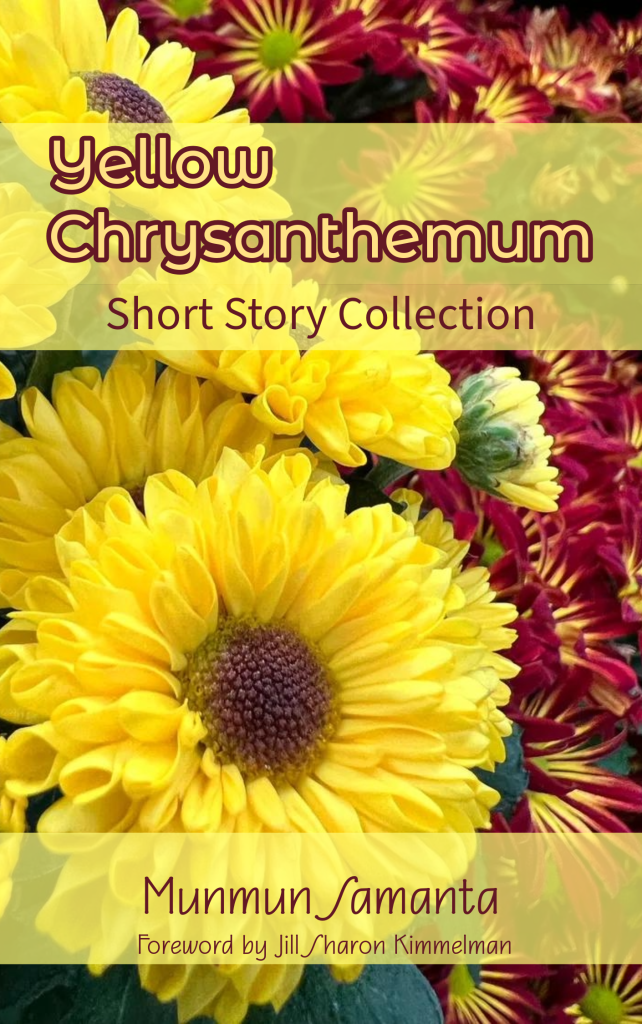
The Light of Day, a review of Yellow Chrysanthemum by Munmun Samanta. Prolific Pulse LLC. Raleigh, North Carolina. 2025.
In “Sia’s Dream of Dawn” a woman is alone in a garden, thinking, and very attuned to her surroundings. Readers at first think she may be an artist and she’s going to paint the sky. As the story unfolds, readers learn she’s a writer, and it’s as if she’s giving the sky a story, with characters, a plot, a conflict to be developed, heightened, and resolved. And she is. And the sky’s story, like clouds in a river, mirrors the writers. It’s original, poetic, and well worth reading again. Yellow Chrysanthemum as a collection is a story of struggle. Sia “loves this part of the garden. But more than that she loves this confluence of light and shadow.” A struggle to be honest with herself. The collection comprises a struggle for freedom as an artist; for freedom as a wife, daughter, mother, sibling; and for freedom as a person, for equality. “But conventional society never teaches a woman to strike back,” the narrator says in “Written in Blood.”
The stories that depict artists, and scholars are: “Peacock’s Feather,” “Sia’s Dream of Dawn,” “Come Back Somlata,” “Long-forgotten Line,” “A Girl Made of Darkness,” which also involves an individual’s struggle to overcome a society’s prejudice; “Lullaby,” as it invokes the bonding of mother and daughter through song; and “Mad Woman in the Attic,” the story of a woman married to a man who is a successful writer and an emotionally cold, distant husband. His books show empathy for others, but the women in his books reject the woman, just as he does, so she burns his books (his women), and feels at peace.
Stories that involve the struggle of women as members of families are: “Mother India,” “The Caged Bird,” “The Scar,” “Beast of Burden,” “Bright Big Bananas,” “Written in Blood,” and “Uproot.” “Mother India,” the first story in the collection is about hunger and poverty, a mother’s plight to feed herself and her children. It is very visceral; readers feel the hunger in it, and the mother’s desperation. “Uproot,” also about a mother, is contemplative. Should the protagonist stay where she is, or give into her married son’s wish that she leave her home, her job of teaching very young children, and go far away to live with him and his wife? Like “Sia’s Dream …” “Uproot” is a garden story. It begins with Sumita telling the children how a monkey-gardener uprooted trees, to analyze how much water they needed. The children are as delighted with their teacher as she is them, and in the end the story comes back to the garden.
While “Special Dish” has shades of scholastic research, it is primarily a story of the bonding of two women from different classes in society. “A Home of One’s Own,” while it involves family, depicts the plight of women in society at large, a society that says in its morays and traditions that women have no home, the home is the man’s. And in this story, there’s this wonderful sentence: “People say many things, but things are different.” Other stories that involve a woman’s struggle for equality are: “Uma,” “The Kitten and Cleopatra,” and “The Shut Door.” In all these, the plight of one woman is the plight of many.
In “The Shut Door” the narrator says, “It happens sometimes you cannot recognize yourself.” All twenty stories have the unstated adage “be honest with yourself.” Each is an attempt to arrive at some truth. Some stories seem sketched in gray pencils, others in dark blue ink. The light of day is the page on which the story appears. Labels limit. The struggle of the artist, the wife and mother, and the individual all intersect, or seem to, many of them. But in each the author, Munmun Samanta has made a thing of beauty, from her imagination, her vision, and her skill with words. These are stories that ring true; stories of India, of women, of lived lives.
Open her book and see for yourself. You’ll be rewarded. ProlificPulse.com
Peter Mladinic‘s most recent book of poems, Maiden Rock is available from UnCollected Press. An animal rights advocate, he lives in Hobbs, New Mexico, United States.
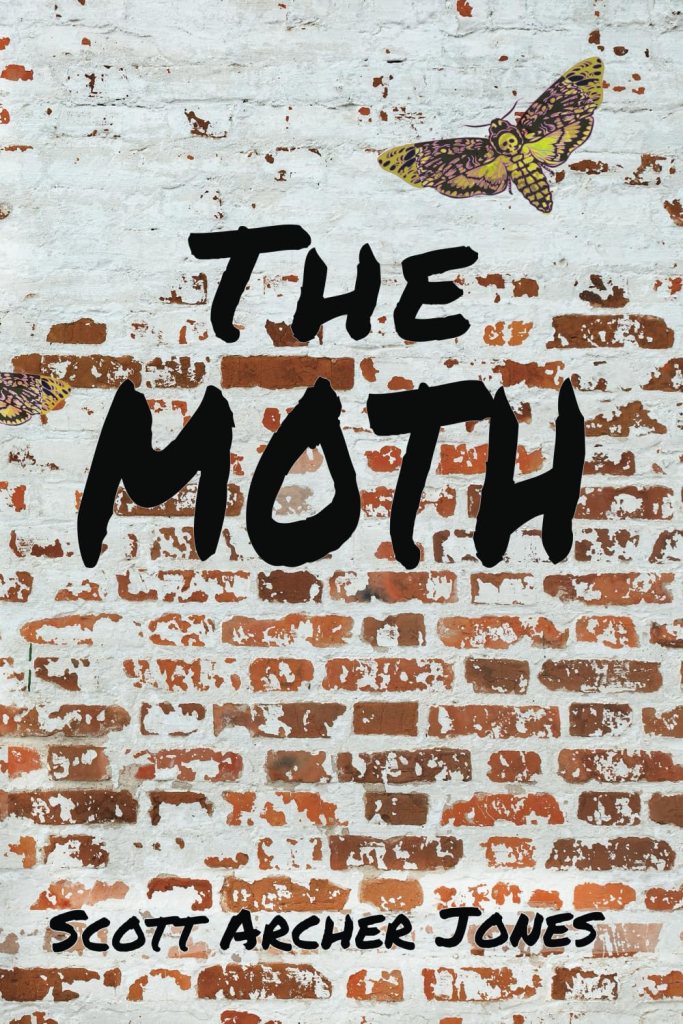
Watches, Cameras, Firearms, Fake IDs: a review of The Moth by Scott Archer Jones. Fomite. Burlington, VT. 2025. $15 paper.
The Moth takes readers on a ride to East L.A. and keeps them on the edge of their seats right to the end as its protagonist, Frank, a.k.a., The Moth, a pawn shop proprietor, sinks deeper and deeper into circumstances beyond his control. Part of the tension is that Frank is the sum of his choices, but he can’t control everything. A fusion of person and place, strong character relationships, and an abiding sense of danger make The Moth a memorable thriller in a noir style that calls to mind the fictional turf of Raymond Chandler and John Fante.
The Moth is character driven. Scott Jones knows that if his readers don’t know they can’t care. One way Jones makes his readers care is by rendering scenes from The Moth’s childhood in the Midwest of the United States. Before he was The Moth, he was Frank, son of a Lithuanian mother and an Irish American father. A central place in Frank’s childhood is the kitchen. It’s in the kitchen that Frank has a scene with his philandering and often absent father that evokes the tension in their relationship, and it’s in the kitchen that Frank learns of the industrial accident that claimed his father’s life. And it’s from the artificial light of the kitchen that Frank and his mother sojourn to the natural light of East L.A., where most of the novel is set. Scott Jones indeed places his readers in that expansive world vastly different from Frank’s claustrophobic roots. It is in East L.A. that he evolves into The Moth. The hospital where Frank’s mother, terminally ill with cancer, lives out her final days; the sidewalks where Frank sells contraband tapes; the food distributing company from which he is fired for giving food to a homeless family; the dark alley where he meets and falls in love with the prostitute Molly; and finally the pawn shop where The Moth works and lives alone in a back apartment are all part of who he is. Similarly other characters in The Moth’s East L.A. neighborhood are products of place. In this place of natural light, the dark of the pawn shop, crowded with items on display and hidden, seems comforting, a refuge, a place where The Moth can be himself.
The Moth evolves into a part of his East L.A. community. A community of people. Some are seasoned criminals, others have criminal ties and indulge in illegal activities; and still others are people who have little and never enough and are in desperate need of help. Molly, drug-addled and controlled by a pimp, is one such desperate person. Some of the best scenes in the novel occur as she and The Moth bond. Her death at the hands of a psychotic, sadistic john is an irreparable loss. It was with Molly that The Moth had a chance for the life he dreamed of when he moved to L.A. Because there are so many shady, seedy characters in The Moth’s East L.A., the innocents (and Molly is at heart an innocent) are all the more valued. The Moth tries to help Molly live a better life. He tries to help a father living with two children in a car get off the streets, and he tries to shelter a teenage girl from her physically abusive father—all to tragic results. But The Moth’s essential goodness, his generosity and empathy for people in dire need of help comes through in carefully rendered scenes.
A person steps into the pawn shop and sees lots of things, but what they don’t see are the fake IDs, the array of firearms, and other weaponry The Moth conceals from the eyes of the casual browser. In one scene he sells a high-powered rifle to the son of a criminal kingpin. The son wants that rifle to right a wrong, but the figurative tables turn, and he dies. The kingpin blames The Moth. For The Moth to keep on living, he must at atone for the son’s death by killing four of the kingpin’s enemies. The Moth is in a bind, and danger abides. Danger is integral to the plot, as The Moth knows violent criminals. What he has is of value to some of those criminals, and what he knows is of value to the police, as represented by a woman, an officer whose career is on the rise. She and The Moth met when she was investigating Molly’s murder. She uses The Moth as a snitch, as he knows things the average shopkeeper would never know. Scott Jones lucidly shows their meetings and The Moth’s dealings with people in his shop and in his community.
The idea of a pawn shop proprietor mixed up in shady dealings is not new, but it plays out beautifully in this novel. Scott Jones makes it believable by giving his readers flesh and blood characters and a well-rounded protagonist. People bring items into a pawn shop and take them out. Or, often those items are taken out by others. In the pawn shop that metaphorically is this novel, through ironic twists and turns, and good storytelling, proprietor-author Scott Jones knows what to put in and what to leave out. The Moth has arrived, an achievement that makes its mark in contemporary literature.
Review Written by Peter Mladinic
About Peter Mladinic
Peter Mladinic’s most recent book of poems, Maiden Rock is available from UnCollected Press. An animal rights advocate, he lives in Hobbs, New Mexico, United States.
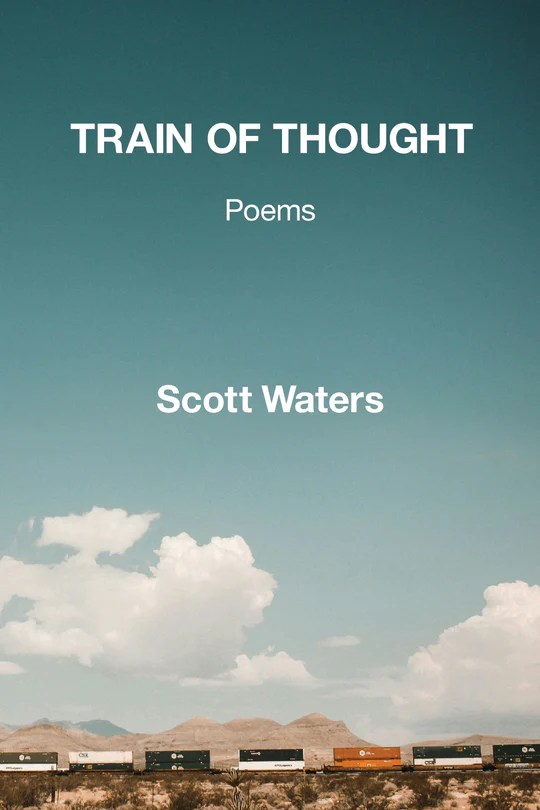
So the Day Doesn’t Escape Too Soon, a review of Train of Thought by Scott Waters. Kelsay Books. American Fork, Utah. 2025. $17.00 paper
In a documentary film on the great director Yasajiro Ozu, Wim Wenders has some wonderful commentary on trains in Ozu’s films. Trains in Ozu are symbols of passage, and a similar symbolism is going on in the poems of Scott Waters. As in Ozu, Waters’ trains are often commuter trains, taking people from their homes to work or to business in a city. Trains appear in various contexts in most of these poems, that concern themselves, and their readers with, like a train, going forward, and the persistence of nature, art, and humanity.
Nature thrives among the ruins. The vital coexists with the decadent. In “When I Took This Job,” the book’s opening poem, “the lulling rumble / of the train car” is juxtaposed with “three ducks shot like arrows / over a Cabernet pond.” The lulling rhythm varies with the quick, smooth flight, as seen from a window. In another poem, hills are likened to horses. In “Small,” “the morning news” is enveloped by a finch’s descent “through the bright pond of air” and “a spray of white petals / against your windshield.” In “Awakening on the 5:05,” the democracy of “a lavender stream in the woods” is accented, how it is there for all, to sustain animal life and evoke tranquility in humans, regardless of their socio-economic strata. It is there for all, as are the “oak, hickory, dogwood” trees in “Parallel Tracks,” the “mountain stream” in “Leaving the Cove,” and the “blackbirds” that rise “from marshes” in “I Took a Train to Fresno.” The human, the machine, and nature converge in “Shredding the Clouds,” a poem about ascent.
Three seagulls
circle above
a commuter train
parking lot
This passage is followed by an image of a raven’s descent onto a parking lot, perhaps to pick up a scrap of food left there. And then, another ascent “a small white plane,” in appearance like a gull, “chops through a / grey scarf of clouds.”
What is art? Perhaps, anything the artist can get away with. The idea that the subject chooses the artist is alive and well in “About the Floor,” with its tone of wry humor. The commuting speaker contemplates nature “cumulus piled / on western hills,” and human-made “beams as thick / as battering rams,” and ends up writing (memorably) about “the filthy / train / floor.” In “Body of Work” he describes in an array of arresting images a painting that has a quilt-like collage. “God’s Diorama” is three-dimensional, like a Joseph Cornell box. Beauty in art underlies “Puffs,” “glory / is an / English train.” The train, like a work of art, “startles you / when it arrives.” The role of the imagination in art underlies “Waking the Phoenix” as a train moves through hills, the “hills roll on,” the sun, like a new-born bird, “learns to fly” and finally is “soaring now,” a metaphor for humans being alive enough to imagine. Art mirrors life. In “Switch,” the speaker says “I …
pull out a pen
and the train, the mole,
the hills, the clouds,
the fog
are all at once embraced
by arms
of light.
The poet Philip Larkin said “What will survive of us is love.” In Train of Thought the best of humanity is exemplified in the care people give to places, things, and each other. Their “best” is continual, starting from “the / loved one / at / the door” in “Castaway Mind,” and ending with the “dark forces” in “Let Us Now Praise Breakfast in the Sun,” a poem that, despite those dark forces, is celebratory. Life is precious because people are mortal, the speaker suggests: “I am 57 / beard more grey/ than it was last week.” With a grey beard and a cognizance of death he says of his company’s CEO, a man who “died in his sleep … He will never face/ another Monday.” In “One Thing” a scent of perfume triggers a romantic memory, and in “A Bit of Flannel” the image of a shirt on a clothesline triggers a memory of familial love. In “Better Home and Garden” the speaker’s empathy for whoever lives in a “Tent by the railroad tracks” abides. A man rummages (“among the flung garbage/ of his campsite”)
as she hangs laundry
among the overgrown weeds
of a yard that belongs
to an unsent postcard
of a home.
Any review of Train of Thought would be remiss without the mention of “Mumbly Old Men.” With its precise showing and telling, it contrasts reality and virtual reality, accenting differences between then and now. One of the best in this collection of very good poems, it deserves to be in an anthology of the best of contemporary poetry. It engages all the five senses, and in a few words says a whole lot, not only about the speaker but about anyone living within the touch of a keypad. Fortunately, for readers, other poems in this book have the import of “Mumbly Old Men,” a poem with something to say that readers are unlikely to forget.
About Peter Mladinic
Peter Mladinic lives in Hobbs, New Mexico. He was born and raised in New Jersey and has lived in the Midwest and in the South. He enlisted in the United States Navy and served for four years. He received an MFA in Creative Writing from the University of Arkansas in 1985, and taught English for thirty years at New Mexico Junior College in Hobbs. He has edited two books: Love, Death, and the Plains; and Ethnic Lea: Southeast New Mexico Stories, which are available from the Lea County Museum Press, as are three volumes of poetry: Lost in Lea, Dressed for Winter, and Falling Awake in Lovington. His most recent book, Knives on a Table was published by Better Than Starbucks Publications in 2021. He is a past board member of the Lea County Museum and a former president of the Lea County Humane Society. An animal advocate, he supports numerous animal rescue groups. Two of his main concerns are to bring an end to the euthanizing of animals in shelters and to help get animals in shelters adopted into caring homes.
Set in contemporary India, “Yellow Chrysanthemum” is a stirring collection celebrating the lives of Durga, Uma, Tihar, Somlata, Mridula, and fifteen other women from rural villages to bursting cities. These women are not passive victims but survivors and warriors who have the courage to challenge the status quo of society, which always seeks to silence their voices.
As the author, I wrote this book to pay my homage to the women who continue challenging society’s oppressive forces. If you are in search of a book that will both challenge and inspire you, “Yellow Chrysanthemum” is a top pick. Take part in the celebration of women’s voices, a call for justice, and a reminder of the incredible power that exists within us all to rise above, no matter the odds. Munmun Samanta
~Storytelling, Truth-telling
The commodity of these twenty stories is the struggle of a woman as an artist, as a family member, and as an individual in society. In “Written in Blood,” which concludes the collection, Asima, the protagonist, says, “But conventional society never teaches a woman to strike back.” In every story, the author strikes back forcefully and eloquently, in sentences that are as poignant as they are poetic. “Mother India, which begins the collection, is about poverty, hunger, and a mother’s determination to feed herself and her children. It’s a visceral story, one feels as they read. In “The Caged Bird,” Tihar,” trapped in a repressive marriage, identifies with the bird she sets free. And in “The Dawn of Sia’s Dream,” the “confluence of light and shadow” that the writer-protagonist loves may be seen as the conflict that drives her story, as if her story is also the sky’s. Its underlying theme is the imagination’s power to transcend, a theme also in ” A Girl Made of Darkness, about an artist who has struggled with society’s prejudice of people, like her, with dark skin. Each story in the collection is an integral part of the whole and told in a voice that arrives in each instance at some truth. Yellow Chrysanthemum establishes Munmun Samanta as a topnotch writer of fiction not only in India but also throughout the world.
– Peter Mladinic, Author of “Files of Information for People who Don’t Exist”
Mumnum Samanta’s short story collection, “Yellow Chrysanthemum,” is a treasure chest of joy and strength that springs from the neglect, abuse, betrayal, and invisibility of 20 women. These women are flowers in a hostile world that crushes them underfoot. Yet somehow, they take root and bloom.
We only need the eyes to see what we take for granted. This book will open those eyes.
Kaelen’s mother recently discussed her daughter’s book, “Wings and Whispers,” and family support.
Background and Inspiration –
1. Can you share a bit about Kaelen’s early interest in writing and illustration? When did you first notice their talent?
The real story with Kaelen was…her internal struggles often held her back. When my daughter Kaelen was born, she had a major hearing loss (100%) in her left ear. From age three, the Special School District provided her with special services while diagnosing her with five language processing impairments, learning disabilities, and unilateral hearing loss. She was the only student who received it during kindergarten. I will say…she didn’t read at age five.
By the time she was in first grade, Kaelen began to have a knack for reading.
I must admit…school was a struggle for Kaelen. She fell behind because all the classes were harder for her. Including math and writing were the hardest for her. Though science was easy for her, and she always loved it. Overtime, my mantra was to break down every word, the synonym, antonym, and re-teaching all the schooling methods at home. Even though Kaelen felt lost, she begged me to stay home from seventh grade on. Due to the five language impairments, and five language barriers really deterred Kaelen from feeling successful.
It was an honor and a privilege to stay home, for the sake of my daughter’s suffering. As far as Kaelen is concerned, here are the crucial elements that have kept her in the game. First, the undeniable talent. And she does art every day. Next, she has always had a burning desire and tenacity beyond any other. Never give up attitude, hard work ethic. There will be lots of “no’s” and one must know that will happen. She’s had mentors who have followed her since she was thirteen. Ibiyinka, the art ambassador of Nigeria, award-winning authors Ginny Rorby & Kirby Larson, her art teachers at Parkway South (Southwest Middle and Wren Hollow) and her professors at Memphis College of Art. Jean Holmgren, Tom Green and more. The last two are professional artists too.
Getting all her supports in school (kindergarten through college) and attending an art school were keys to her newfound success.
Though she never stopped dreaming. She held her head up high and pushed through every obstacle. There were a lot of delays in writing, it was a challenging task to put words together in the sentence. Since she didn’t read much at first, Kaelen illustrated and drew the stories instead of writing. When she was in kindergarten, that was mostly what she did with communicating the words, instead of detailing it in writing.
Every assignment she turned in was illustrating a visual event in drawing pictures. Completely from imagination. Kaelen was a great speller! Somehow, her brain knew how to spell the hardest words. One fun fact, my daughters were in two distinct aspects. Her sister and her were very inseparable as kids. But, despite all that, it was a challenge for Kaelen to write and read…because her hearing loss caused processing issues which led to learning disabilities. Nevertheless, Kaelen rose like the phoenix…and she proved to herself she could do it.
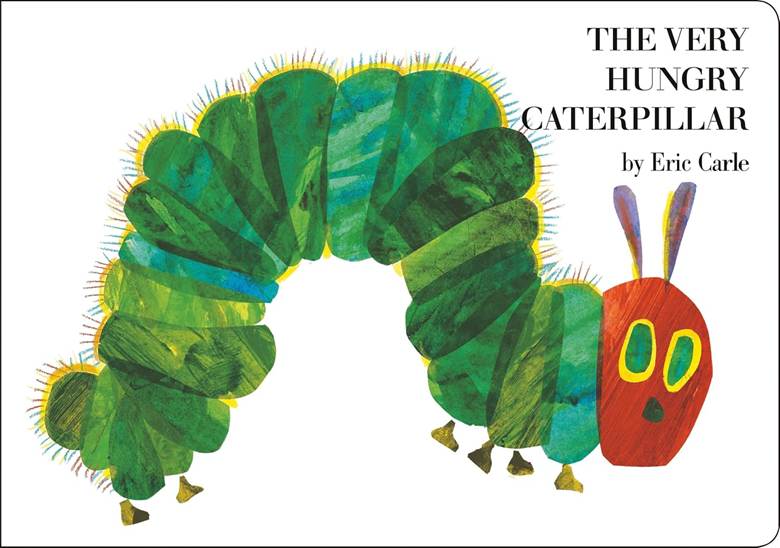
My little girl was reading downstairs in her and sister’s room, a book called, “The Very Hungry Caterpillar” by Eric Carle. Never in my wildest dreams was I so surprised. Kaelen Elise Felix was reading to herself and watching every word while trying to figure out how to write.
I recall Kae said… “Mommy, this book inspires me. I think this is my calling.”
Why do I mention these hurdles? This makes Kaelen’s dream possible; these setbacks shaped her into the lovely young lady she is today.
At age 13, Kaelen started to have a zest for writing after she emailed her favorite author, Kirby Larson, about becoming an author. While Kaelen suffered so much with written communication, even putting a sentence with all knowing where the commas needed to be placed was hard.
Seventeen years later…it brings me happy tears my daughter achieved her dream!
2. What were some of Kaelen’s favorite books, authors, or illustrators growing up?
Without a doubt, her favorite books were all about animals, of course. Eric Carle inspired her to see the beauty in life full of imagination and colors. She adored Dr. Suess, because it was one of her favorites to be able to break down the numbers, characters and more, given the internal disabilities she had. His characters and rhythm are a great asset to Kaelen’s fondness for children’s literature.
And I made sure to keep all these precious books for Kaelen. We recently found them downstairs in the basement.
I know Kaelen…she was moved. Kaelen has instilled in her the values of kindness, genuineness, and humbleness.
Some of her favorite illustrators are from the whimsical period of Art nouveau from the 1900s period. Without a doubt, she continues to love this one artist called Chuck Close, and his use for detail or photorealism motivated Kaelen more by the day. The intricate number of features of additive colors in every circle allowed her to be able to break it down.
She is very much inspired by Vincent Van Gough, especially from her book in the chapter with the frog.
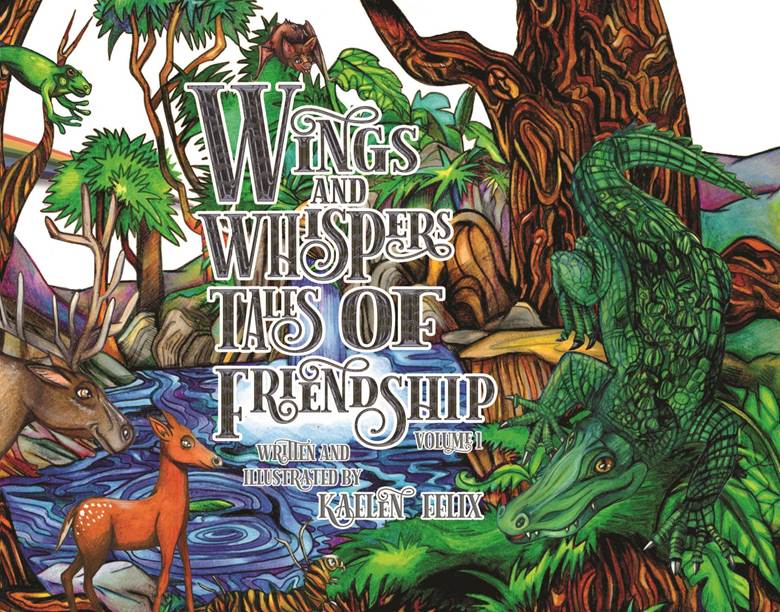
3.How did Kaelen come up with the idea for Wings and Whispers: Tales of Friendship?
The title didn’t even exist at first as “Wings and Whispers: Tales of Friendship Volume 1). It was originally written like, “…A is for alligator.” It was more of a tell than sharing the intricate details. Kaelen had a desire to publish it for her final BFA thesis. But then, she wasn’t ready to share it with the world. So, it was put on hold.
The book she crafted over 9+ years. Presented to Ginny’s editor and Kirby’s editor, both said no.
She went back to rewriting it, reworking it, and a publisher, which is so wonderful. We found you, Lisa! I am so happy she found you too!
That was almost two years ago in December. The first book was edited, and she spent 4-1/2 months creating eighty-four hand-drawn illustrations, designing the book layout, and creating it. She has a contract deal for Volumes 2, 3 & 4. And she is in the middle of illustrating another client’s book. She’s having a blast of doing it, for sure! But she will continuously work on hers too.
She initially wanted to create a book about figurative language but decided to mesh poetry with it, too.
4. Did any real-life experiences or friendships inspire the story?
Several years ago, Kaelen was severely depressed. Kaelen kept battling bouts of mental health and discouragement.
She struggled finding relationships with people she would connect well with. Having a support group on Facebook and Instagram allows her to keep going, and these supportive groups are professional poets, illustrators, artists, or even fans.
She became depressed and lonely. One day I, as her mother said to her, “I think you should just try to go back to doing ‘art every day.’ And inner fire and desire allowed Kaelen to not stop drawing, outlining, painting, and you name it. She did it! She didn’t give up. The dream never ever went away, it was always there. Though Kaelen didn’t talk about it. Even if she did illustrations for other clients, she gave her more insight into the publishing process and what should be included and not included. Lisa is a gem and has been a wonderful help for Kaelen!
The friendship part is more inspired by the arrival of my granddaughters. Evie and Thea changed Kaelen’s life! She loves being an aunt so much. Her sister has always been incredibly supportive of her, too. Kaelen plans to dedicate her second book to her sister.
Creative Process and Development
5.What was Kaelen’s creative process like when working on the book? Did they focus on writing first or illustrations?
At first, nine years ago, it was the writing. She didn’t like the tone of it. I recall she would video call me from Memphis College of Art andI would give her some tips. The illustrations in the book came first in this scenario because she loved creating all the ecological animals from imagination.
Kaelen often filmed reels on her iPhone recently, and she’s gotten better at the process, too! She used to thumbnail tiny placements of where the artistic storyboarding is going.
Then, she transfers all the details on the watercolor Strathmore Illustration paper, drawing in pencil, outlines it. Her craft is all about using gouache and watercolor paints, along with creating an overlay of colored pencils.
6. Were there any challenges Kaelen faced during the creation of the book? How did they overcome them?
The main challenges faced during the creation of the book were mainly when she first started, her mentors’ editors rejected it. Kaelen did feel a little defeated, but she didn’t let that stop her. That’s where you came in, Lisa. You and Kaelen’s collaboration fits just like a glove!! If it weren’t for you, Lisa…none of this would have been possible. I simply have to say…thank you!
7. How did Kaelen balance her life while working on their debut book?
Kaelen would go to work, and then come home, and work on her craft. She hardly spent time cooking because she had to keep working on the book. Though, at times, she made some efforts to do it.
Before the book debuted, Kaelen worked tremendously hard to put the book together. She relaxed for a while. She does an excellent job of making sure to take care of herself better than ever! I am extremely proud of her for that.
8. As a parent, did you play a role in encouraging or supporting Kaelen’s creative work?
I wanted to be the best role model for my daughter as best I could. Given when she was little, I traveled for a living. I had to have surgery here and there. But I always made sure to spend time with my child. I encouraged the saying, “Remember…it is the story you tell yourself that you want to put on paper or canvas.”
I told her art every day for her is especially important, and she has always been able to listen to me on that one as well.
I will always support and encourage my child to the best of my ability as possible to show her and be a great mentor to her.
Publication and Reception
9. How did Kaelen react when she learned the book would be published?
I can remember Kaelen was screaming happiness from the top of her lungs. She couldn’t believe it at all. This was the dream she pushed herself to work hard on for so long.
10. What has been the most exciting part of this journey for Kaelen and your family?
I would say…the fact my grandchildren get to be a part of this journey in the story sets the record straight, too. A lot of my followers from grade school and onward couldn’t believe my daughter did this. The fact that my father’s sister Margaret created, wrote, and published a book at age 7 is truly remarkable.
11.What do you hope young readers take away from Wings and Whispers: Tales of Friendship?
Readers should know…my daughter was a shy little girl growing up with internal struggles herself. She, in a way, relates to a lot of the characters, too. My hope is that the reader will learn to be nicer, kinder, and less brutal to younger kids. I never raised my kids to act that way for sure.
Looking Ahead
12. Does Kaelen have any plans for future books or projects?
Kaelen is planning to continue authoring books. She doesn’t know yet, because Wings and Whispers holds a special place in her heart at this moment. She hopes to continue illustrating for clients with Lisa. If not, she will always keep working on her stories as well.
13.How do you see Kaelen’s writing and illustration evolving in the future?
I would say…Kaelen does plan to continue to work in her current job. That’s what I would want for my child is to have a steady income for right now.
Kaelen spends a lot of her writing, illustrating, and designing outside of work. She is constantly thinking about what her next art piece will be about. Perhaps more publishing companies will pick up her work. We must see what the future holds for her.
14.What advice would you give to other parents who want to nurture their child’s artistic and literary talents?
If you have a child with special needs to get as many special education supports in place to overcome their disabilities. Along with following their dream. I want other parents to understand I have lived that journey! And I will never give up on my child. Though, I think Kaelen is on the best path possible.
Even emotionally and mentally, she is in the best place in her life. And I couldn’t be prouder of her, along with her accomplishments. I could stand before my parents and say I did the best I could to provide the special needs services for her. Again, as her mom, I will always be a great mentor to many of her friends from Memphis College of Art and more.
Thank you to Linda Felix for taking the time to complete this interview. I believe you will find this interesting and inspirational as I have.
As a teacher, I will always remain a student. In the classroom of life, l wish to work with and educate others. Whether you’re a teacher, student, or just your average person, here are a few of my "TEACHERble" moments.
Hi! my name is Sebastian (You can call me Seb!) ...welcome to my Blog. I'm a photographer from Worcester, Worcestershire, England. Thanks for dropping by! I hope you enjoy my work.





 Prolific Pulse Blog