Book Reviews, books, poetry

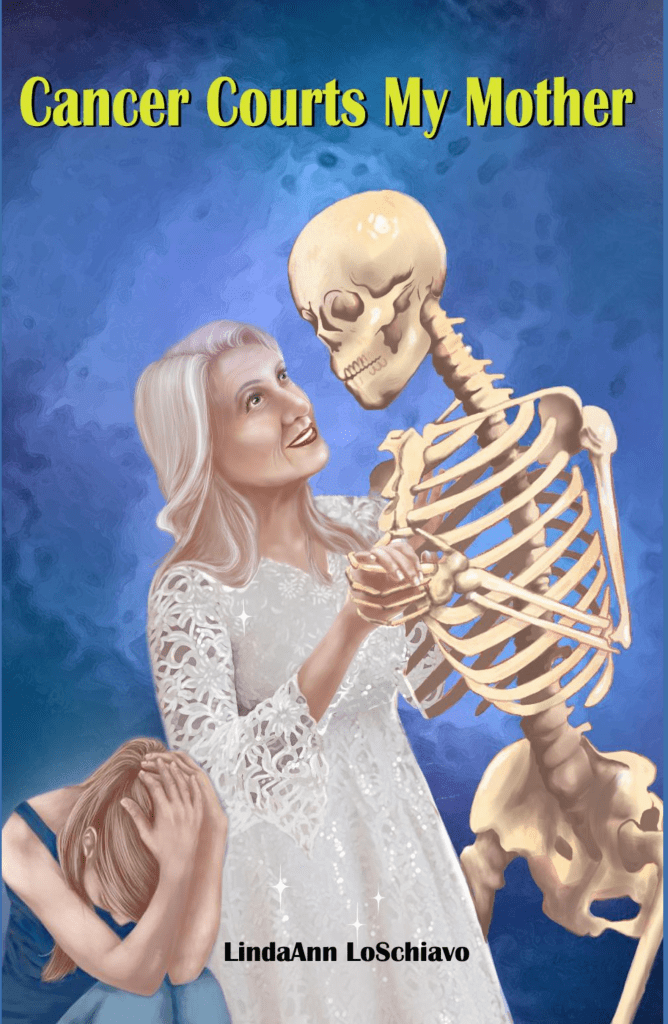
Peter Mladinic’s Book Review of “Cancer Courts My Mother” by LindaAnn LoSchiavo


Home Remedies: a review of Cancer Courts My Mother by LindaAnn LoSchiavo. Prolific Pulse Press. Raleigh, NC. November 2025

It would be hard to find a person whose life, directly or indirectly, has not been touched by cancer. Just as cancer takes many forms, people’s mental, emotional, and physical responses vary. LindaAnn LoSchiavo’s response is this book. Out of ugliness, the frightful fact cancer kills, she has wrought beauty, this sequence of poems. A reader’s appreciation of them may be heightened by taking a look at their metaphorical resonance and their distinction between honesty and artifice; and, ultimately, by considering the voice of the poet, a daughter speaking about her parents.

The book’s title Cancer Courts My Mother suggests an extended metaphor. The tenor, cancer, is a suitor. A suitor is defined as a man who courts a woman.  Although the title suggests otherwise, the woman the suitor courts is the daughter, the poet. In “Arrival” she says, “I know he’s made himself at home, the dark prince …conveying her into his sunless realm.” Yes, death is conveying the mother but it’s daughter who knows. And she is the one being courted, the one who hears the dark prince’s seductive whispers, the one for whom “terminal illness / twirls out of the speech of men.” At the end of “Tick Tick” she says, “Cancer, biding his time, taunts me.” In “Early Visit from the Grim Reaper,” “His baritone commanded me to GO!” In the “Bartering with Cancer,” the octave begins with “When medicine has nothing more to give / There’s only daughters and morphine…” And in the turn, the second half, she says, “I’m stunned.” In “Jaundice,” she says, “my mother wound up with him —Cancer —,” but in the realm of life, cancer courts the daughter, the maker of these poems.

They are interesting for their distinction between fact and fiction, honesty and artifice. Interesting, compelling, haunting. “Diagnosis” begins the sequence. Its abrupt enjambments signal an urgency that inclines the speaker towards artifice.

Transformation’s required, starting with your voice,
Hemorrhaging with euphemisms, lies. You could
Be an actor fed fake dialogue, words almost
A well-rehearsed performance. You could be-
Come an acrobat, clutching the girders of hope. A
Safety net’s missing. The laughter is a ghost’s.

The abiding artifice is the poems.

Even imagination threatened to betray
me, failing to make good on the fancies I’d hope to invent.
But pen and paper became the dependable parents I’d
always longed for. With them, I sketched realities I could
eventually escape to.

That passage is the conclusion of “Mother Magnified,” which is an honest account of the friction between the speaker and her mother, one aspect of this mother and daughter relationship. Yet another realm of reality, that not only counters the artifice “an actor fed fake dialogue” but also the wooing of “the dark prince” is the life of plants.  In “Green Nursemaid” the daughter tends her mother’s plants, “suturing new healthiness into the exhausted potting mixture.” While other flourishes of artifice appear in the forms of mythic “mermaids” and the “prayer candles” of religious ritual, the plants symbolize continual life, and, in “Living through the Dying,” which begins with the imperative “Resuscitate the wilted,” their tenacity and the poet’s.

To consider the voice in the poems is to consider the speaker, a poet facing the grim reality that many of her reading audience have faced or will face: cancer kills. The poet’s mother’s suffering is terminal; then there’s her father’s suffering and her own. Her voice, what is said, and how, reflects the human heart in conflict with itself. Signs that say Fuck Cancer are brandished by people who hate the thing that is killing their love ones. I love, I hate —they suggest, conveying that conflict. The poet’s “realities” she “could escape to” suggests her speaking, and putting pen to paper is cathartic. She is also defiant. In “Early Visit …” the reaper says, “GO! She says “No!” 

Cancer Courts My Mother consists of poems in free verse and in tradition forms. While its rhymes resolve, there is no closure; the poet’s turmoil remains. Cancer took her mother. A mother’s suffering and eventual absence, left a daughter and a spouse/ father to grieve. The poet’s grief is poignantly conveyed throughout this sequence. Towards the end she says, “When my mother died, she took home along with her.”

Order “Cancer Courts My Mother”

Peter Mladinic was born and raised in New Jersey. He graduated from the University of Minnesota in 1973 and earned an MFA in Creative Writing at the University of Arkansas in 1985. Professor emeritus at New Mexico Junior College, where he was a member of the English faculty for thirty years. During that time, he was a board member of the Lea County Museum and president of the Lea County Humane Society. He is the author of several poetry collections.
Announcements, Book Announcements, book launch, Book Reviews, poetry

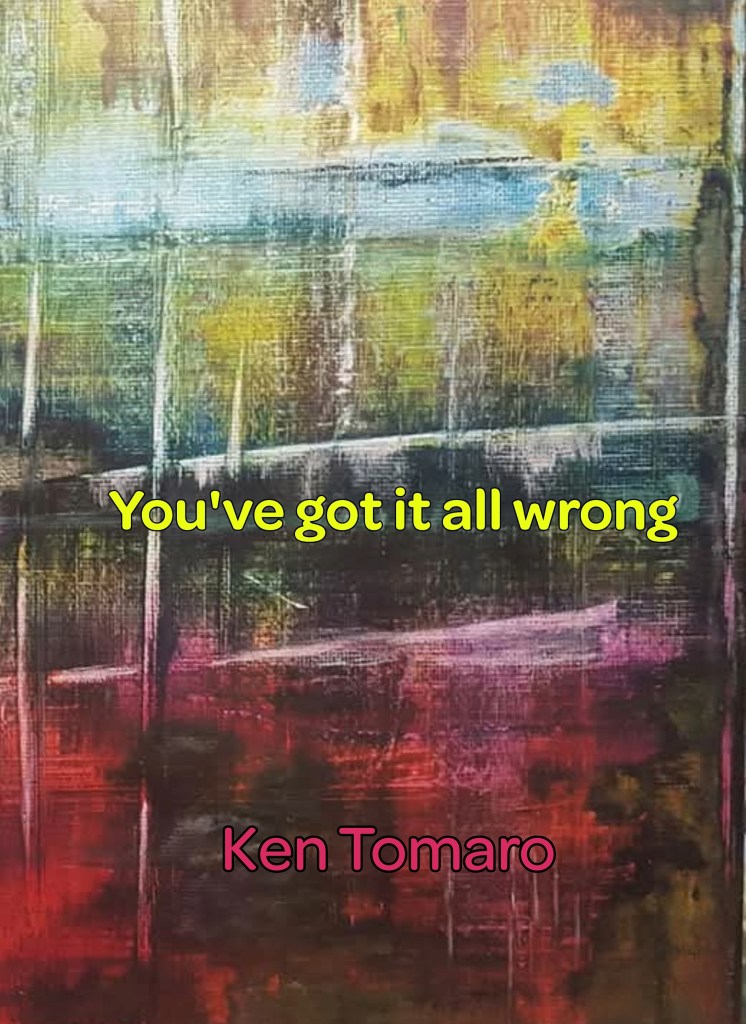
ANNOUNCEMENT! “You’ve got it all wrong” by Ken Tomaro is ready for you!

An Honest Review From Munmun “Sam” Samanta:

“You’ve Got it All Wrong” by Ken Tomaro.

 “I cleaned the apartment today,

changed the lightbulb in the refrigerator

and made stew from the leftover lamb my sister didn’t eat

I’m tired, it’s cold and dark here

and I am afraid of what’s out there

beyond the glass of the balcony door

beyond the neighbor who yells at his wife,

and kids, and brother

I’m afraid I’ll never find

what it is I don’t even know I’m looking for

or maybe I’m afraid

I won’t be able to change those things that need it…”

This is Ken Tomaro, so easy yet so profound.

Ken Tomaro’s collection “You’ve Got it All Wrong” explores nostalgia, loss, and the absurdities of existence through poignant, reflective poems. It is a collection of poetry that resists lyric ornament in favour of blunt realism, irony, and dark humour. Written in a conversational style, these poems traverse memory, absurdity, faith, mortality, and working-class identity.

The first poem, “I remember the distinct aroma,” begins with the scent of Polish doughnuts, using this family memory to reflect on the passing of time, the loss of childhood innocence, and fleeting moments that cannot be reclaimed.

“I was robbed” is a fierce monologue where Tomaro likens life to a thief: it brandishes a gun, steals sanity, dreams, and certainty, yet he refuses to yield.

“Playing God” conjures the fantasy of manipulating fate, depicted through cars on a highway—miniature models in the mind’s grip. “Summer of ‘89” is a lyrical meditation on teenage nights at Lake Erie.

“Life is very much a horror movie” is a standout poem that likens office life to an unending nightmare.

“If I believed in God” and “The big God damn bang” both question religious belief, exposing the flaws Tomaro perceives in the idea of a universe created by an indifferent force. In contrast, “Chickens” injects humour with its absurd image of chickens wandering a city road, disrupting the poet’s brooding thoughts.

“We all carry anger.”

A compassionate poem speaking to grief, persistence, and the will to keep breathing. “Make it stop” is among the darkest, most unflinching poems:

“word of warning –

It’s not a happy ending.”

“Breathworks” is a brief yet powerful poem that reminds us that trauma begins at birth. “Bad genes” is a satiric poem wrapped in humour and rage. Tomaro’s bluntness, “fuck all of you!” is cathartic. “Rosemarie” is a deeply nostalgic and tender poem that evokes memories of childhood winters, fireplaces, and Christmas music from 1976.

“Sometimes a dog’s butthole” leans into shock value, but its humour reveals genuine affection for Cleveland, using the city’s quirks—potholes, pierogies, grey winters—to illustrate imperfect love.

“A glittering shitshow of smash-faced adults” distils Tomaro’s outlook: absurdity, bluntness, and unyielding truth. The poem confronts adolescence, broken towns, and fragmented adulthood.

“Beyond the Glass” is one of the most vulnerable poems by Tomaro. It captures the threads of loneliness, seasonal depression, and the fear of the unknown that linger in the human heart. The “cold and dark” beyond the balcony glass becomes a metaphor for uncertainty and existential dread. “Well, hello” is the closing poem.  It is structured around the word “well,” and ties together themes of health, survival, and cautious hope.

Tomaro writes with honesty and sharp wit, never sugarcoating his words. His poetry speaks to those who want the truth, humour that doesn’t hold back, and a clear-eyed look at life. “You’ve Got It All Wrong” reminds us that being human means living with contradictions and sometimes finding reasons to laugh anyway.

“You’ve Got It All Wrong” isn’t for readers who want romance or flowery language. Tomaro’s poems are stripped down, gritty, and often hit hard. He writes about life’s odd moments, the pull of memory, and the humour that helps us get by. This is poetry about surviving with honesty and wit, not by escaping reality. Fans of Charles Bukowski, Diane Seuss, John Prine, or anyone ready to face life’s absurdities with a grin must grab a copy:

“and it’s time for your annual wellness check/ to make sure you and your doctor/ remember each other’s faces.”

Get your copy today!!

Announcements, Book Announcements, Book Reviews, Celebrations, poetry

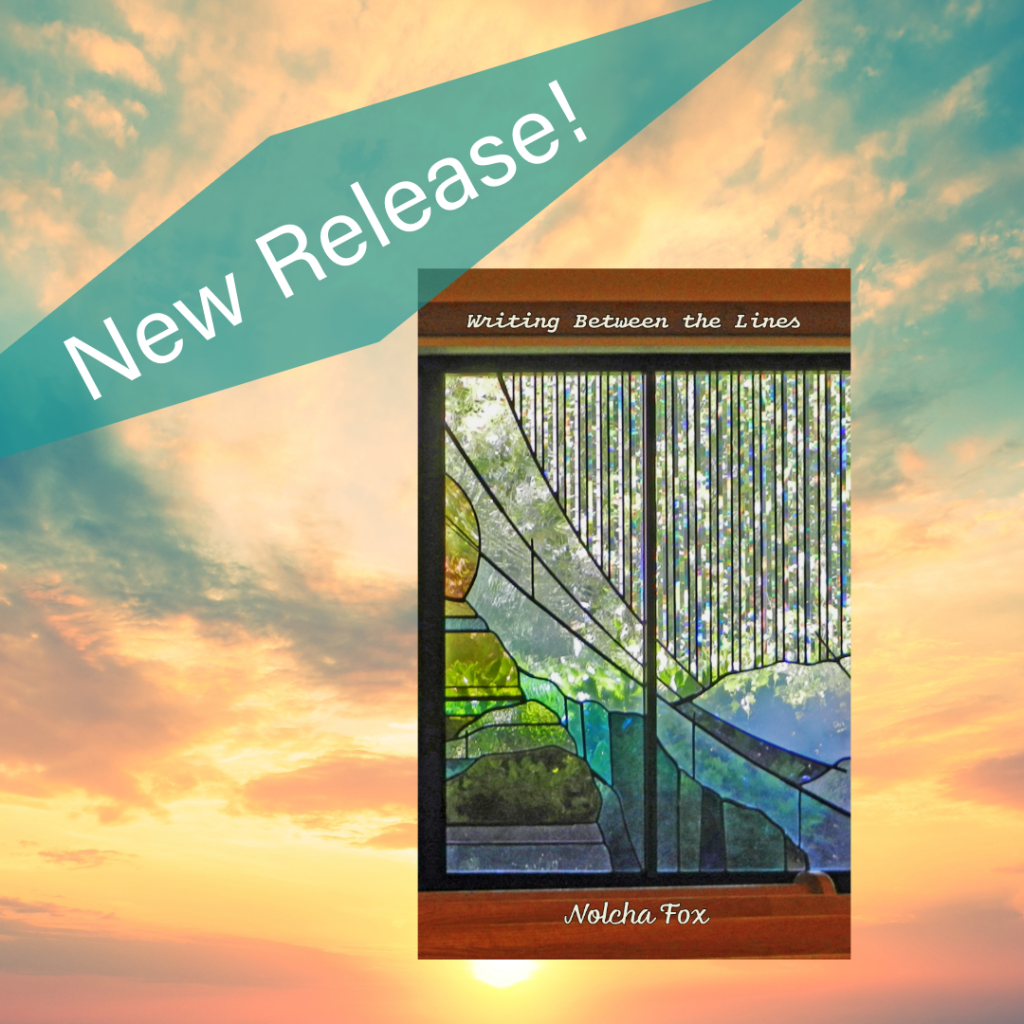
ANNOUNCEMENT! “Writing Between the Lines” by Nolcha Fox is Now Released!

https://www.prolificpulse.com/nolchafox

We are pleased to announce the new release of Nolcha Fox’s Poetry Collection, Writing Between the Lines”

Each natural jewel has its own unique brilliance. Catch the fire in a diamond and it’s like no other. As Nolcha catches the fire from other’s poems, these reflections create a whole new light show. As you read through the poems, you may find remnants of life’s experience weaving through. Like the light streams through stained glass windows, there are illuminations, sun dogs of brilliance, fractures melded into brilliant streams of color, of light.
~~~

Nolcha Fox is fearless. She walks the literary tightrope between success and failure with grace and elegance and she never ever disappoints. For my money, she’s simply one of the most remarkable writers to come along in years.

John Yamrus, author of Don’t Shoot the Messenger: Just Give Him a Good Place to Hide

***
Nolcha Fox’s new poetry book, Writing Between the Lines, is a keen collection of poems that begin and end with two lines from another poet’s poem. Although two lines are credited to another poet, the reader is taken into a new story and resolution decorated with vivid imagery and metaphors.

Barbara Leonhard, author of Three-Penny Memories: A Poetic Memoir

***

“Writing Between the Lines” by Nolcha Fox is a collection that surprises at every turn. Written as part of a 30-poems-in-30-days challenge, each piece begins and ends with borrowed lines from other poets, yet what happens in between is unmistakably Fox’s own voice.

The poems move effortlessly between humour and heartbreak. In “Drunk,” night, sleep, and dawn stumble together like a merry band of revellers, while “My Father’s Death” cuts deeply with raw grief and memory. “Dog Days” transforms the sun into a mischievous dog splashing through a creek, while “Keep Things Simple” delivers biting dark wit.

Nolcha Fox excels at capturing the contradictions of human experience, sorrow and absurdity, longing and laughter. Her imagery is sharp, her tone daring, and her honesty uncompromising.

Munmun Samanta, author of Yellow Chrysanthemum

Get your copy today! Click here for the best choices for this prolific collection.

Book Reviews, short story

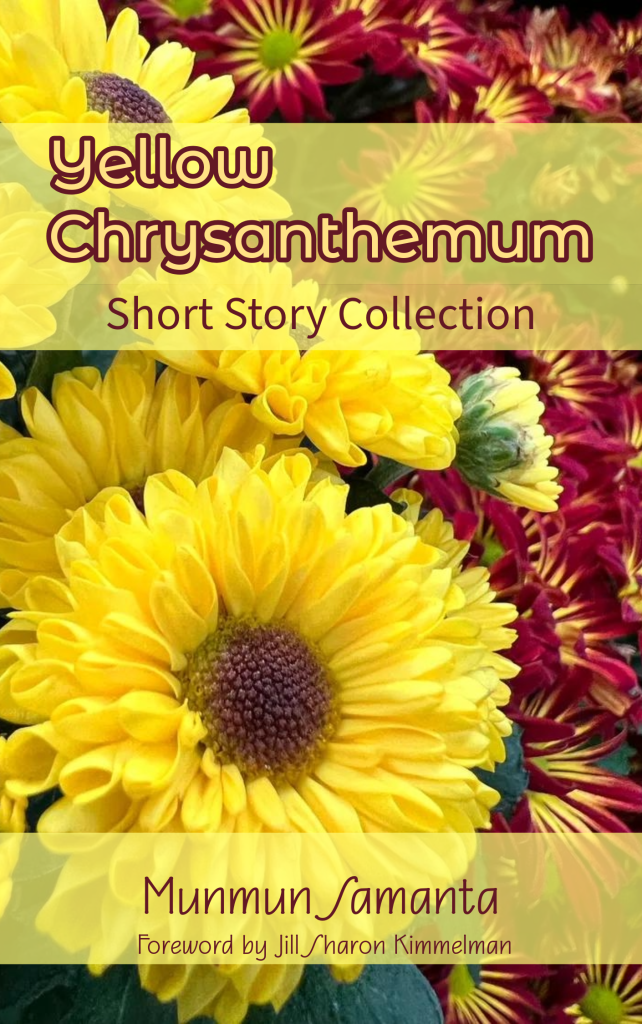
Peter Mladinic’s “The Light of Day,” a review of “Yellow Chrysanthemum”

The Light of Day, a review of Yellow Chrysanthemum by Munmun Samanta. Prolific Pulse LLC. Raleigh, North Carolina. 2025.

In “Sia’s Dream of Dawn” a woman is alone in a garden, thinking, and very attuned to her surroundings. Readers at first think she may be an artist and she’s going to paint the sky. As the story unfolds, readers learn she’s a writer, and it’s as if she’s giving the sky a story, with characters, a plot, a conflict to be developed, heightened, and resolved. And she is. And the sky’s story, like clouds in a river, mirrors the writers. It’s original, poetic, and well worth reading again. Yellow Chrysanthemum as a collection is a story of struggle. Sia “loves this part of the garden. But more than that she loves this confluence of light and shadow.” A struggle to be honest with herself. The collection comprises a struggle for freedom as an artist; for freedom as a wife, daughter, mother, sibling; and for freedom as a person, for equality. “But conventional society never teaches a woman to strike back,” the narrator says in “Written in Blood.”

The stories that depict artists, and scholars are: “Peacock’s Feather,” “Sia’s Dream of Dawn,” “Come Back Somlata,” “Long-forgotten Line,” “A Girl Made of Darkness,” which also involves an individual’s struggle to overcome a society’s prejudice; “Lullaby,” as it invokes the bonding of mother and daughter through song; and “Mad Woman in the Attic,” the story of a woman married to a man who is a successful writer and an emotionally cold, distant husband. His books show empathy for others, but the women in his books reject the woman, just as he does, so she burns his books (his women), and feels at peace.

Stories that involve the struggle of women as members of families are: “Mother India,” “The Caged Bird,” “The Scar,” “Beast of Burden,” “Bright Big Bananas,” “Written in Blood,” and “Uproot.” “Mother India,” the first story in the collection is about hunger and poverty, a mother’s plight to feed herself and her children. It is very visceral; readers feel the hunger in it, and the mother’s desperation. “Uproot,” also about a mother, is contemplative. Should the protagonist stay where she is, or give into her married son’s wish that she leave her home, her job of teaching very young children, and go far away to live with him and his wife? Like “Sia’s Dream …” “Uproot” is a garden story. It begins with Sumita telling the children how a monkey-gardener uprooted trees, to analyze how much water they needed. The children are as delighted with their teacher as she is them, and in the end the story comes back to the garden.

While “Special Dish” has shades of scholastic research, it is primarily a story of the bonding of two women from different classes in society. “A Home of One’s Own,” while it involves family, depicts the plight of women in society at large, a society that says in its morays and traditions that women have no home, the home is the man’s. And in this story, there’s this wonderful sentence: “People say many things, but things are different.” Other stories that involve a woman’s struggle for equality are: “Uma,” “The Kitten and Cleopatra,” and “The Shut Door.” In all these, the plight of one woman is the plight of many.

In “The Shut Door” the narrator says, “It happens sometimes you cannot recognize yourself.” All twenty stories have the unstated adage “be honest with yourself.” Each is an attempt to arrive at some truth. Some stories seem sketched in gray pencils, others in dark blue ink. The light of day is the page on which the story appears. Labels limit. The struggle of the artist, the wife and mother, and the individual all intersect, or seem to, many of them. But in each the author, Munmun Samanta has made a thing of beauty, from her imagination, her vision, and her skill with words. These are stories that ring true; stories of India, of women, of lived lives.

Open her book and see for yourself. You’ll be rewarded. ProlificPulse.com

Peter Mladinic‘s most recent book of poems, Maiden Rock is available from UnCollected Press. An animal rights advocate, he lives in Hobbs, New Mexico, United States.

Maiden Rock: Mladinic, Peter: 9798990558557: Amazon.com: Books