

Two books. Welcomed, each in their own genre.
THOUGHTFUL READS

Two books. Welcomed, each in their own genre.
THOUGHTFUL READS
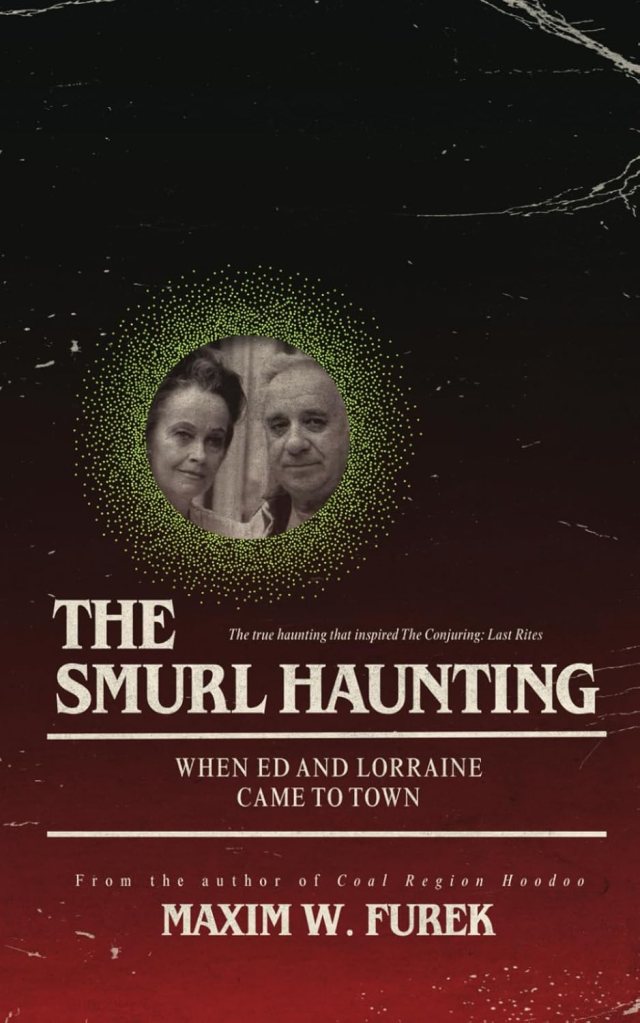
This is a guest post for the book review of The Smurl Haunting, Independently Published (2025) as reviewed by Levi Hill.
It is clear Maxim W. Furek has forgotten more about the occult and paranormal than most people will ever know, and his 176-page joyride through some of most prominent paranormal cases of famed ghosthunters and demonologists Ed and Lorraine Warren is a testament to that fact.
At first, it may not be clear to casual readers the picture Mr. Furek is painting as he tours us through some of the Warrens’ most famous cases. But his detours into events connect to those cases and glimpses into the lives of some of the most prolific and horrific mass murderers of our time are all leading the uninitiated and open-minded to the Smurl House haunting.

Was the Smurl haunting a genuine demonic event or simply another stopping off point on the impressive literary and cinematic empire the Warren’s gathered around themselves? Were the Warrens indeed spiritual warriors fighting an incorporeal battle with the forces of evil, or clever charlatans capitalizing on the world’s fascination with the ethereal as their detractors contend?

The reader can decide for themselves and Furek has given them plenty to consider before they make up their minds.
If you’re not every-day-familiar with the other-worldly, Mr. Furek’s book is a solid stepping off point into the vast and terrifying world of the paranormal and is sure to give the reader plenty of dark alleyways to venture down as they delve deeper into the world of the occult.

If you’re a devotee of the demonic and supernatural, you may not find much in Furek’s book that you probably haven’t already brushed up against on a cold, dark night surfing the paranormal backwaters of the Internet but who knows what specter may linger yet undiscovered?
Whether new to the field of paranormal investigations, or a seasoned veteran of cemetery seances, Furek’s book is a quick and interesting delve into the Ed and Lorraine mythos and sure to leave the reader hungering for more.

Levi Hill
Jal, New Mexico
Oct. 15, 2025.
Levi Hill is a 20-year veteran, award-winning journalist. He grew up in southeast New Mexico in a haunted house and has had multiple paranormal experiences. He writes an ongoing outdoors column and a series of stories focusing on hauntings in his local area.

“I’m sure to get where I’m going. Words and words and words.” (6)
see/saw quirky poems
Thank you to Dawn Reviews Books for this outstanding review!
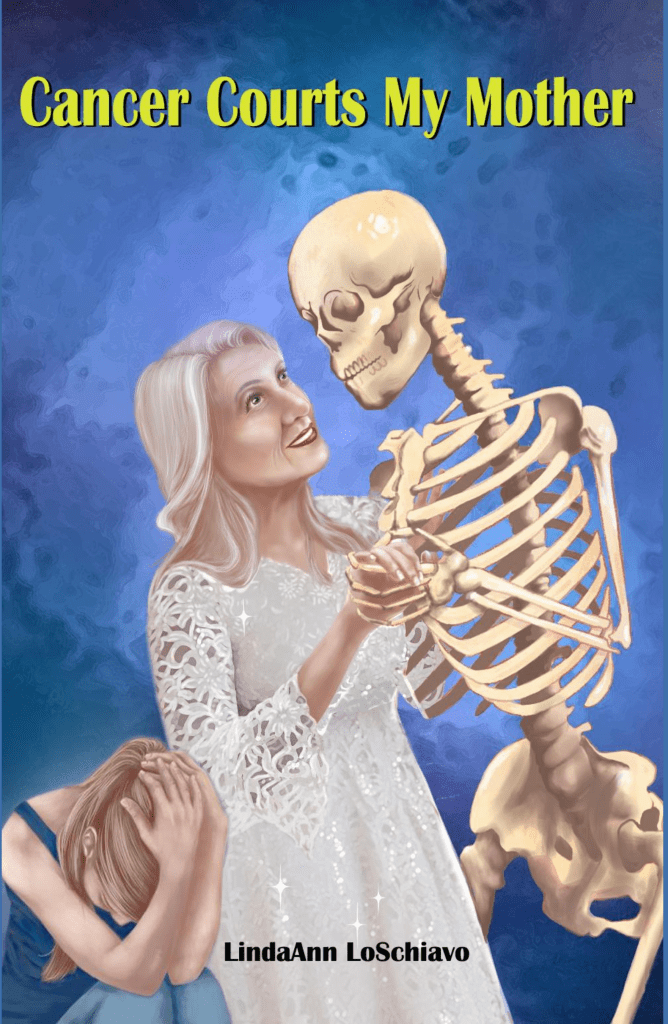
Defying expectations, a caregiver’s journey is told as a story of adultery.
   In "Cancer Courts My Mother" by LindaAnn LoSchiavo, disease becomes a Casanova.
Book Awards:
Winner of . . . .
Award nomination: The Brew Awards, nominee, The Chrysalis BREW Project
Award nomination: CLMP’s Firecracker Award

In "Cancer Courts My Mother," a daughter becomes caregiver to her
abusive, soul-scorching mother, discovering that tending to the dying can unexpectedly
heal the living. In this intimate drama, cancer plays Casanova—a relentless suitor
determined to steal a mother from her family.
Essence: Defying expectations, a caregiver’s journey is told as a story of adultery.
In "Cancer Courts My Mother" by LindaAnn LoSchiavo, disease becomes a
Casanova.
Death ends a life but memories hang on.

Haiku Summary:

Cancer’s intrusions
cannot prevent lifelong wounds
from healing
Advanced Acclaim:
When an adult child becomes caretaker for a parent with cancer, family dynamics shift
profoundly. In “Cancer Courts My Mother,” LindaAnn LoSchiavo captures this complex
journey through poetry that balances tenderness with brutal honesty. She navigates
caregiving’s challenges with grace, inviting readers to witness the delicate interplay of
love and fear while portraying her mother as a fully realized, complex human being. The
journey isn’t pretty—sometimes the words are fierce—but this collection digs deep into
universal experiences of loss and care.
― Kellie Scott Reed, Poetry Editor, Roi Fainéant(USA)
In “Cancer Courts My Mother,” LindaAnn LoSchiavo chronicles an emotional journey
through varied poetic forms. She weaves a metaphor of nurturing plants back to life
while her mother finds remission, then faces cancer’s return. The collection reconciles
memories of a difficult mother with the current, vulnerable one—”Bad memories are
cadavers that refuse burial.” As both subject and narrator, LoSchiavo illuminates the
delicate balance between personal autonomy and familial duty.
― Karen Cline-Tardiff, poet and Editor-in-Chief of Gnashing Teeth Publishing
(USA)
Real and harried, purposeful and comprehensive, when understanding is sought and
reason is not always kind, “Cancer Courts My Mother” provides readers with great
measures of meaning.
― Matt Potter, Editor-in-Chief of Pure Slush Publishing (Australia) and
author of “Hamburgers and Berliners”
Remembering Remission Christmas
They’d bickered over her like two suitors:
Vitality, her birthright, who had known
My mother well before her married life,
And Cancer, who’d mapped out his own terrain,
Unravelled secret strands of resistance,
Until oncologists chased him away.
Remission Christmas reunited us,
Our joy like steam escaping after frost.
I shipped my gifts to Florida ahead:
Biscotti, pignola cookies, torrone
From Little Italy, fine leather goods,
And for her green thumb, a red amaryllis.
But Safety Harbor’s Gulf of Mexico,
Producing Christmastime’s Cancerian
Heat in December, had confused this bulb.
Amidst the presents and nativity,
Its empty cradle strewn with straw, green life
Ripped up gay mummy wrapping, and tore loose,
Unhampered by its ground like Lazarus
Unbound. My parents, unprepared for ghosts
Of miracles, became unnerved by sounds
Newborn right by their crèche, the fir tree’s base,
Invisible and inexplicable
Like faith. Or like remission. After Mass,
They found a determined amaryllis, force
Which sleeps but cannot die, that mother took to heart.
LindaAnn LoSchiavo
While you are waiting for your copy to arrive, enjoy this interview with the lovely LindaAnn LoSchiavo
Welcome to my Reading Nook. A little corner of the web dedicated to the bookworms out there like me. So if you like what you see then follow me :)
Международен конкурс за хайку "Мая Любенова"
Romance, mystery, suspense, & small town humor...
Poetry, Flash Fiction, Stories, Musings, Photos
The Truth is Stranger than Fiction
Empowering a World of Readers, One Book at a Time
A Magazine Where Words and Books Meet the World
A personal blog sharing heartfelt poetry inspired by nature, beauty, and soulful reflection.
Unravelling thoughts. One word. One poem at a time.
"I am a wildflower, free"
Daydreaming and then, maybe, writing a poem about it. And that's my life.
Just Another Trans Writer Guy
she strives to do it all
As a teacher, I will always remain a student. In the classroom of life, l wish to work with and educate others. Whether you’re a teacher, student, or just your average person, here are a few of my "TEACHERble" moments.
Beautiful & Damned!
Life on the go ❤️
Dive into a collection of memories, musings and emotions delicately concocted into stories and introspective articles
Hi! my name is Sebastian (You can call me Seb!) ...welcome to my Blog. I'm a photographer from Worcester, Worcestershire, England. Thanks for dropping by! I hope you enjoy my work.
 Prolific Pulse Blog