Award Winning Children’s Book Author & Illustrator Kaelen Felix talks about “Wings & Whispers-Tales of Friendship, Volume 1” and more. You’ll never meet any other artist and writer like Kaelen Felix. Despite life’s challenges, she moved forward to complete her debut #childrensbook And talks about her art, writing, and future plans. To view more of her works, visit: https://www.kaelenfelix.com/about To view her Prolific Pulse Press Feature Page go to: https://www.prolificpulse.com/kaelenfelix
Category: interview
Getting to Know Mike Armstrong
Poetry Special: Danielle Martin

In fashion nothing completely goes out of style. Major trends often see great comebacks after generations of being shunned, resurfacing with a bang! So, yes, poetry is very much back in fashion, especially amongst the young, which is a delight to see. It never really left to be honest, I think it underwent and is […]
Poetry Special: Danielle Martin
Getting to Know Mike Armstrong

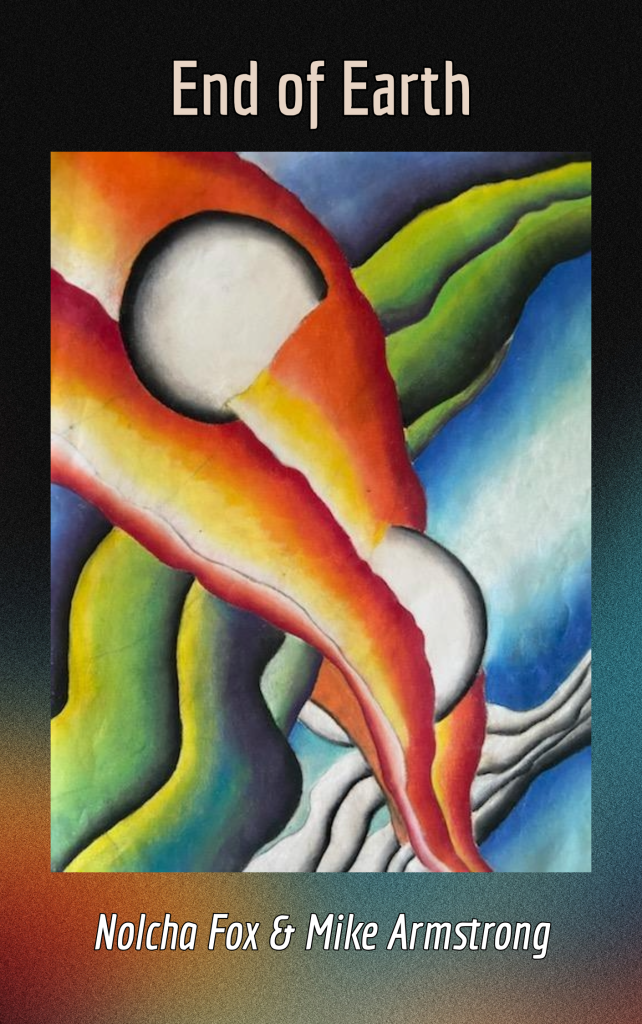
Recently, Mike Armstrong, the artist for End of Earth, responded to my many interview questions.
– Please tell us a bit about yourself and your journey as an artist. – What inspired you to start creating art? How would you describe your artistic approach, style, and the themes you often explore in your artistic creations?
Long ago, I was born in Beautiful Birmingham Alabama. Fortunately, I received early Art instruction. I threw my first pot in the 3rd grade. It was a mess. I have taught Sculpture since.
Not being the ‘greatest’ High School student, I was released, by some of my teachers, to go to the Art room where I never made less than an A.
At the University of Alabama, I majored in Painting/Ceramics. Also studied Art and Art history at Santa Monica College and U.C.L.A.
I’m right brained and left-handed
Your Poetry and Art Book:
– Congratulations on your latest poetry and art collaboration! Can you give us an overview of what readers can expect from it?
I hope that our readers will explore its depth and lightheartedness. In other words, I hope that they get it.
Rotate book cover to the left and see something different. NOT to be strange, rotate pages 22 and 24 left-I see you. Be afraid–
Creative Process:
– Could you walk us through your creative process when creating a new painting? – Do you have any rituals or routines that help you get into the right mindset for painting? – How do you know when a painting is “finished?”
The creative process requires both mental and physical energy. I have recently moved my studio from the commercial Brevard Art Guild, where painting and associating with other artists was a plus, to my home studio which is convenient.
My non-representational work starts with adding a shape and a color to a usually blank canvas. Analyze, repeat. Finishing can be problematic-could take a week (record), or never. Yes, I have a lot of unfinished work.
– Many poets infuse their work with personal experiences or social commentary. Are there any recurring themes or messages in your art? – Are there any messages you hope readers take away from your art?
Although I do not aim for realism, I must be influenced by water. I grew up with a creek in my back yard and now live on the ocean. Also, many years of camping in the beautiful mountains of northern California are strongly remembered.
Named paintings are “Mountains” and “More Mountains.”
I often utilize a straight line, perhaps it represents sea line or–back to earth.
My work is spontaneous and has no intentional outcome. It is both mindless, reactive, and sometimes stressful.
– Who are some artists who have influenced your work? – Are there any other art forms or sources of inspiration that impact your art? – How do you navigate the fine line between drawing inspiration from others’ work and maintaining your own unique voice as an artist?
I am a fan of Willem De Kooning.
I was very much influenced by High School teacher, Deliska Skinner who guided and tolerated me for 3 hours, 5 days a week. Angelic.
Alvin Sella often frightened his students into hard work at the University of Alabama. With me, he was kind and gentle. Check him out.
Santa Monica College provided me with years of world travel and museums. A great Art department.
While at U.C.L.A., I would have to leave the all-night sessions in the photo lab only because the janitor was coming to work, and I had his parking space. Don’t think that I was supposed to be there–
Audience and Reception:
– Who do you envision as your target audience for this book? – What do you hope readers will gain or feel after viewing this collaboration? – How do you handle feedback or criticism of your art, both positive and negative?
When being reviewed, I listen for sincerity. It’s great when a viewer sees something that I have not, yet, considered.
– Any final words of encouragement or wisdom for aspiring artists reading this
interview?
For encouragement?? Yes, I’ll take all you can give. Oh yes, practice, practice.
Thank you, Mike Armstrong, for your interesting responses. I feel like I know you a little better.
Have you picked up your copy of End of Earth?

Feature Interview of Nolcha Fox – the Poetic Half of “End of Earth”

You’ve already learned of the new release of “End of Earth” but in case you missed it… it’s right HERE
This is the first of Two interviews. This first interview is with Nolcha Fox, the Poetry Contributor of the poetry and art collection by Nolcha Fox and Mike Armstrong.
Let’s learn about Nolcha Fox:
– Please tell us a bit about yourself and your journey as a poet and writer,
I started writing as a toddler, using poop on the walls. I also tried to write on myself using my mother’s red lipstick. She told me it took a little while before the red tint disappeared from my face and hair.
When I was a little older, I returned to walls with crayons. I must have been potty-trained.
I expanded my writing to the margins of pages, a little embarrassing to my father, who borrowed the book. That may have been when I fell in love with reading, too.
In school, I expanded my skills through writing assignments. I had a wonderful teacher who encouraged us to write in the style of different authors. I wrote in the style of Charles Dickens for a bit. Poor Dickens.
I journaled in my early 20s and 30s. My journals included some awful poetry. So awful, I eventually tossed a small library of journals into a dumpster and never looked back.
My poetry was awful because I didn’t write like myself. I didn’t trust my intuition to guide me.
Plus, the angst in my poems was over the top. Hormones will do that.
Finally, I stumbled into technical writing. What an education in learning how to write! Much of my career was a black hole that squashed my creative writing. After 8+ hours working at a computer, my eyes were too tired to stare at another screen.
I didn’t seriously write until I retired. I had to wait for my hormones to move to a tropical island before I could truly write instead of emote.
– What inspired you to start writing poetry?
A dear poet friend of mine suggested poetry when the pain of daily migraines made it next to impossible for me to write any short fiction.
My first poem was published, and I thought, hey, I can do this!
– How would you describe your writing style and the themes you often explore in your poetry?
I write about whatever comes to mind. When I start a poem, I have no idea where it will end. I went through a period of writing about grief after my mother died last year. Otherwise, my themes are all over the place.
Most of my poetry is short (10 lines or less), unless I’m working with a form, such as a pantoum.
– Congratulations on your latest poetry book! Can you give us an overview of what readers can expect from it?
It’s a collection of short poems written to Mike’s paintings. His paintings draw the reader in visually, and the poetry draws the reader in mentally/emotionally.
– What was the inspiration behind this particular collection of poems?
Mike, don’t kill me. My mother inspired the collection. She recommended writing to Mike’s art. At first, I protested, because I typically write to images that aren’t abstract, like Mike’s. She laughed and said I could write anything I wanted, and nobody would know the difference.
However, when I began the project, I found myself responding to colors and forms, so it was easier to do than I originally thought.
– Please share your poetry from this book.
They circle

thinking I taste good,
at first, I think they’re vultures.
A second look reveals teeth.
Ah, they are money vampires.
They tell me they can hook me up,
no, cook me up in style.
They see me as some roadkill
and they’re a spatula.
***
Don’t let the light

seep through the sutures of your skull,
don’t let it set your hair ablaze.
It’s hard enough to fit
into this dark and dreary world
without everybody noticing your fire.
– Could you walk us through your creative process when crafting a new poem?
Often, an unrelated object or experience comes to mind as I mull over a prompt or an experience/feeling. For example, I wanted to write to the prompt “bond,” but blueberries popped into my head. So, I wrote a line that included blueberries, and the whole poem fell into place.
I only take a couple of minutes to decide where to start, and I write quickly. I usually give a poem one editorial pass, and then get it out to the world. It’s similar to explosive barfing.
If I find myself struggling with a poem, I put it away. It’s not ready to be born yet.
– Do you have any rituals or routines that help you get into the right mindset for writing poetry?
I attend to anything that will distract me from writing (such as laundry, hungry dogs, or emails). And then I write. I usually write two poems a day between distractions. The most I ever wrote was seven poems in a day.
– How do you know when a poem is “finished” and ready to be included in your book?
I call a poem finished when I have no more to write. I read through it once to see if it makes me laugh or if I respond emotionally. Sometimes I think it’s garbage and ask a poet friend to give me his thoughts. I’m usually wrong.
– Many poets infuse their work with personal experiences or social commentary. Are there any recurring themes or messages in your poetry?
My personal experiences are usually boring. I never have enough understanding to engage in social commentary. I rely on my imagination to lead me into and through a poem. In End of Earth, I couldn’t tell you if there are any recurring anythings. I don’t know how to step outside my poetry and observe it critically, so I let other people analyze what I wrote. I’m moving on to the next poem.
– How do you balance the personal with the universal in your poems?
I stick to everyday, specific images. If the universal creeps in, yay for me. It wasn’t intentional.
– Are there any messages you hope readers take away from your poetry book?
I hope readers enjoy the feast Mike and I laid out for them.
– Who are some poets or writers that have influenced your work?
My top influences are Alice in Wonderland and The Cat in the Hat. I love the rhythm and imaginative storytelling.
– Are there any other art forms or sources of inspiration that impact your poetry?
I often write to photographs or art.
– How do you navigate the fine line between drawing inspiration from others’ work and maintaining your own unique voice as a poet?
I read other poets’ work voraciously. I now have an idea or phrase in a poem as a springboard. And delete the poem to save my poor computer from becoming a literary porker.
– Who do you envision as your target audience for this poetry book?
Readers who enjoy art and writing.
– What do you hope readers will gain or feel after reading your poems?
Enjoyment
– How do you handle feedback or criticism of your poetry, both positive and negative?
I say thank you.
– Can you share a bit about your experience with the publishing process for this book?
Working with Lisa is wonderful. Everything went smoothly.
– What advice would you give to aspiring poets who are looking to publish their own work?
Carefully consider how much writing time you’re willing to give up to promote your book. And don’t expect to become an overnight sensation.
– How do you approach marketing and promoting your poetry book to reach a wider audience?
I live in Wyoming, where I have to drive long distances to participate in readings, and local opportunities are few. I rely on social media to get the word out.
– Are there any upcoming projects or future plans you can share with us?
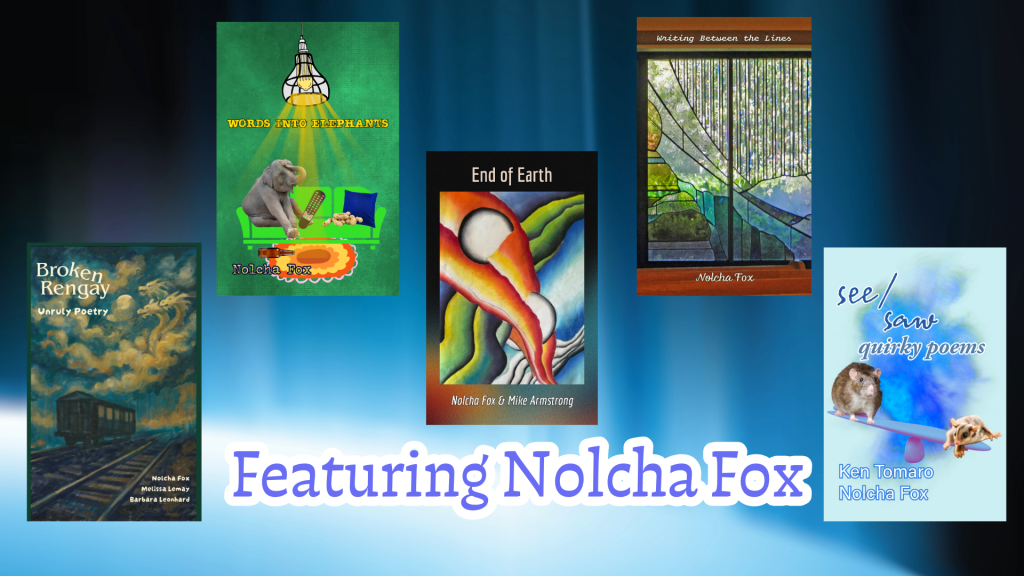
Lisa is publishing a collaborative book with poetry by Ken Tomaro and me in 2025. I have one more book in the queue, and then I plan to take a breather from book publishing.
– How do you see your poetry evolving or changing in the future?
No idea. My intuition doesn’t like to share her plans.
– Where can listeners find your poetry book and connect with you online?
My book will be available on Amazon and Barnes & Noble, and with other booksellers.
You can find me at:
LinkedIn: https://www.linkedin.com/in/nolchafox/
Facebook: https://www.facebook.com/nolcha.fox/
I am also the editor for the literary magazine Chewers by Masticadores. Submissions are always open and always free. Please submit!

Thank you to Nolcha Fox for this enlightening interview! You can find links for sales sites at ProlificPulse.com/NolchaFox or go to: