art, interview, poetry, Poets & Events

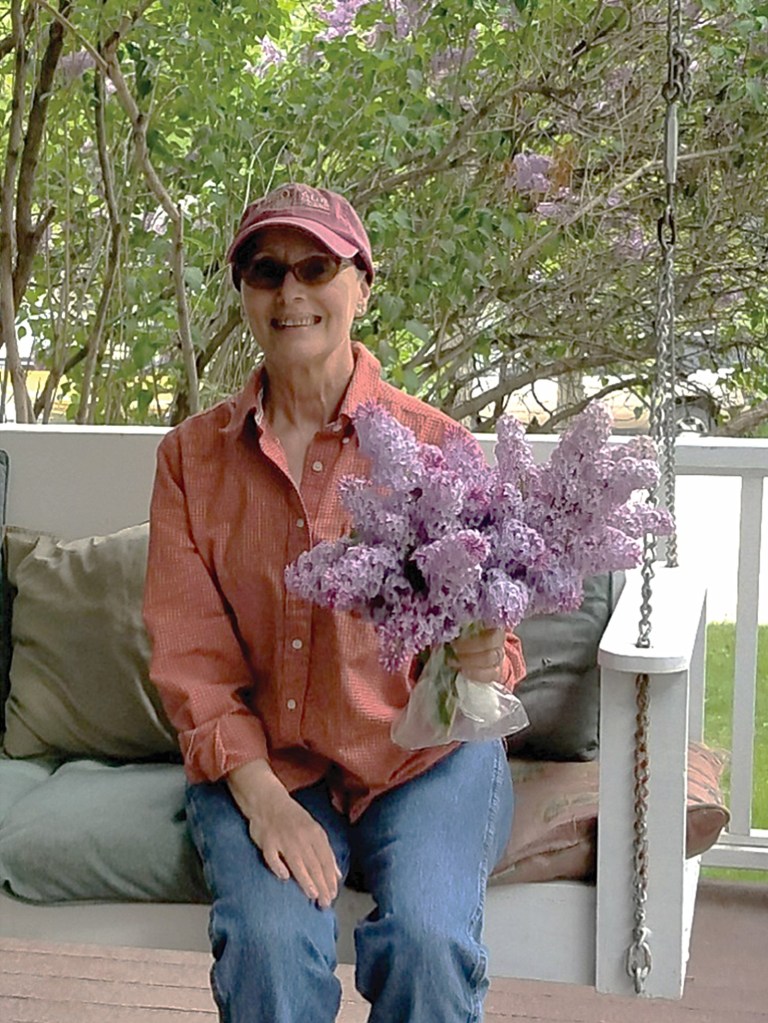
Feature Interview of Nolcha Fox – the Poetic Half of “End of Earth”

You’ve already learned of the new release of “End of Earth” but in case you missed it… it’s right HERE

This is the first of Two interviews. This first interview is with Nolcha Fox, the Poetry Contributor of the poetry and art collection by Nolcha Fox and Mike Armstrong.

Let’s learn about Nolcha Fox:

   – Please tell us a bit about yourself and your journey as a poet and writer,

I started writing as a toddler, using poop on the walls. I also tried to write on myself using my mother’s red lipstick. She told me it took a little while before the red tint disappeared from my face and hair.

When I was a little older, I returned to walls with crayons. I must have been potty-trained.

I expanded my writing to the margins of pages, a little embarrassing to my father, who borrowed the book. That may have been when I fell in love with reading, too.

In school, I expanded my skills through writing assignments. I had a wonderful teacher who encouraged us to write in the style of different authors. I wrote in the style of Charles Dickens for a bit. Poor Dickens.

I journaled in my early 20s and 30s. My journals included some awful poetry. So awful, I eventually tossed a small library of journals into a dumpster and never looked back.

My poetry was awful because I didn’t write like myself. I didn’t trust my intuition to guide me.

Plus, the angst in my poems was over the top. Hormones will do that.

Finally, I stumbled into technical writing. What an education in learning how to write! Much of my career was a black hole that squashed my creative writing. After 8+ hours working at a computer, my eyes were too tired to stare at another screen.

I didn’t seriously write until I retired. I had to wait for my hormones to move to a tropical island before I could truly write instead of emote.

   – What inspired you to start writing poetry?

A dear poet friend of mine suggested poetry when the pain of daily migraines made it next to impossible for me to write any short fiction.

My first poem was published, and I thought, hey, I can do this!

   – How would you describe your writing style and the themes you often explore in your poetry?

I write about whatever comes to mind. When I start a poem, I have no idea where it will end. I went through a period of writing about grief after my mother died last year. Otherwise, my themes are all over the place.

Most of my poetry is short (10 lines or less), unless I’m working with a form, such as a pantoum.

   – Congratulations on your latest poetry book! Can you give us an overview of what readers can expect from it?

It’s a collection of short poems written to Mike’s paintings. His paintings draw the reader in visually, and the poetry draws the reader in mentally/emotionally.

   – What was the inspiration behind this particular collection of poems?

Mike, don’t kill me. My mother inspired the collection. She recommended writing to Mike’s art. At first, I protested, because I typically write to images that aren’t abstract, like Mike’s. She laughed and said I could write anything I wanted, and nobody would know the difference.

However, when I began the project, I found myself responding to colors and forms, so it was easier to do than I originally thought.

   – Please share your poetry from this book.

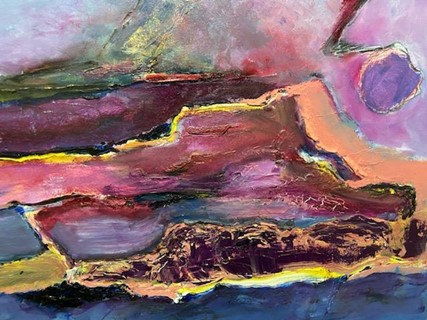
They circle
Artist: Mike Armstrong

thinking I taste good,

at first, I think they’re vultures.

A second look reveals teeth.

Ah, they are money vampires.

They tell me they can hook me up,

no, cook me up in style.

They see me as some roadkill

and they’re a spatula.

***

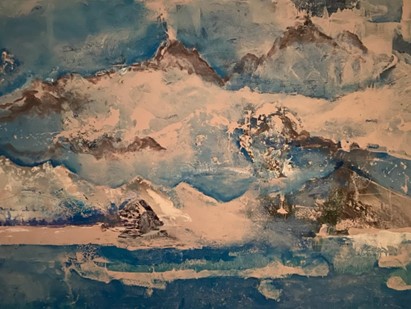
Don’t let the light
Artist: Mike Armstrong

seep through the sutures of your skull,

don’t let it set your hair ablaze.

It’s hard enough to fit

into this dark and dreary world

without everybody noticing your fire.

   – Could you walk us through your creative process when crafting a new poem?

Often, an unrelated object or experience comes to mind as I mull over a prompt or an experience/feeling. For example, I wanted to write to the prompt “bond,” but blueberries popped into my head. So, I wrote a line that included blueberries, and the whole poem fell into place.

I only take a couple of minutes to decide where to start, and I write quickly. I usually give a poem one editorial pass, and then get it out to the world. It’s similar to explosive barfing.

If I find myself struggling with a poem, I put it away. It’s not ready to be born yet.

   – Do you have any rituals or routines that help you get into the right mindset for writing poetry?

I attend to anything that will distract me from writing (such as laundry, hungry dogs, or emails). And then I write. I usually write two poems a day between distractions. The most I ever wrote was seven poems in a day.

   – How do you know when a poem is “finished” and ready to be included in your book?

I call a poem finished when I have no more to write. I read through it once to see if it makes me laugh or if I respond emotionally. Sometimes I think it’s garbage and ask a poet friend to give me his thoughts. I’m usually wrong.

   – Many poets infuse their work with personal experiences or social commentary. Are there any recurring themes or messages in your poetry?

My personal experiences are usually boring. I never have enough understanding to engage in social commentary. I rely on my imagination to lead me into and through a poem. In End of Earth, I couldn’t tell you if there are any recurring anythings. I don’t know how to step outside my poetry and observe it critically, so I let other people analyze what I wrote. I’m moving on to the next poem.

   – How do you balance the personal with the universal in your poems?

I stick to everyday, specific images. If the universal creeps in, yay for me. It wasn’t intentional.

   – Are there any messages you hope readers take away from your poetry book?

I hope readers enjoy the feast Mike and I laid out for them.

   – Who are some poets or writers that have influenced your work?

My top influences are Alice in Wonderland and The Cat in the Hat. I love the rhythm and imaginative storytelling.

   – Are there any other art forms or sources of inspiration that impact your poetry?

I often write to photographs or art.

   – How do you navigate the fine line between drawing inspiration from others’ work and maintaining your own unique voice as a poet?

I read other poets’ work voraciously. I now have an idea or phrase in a poem as a springboard. And delete the poem to save my poor computer from becoming a literary porker.

   – Who do you envision as your target audience for this poetry book?

Readers who enjoy art and writing.

   – What do you hope readers will gain or feel after reading your poems?

Enjoyment

   – How do you handle feedback or criticism of your poetry, both positive and negative?

I say thank you.

   – Can you share a bit about your experience with the publishing process for this book?

Working with Lisa is wonderful. Everything went smoothly.

   – What advice would you give to aspiring poets who are looking to publish their own work?

Carefully consider how much writing time you’re willing to give up to promote your book. And don’t expect to become an overnight sensation.

   – How do you approach marketing and promoting your poetry book to reach a wider audience?

I live in Wyoming, where I have to drive long distances to participate in readings, and local opportunities are few. I rely on social media to get the word out.

   – Are there any upcoming projects or future plans you can share with us?

Lisa is publishing a collaborative book with poetry by Ken Tomaro and me in 2025. I have one more book in the queue, and then I plan to take a breather from book publishing.

   – How do you see your poetry evolving or changing in the future?

No idea. My intuition doesn’t like to share her plans.

   – Where can listeners find your poetry book and connect with you online?

My book will be available on Amazon and Barnes & Noble, and with other booksellers.

You can find me at:

LinkedIn: https://www.linkedin.com/in/nolchafox/ 

Facebook: https://www.facebook.com/nolcha.fox/

I am also the editor for the literary magazine Chewers by Masticadores. Submissions are always open and always free. Please submit!
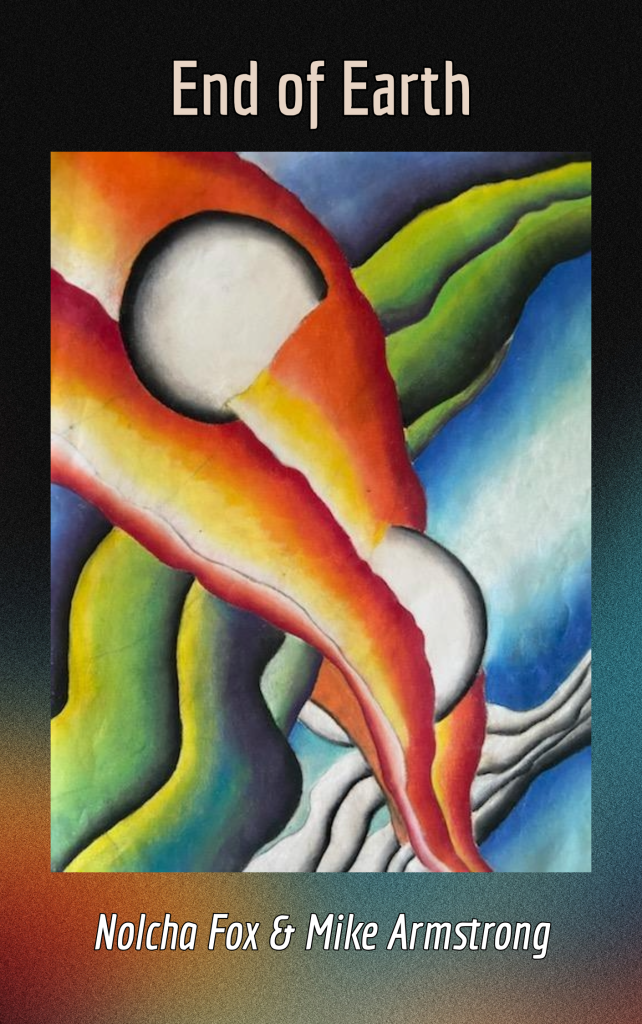

Thank you to Nolcha Fox for this enlightening interview! You can find links for sales sites at ProlificPulse.com/NolchaFox or go to:
Amazon Barnes & Noble BAM BookShop ProlificPulse

books, interview, poetry, writing

Feature Interview of Laura Stamps as She Releases a Fun and Fantastic Novella in Haiku

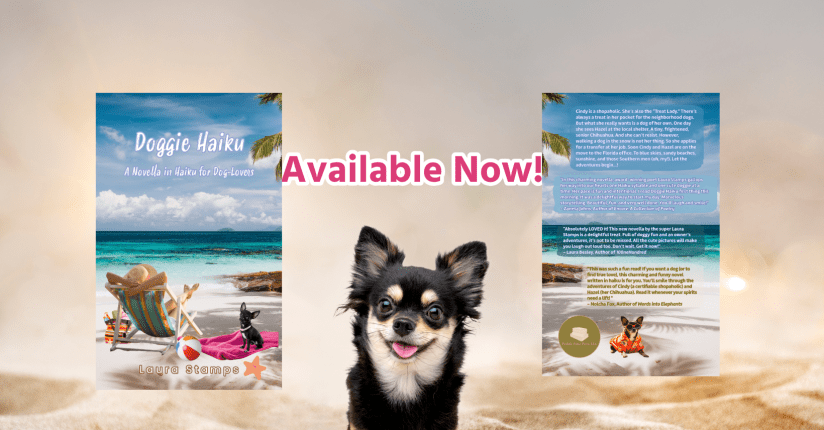
Prolific Pulse Press has now released Laura Stamps latest book “Doggie Haiku – A Novella for Dog-Lovers” Since this is the second book of Laura’s that we have published, it’s only fitting that we interview this fun and fascinating writer. Here goes!

1.) Please tell us a bit about yourself and your journey as a poet and writer.

I didn’t start writing until I was 30. By then I was a successful fine artist with paintings and art prints in galleries around the world. But one day I bought a “Writer’s Digest” magazine at my local Waldenbooks. I loved every word in it, especially Judson Jerome’s poetry column. It was his column that inspired me to write my first poem. And what an awful poem it was! I had no idea what I was doing. But I was hooked! I had always been an honors student in high school and college in English literature, but had never considered a career in writing because I am dyslexic. After writing that first poem, I dug out all my college English grammar text books, studied like crazy, and ordered a bunch of books from the “Writer’s Digest Book Club” about how to write poetry, fiction, and nonfiction. I read, studied, wrote every day, submitted to magazines, and eventually overcame my dyslexia. You can imagine how much the 2005 Pulitzer Prize nomination for my poetry book “The Year of the Cat” meant to me, considering the obstacles I’d overcome in order to achieve it. Today, I’ve published over 67 poetry books, short story collections, novels, and novellas with various publishers. Most recently, “The Good Dog” (Prolific Pulse Press, 2023), “Addicted to Dog Magazines” (Impspired, 2023), and “Dog Dazed” (Kittyfeather Press, 2022). In 2025 Prolific Pulse Press will publish my next novella-in-verse, “Postcards to Herself.” Many of my novels and novellas have spent months or years on the Amazon bestsellers lists. My stories and poems have appeared in over 2000 literary magazines and anthologies worldwide. And I’ve won countless awards, as well as receiving 7 Pushcart Prize nominations.

2.) How would you describe your writing style and the themes you explore in your novellas-in-verse?

I write in a stream-of-consciousness style. At first glance this style of writing might seem chaotic. But it’s how the subconscious strings thoughts together, which is why it makes perfect sense in the mind of the reader. And that fascinates me. I love to push it as far as I can, creating experimental forms, and breaking the rules of traditional sentence structure, which is why I enjoy writing novellas-in-verse like “Doggie Haiku.” I’m also attracted to this style of writing because I’m a huge fan of abstract art. Stream-of-consciousness writing is structured in the same way an artist paints an abstract painting. Gertrude Stein is famous for her stream-of-consciousness poems and stories. Virginia Woolf wrote an entire novel in this style (“The Waves”). The themes in my books may vary, but the underlying theme is always positive and empowering. That’s because I’m a child abuse survivor, date rape survivor, attempted kidnapping survivor, and domestic abuse survivor. And I’ve experienced all the side effects that accompany that kind of trauma, like PTSD, anxiety, panic attacks, and depression. I’ve also experienced my share of stalkers and bad-news men in love relationships. That’s why my books, even the humorous ones, are always empowering. I like to highlight the positive and offer hope to my readers. There’s enough darkness in the world. I have no desire to add to it.

3.) Congratulations on your latest poetry book! Can you give us an overview of what readers can expect from it?

“Doggie Haiku” is a novella written entirely in haiku poems. Cindy, the main character, is a shopaholic. She’s also the “Treat Lady.” There’s always a treat in her pocket for the neighborhood dogs. But what she really wants is a dog of her own. One day she sees Hazel at the local shelter. A tiny, frightened, senior Chihuahua. And she can’t resist. However, walking a dog in the snow is not her thing. So she applies for a transfer at her job. Soon Cindy and Hazel are on the move down to the Florida office. To blue skies, sandy beaches, sunshine, and those Southern men (oh, my!). And that’s when the adventures begin!

4.) What was the inspiration behind this particular collection of poems?

I prefer to write poetry in the form of novellas-in-verse, and I’ve published many in the last 36 years. Several with short poems. But never one in haiku. And I’ve never seen a published novel or novella written entirely in haiku. Since I’ve always loved haiku, I thought it would be a fun challenge. And it was! I enjoyed every minute of the process. And I’m very pleased with the result.

5.) Were there any specific challenges or highlights you encountered during the writing process of this book?

Not during the writing process. That was great fun. The challenge occurred during the editing. Every section of this novella had been published months before as separate poems in numerous literary magazines. In order for those sections to make sense as separate poems I had to tweak them a little. However when it came time to edit the novel, each section had to be tweaked again to create the smooth flow of a novel. Plus, there was the syllable count for each poem to consider. Some words have more syllables than you think. Some less. So I ran each haiku poem through a syllable counter to make sure it met the traditional 5/7/5 Haiku syllable structure. Because of this, editing this novella took much longer than usual.

6.) Please share your poetry from this book.

I join a book club

at the library. Novels

for dog-lovers. (Woof!)

But who do I see

next week at the book club? Mark.

(Are you kidding me?)

Mark. The cute guy. The

vet tech. My disaster date.

(How embarrassing!)

“Hi, Cindy,” he says.

“Well, this is awkward.” (You think?

Geez. What a nightmare.)

“Your dog bit my dog,”

I say. “True,” Mark says, “but we

can still be friends, right?”

“I’m not dating you,”

I say. “Your dog hates my dog.”

“Yes,” Mark says. “He does.”

This. This is why I

don’t date. Too stressful. It is.

(I’m no good at this!) 

“Just keep Sam away

from Hazel,” I say. “Deal,” he

says, “friends now?” (Maybe…)

7.) Could you walk us through your creative process when crafting a new poem?

I have two offices in my home, and I keep regular business hours (7:00am – 4:00pm). I’m a fulltime writer. My writing day begins every morning at breakfast. I work on poems while I eat breakfast, lunch, and sometimes at dinner. The first draft of a poem is written by hand in a little 3×5 spiral-bound memo pad. I keep one of these pads, the first drafts of poems, and the poem I’m currently working on in a 5.5 x 8.5 zippered notebook. After I finish the first draft of a poem, I type it up on computer and print it out to edit. And that’s how I work until a poem is finished (edit by hand, type up the edits on computer, and print it out to continue editing). Afternoons are for editing. Each poem will go through 40-50 edits over the course of several days. When a poem is finished, I submit it to a magazine and begin working on the next poem. I’m a narrative poet, not a confessional poet, which means every poem I write is part of a novella-in-verse. I rarely take a break after I finish a book. By then I’ve already decided on the story and characters in my next book, and I’m anxious to begin. 

8.) Who are some poets or writers that have influenced your work?

All my favorite writers are experimental. I love Anne Carson’s poetry books, especially “Autobiography of Red,” and “Beauty of the Husband”. Every book of hers is written and structured in a different style or form. She is amazing! And, of course, there’s Donald Barthelme. He was such an experimental goof and always cracks me up. The short stories of Ann Beattie and the flash fiction stories of Joyce Carol Oates were also early influences, and I still enjoy them. However, I would have to say Carson and Barthelme are my favorites. Always innovative. Always entertaining.

9.) Are there any other art forms or sources of inspiration that impact your poetry?

I’m a huge fan of abstract art, and it has always been an inspiration for my writing, because it’s a form of art that appeals to the subconscious. I like to structure my novels-in-verse in the same way as an abstract painting. Stories that touch the reader on a subconscious level.

10.) Who do you envision as your target audience for this book?

Dog-lovers and dog owners, as well as anyone who has had a dog, grew up with dogs, or would like to adopt a dog someday. Shopaholics (of course!). Any reader who loves a fast-moving, hysterically funny story. Readers who have survived dating disasters (haven’t we all?). Sometimes you just want to take a break from dating and the opposite sex. Especially when hanging out with your dog is less stressful and more fun. If any of this sounds like you, you’re going to love Cindy!

11.) What do you hope readers will gain or feel after reading your novellas-in-verse?

My goal in all my novels and novellas is to give my readers a fast, entertaining read they can’t put down until they finish it. One that makes them smile and laugh all the way through. A story that lifts their spirits and leaves them with a positive feeling. If that happens, I’ve done my job.

12.) Are there any upcoming projects or future plans you can share with us?

Yes, my next novella-in-verse will be coming out in 2025. It’s called “Postcards to Herself,” and it’s about a woman who writes and mails postcards to herself every week. However, what she has to say in these postcards is NOT what you would expect! It’s another humorous novella with one of my wacky women characters, who also happens to be a dog owner.

13.) Where can readers find your book and connect with you online?

If you live in the U.S., you can order a signed copy of “Doggie Haiku” directly from me. Just email laurastamps18@yahoo.com for ordering information. You can also find me on Facebook (Laura Stamps) and WordPress (www.dogdazed7.wordpress.com) and my website (www.LauraStampsFiction.blogspot.com). “Doggie Haiku” will also be available on Amazon Barnes & Noble Books A Million BookShop and other online stores.